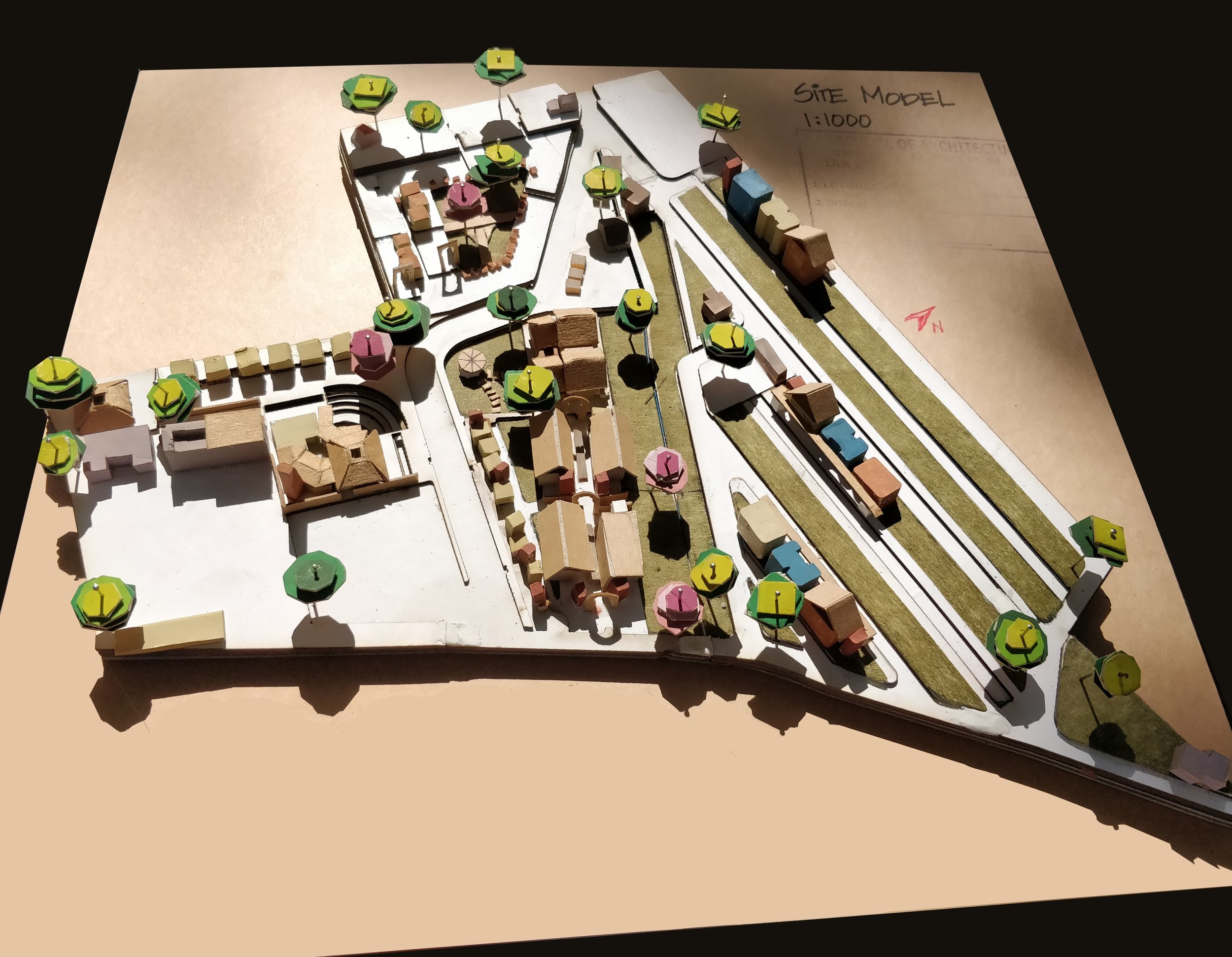
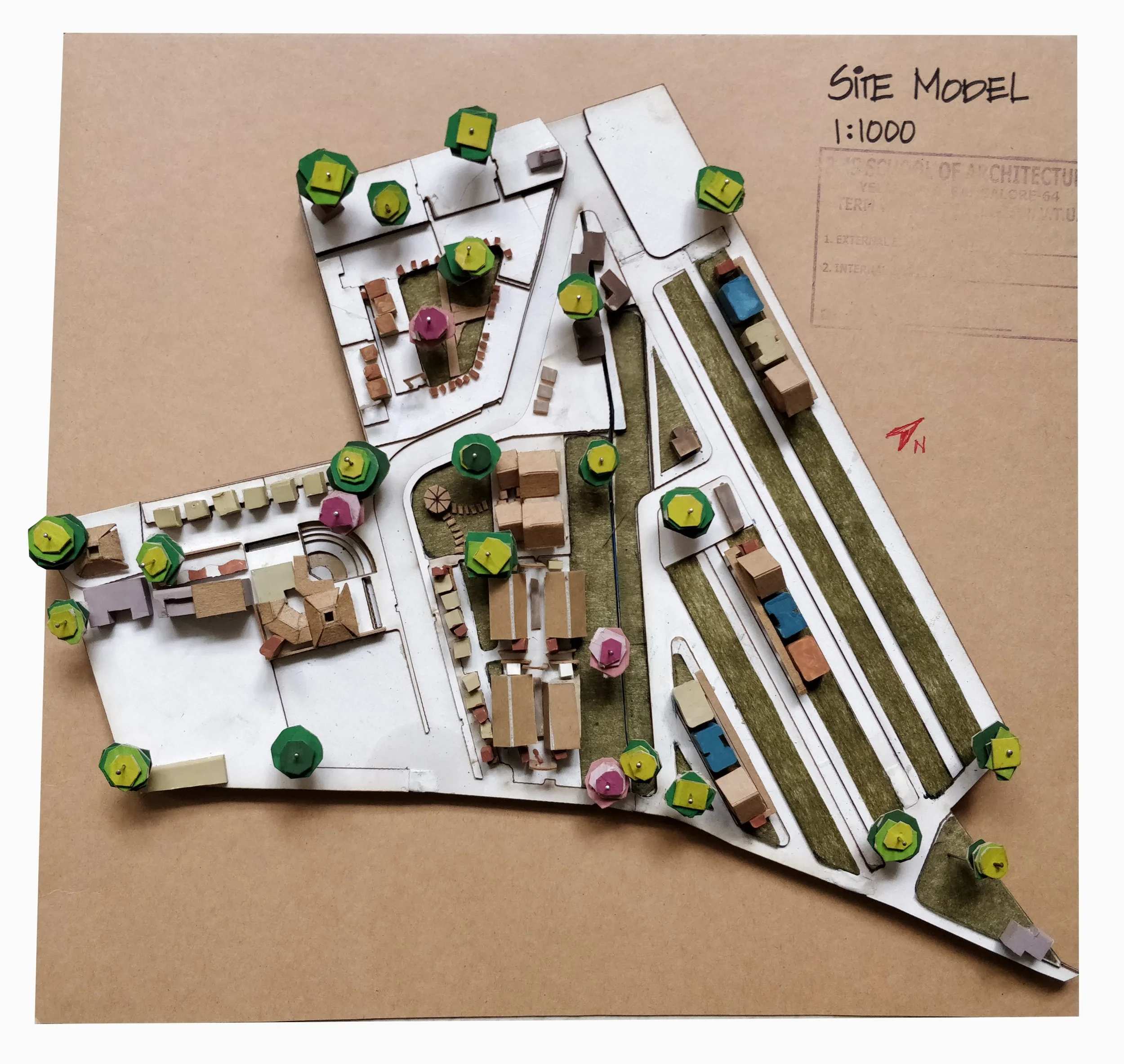
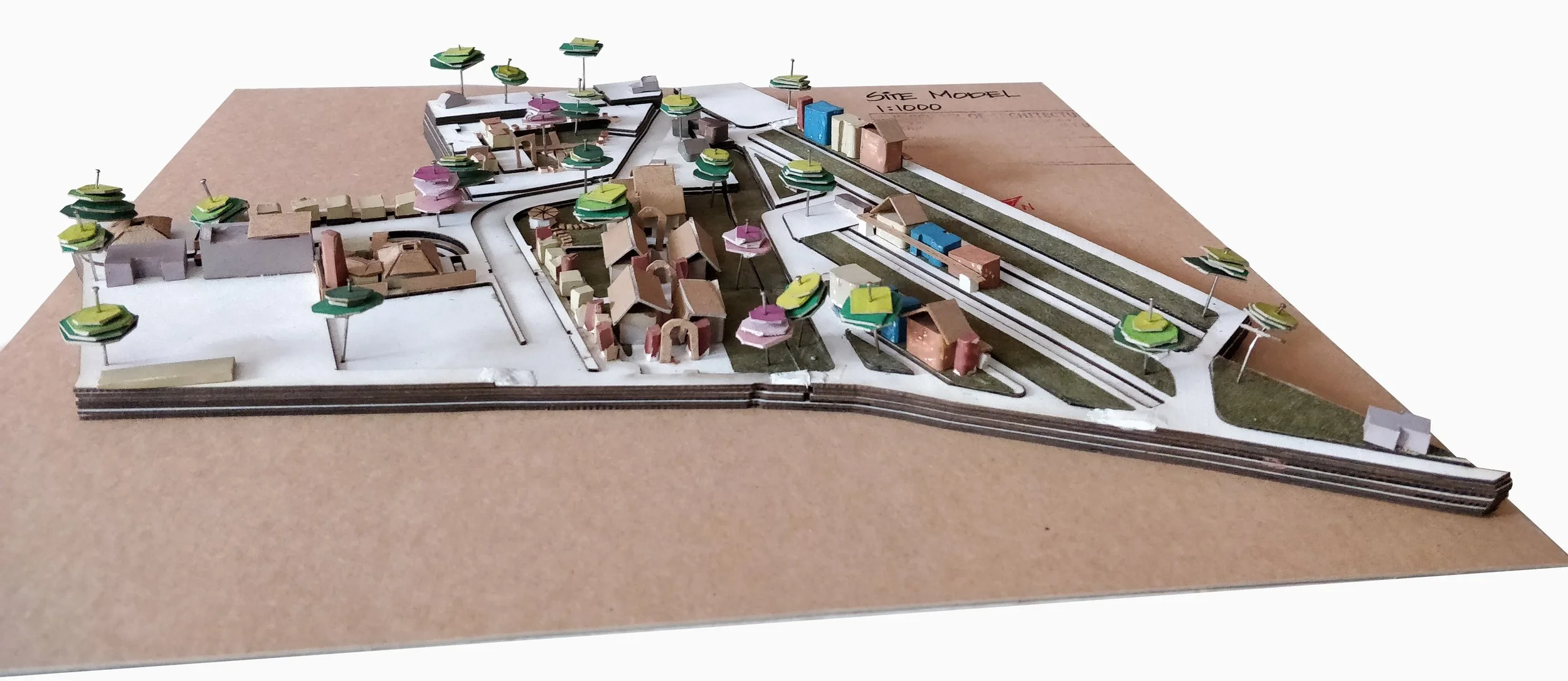
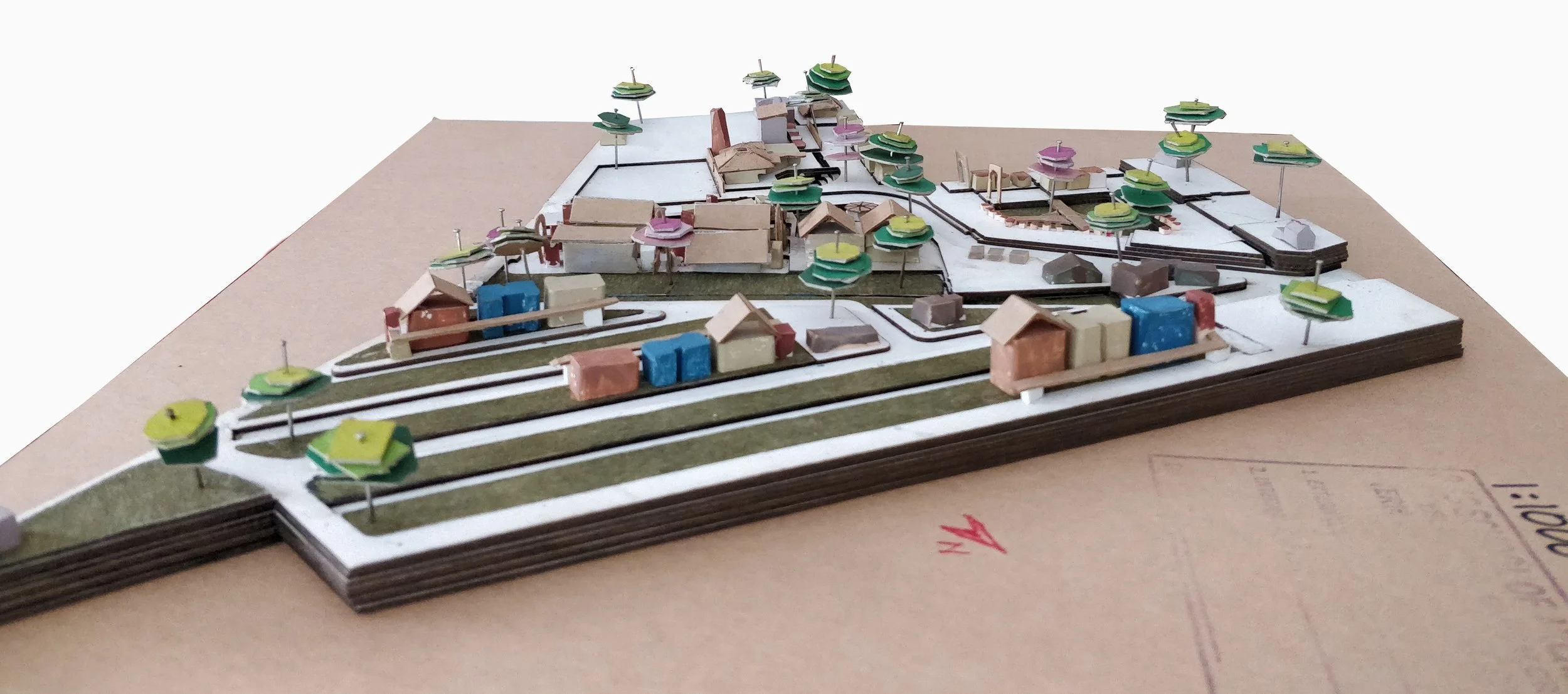
Madake : Reimagining Bengaluru’s Pottery Town
Final year thesis
Urban masterplan integrating housing, public spaces and craft-based livelihoods
Jan - July 2018
Nominated at the zonal level for the Council of Architecture National Awards for Excellence in Architectural Thesis, 2018
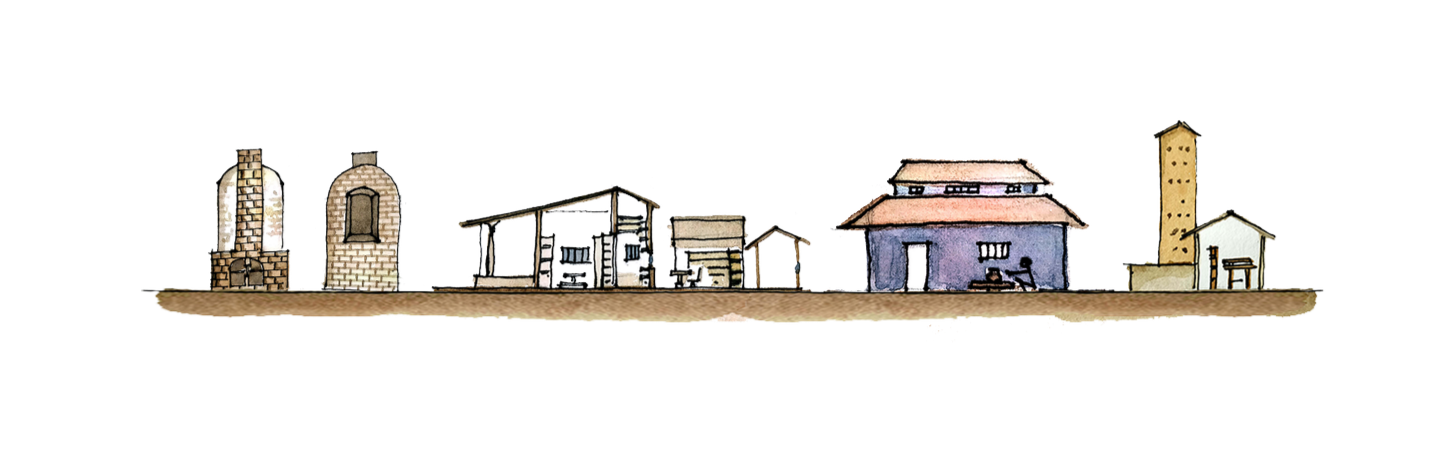
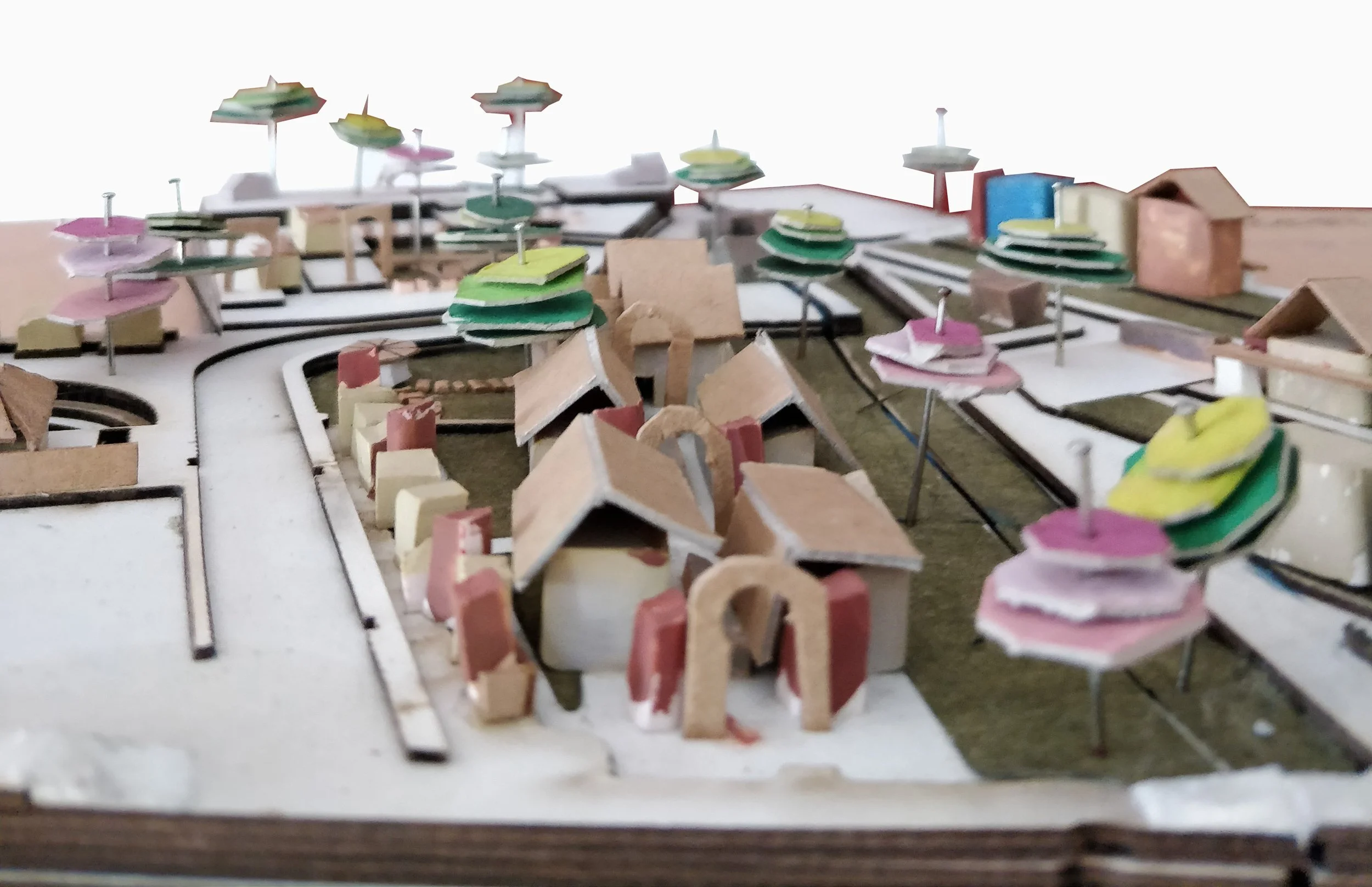
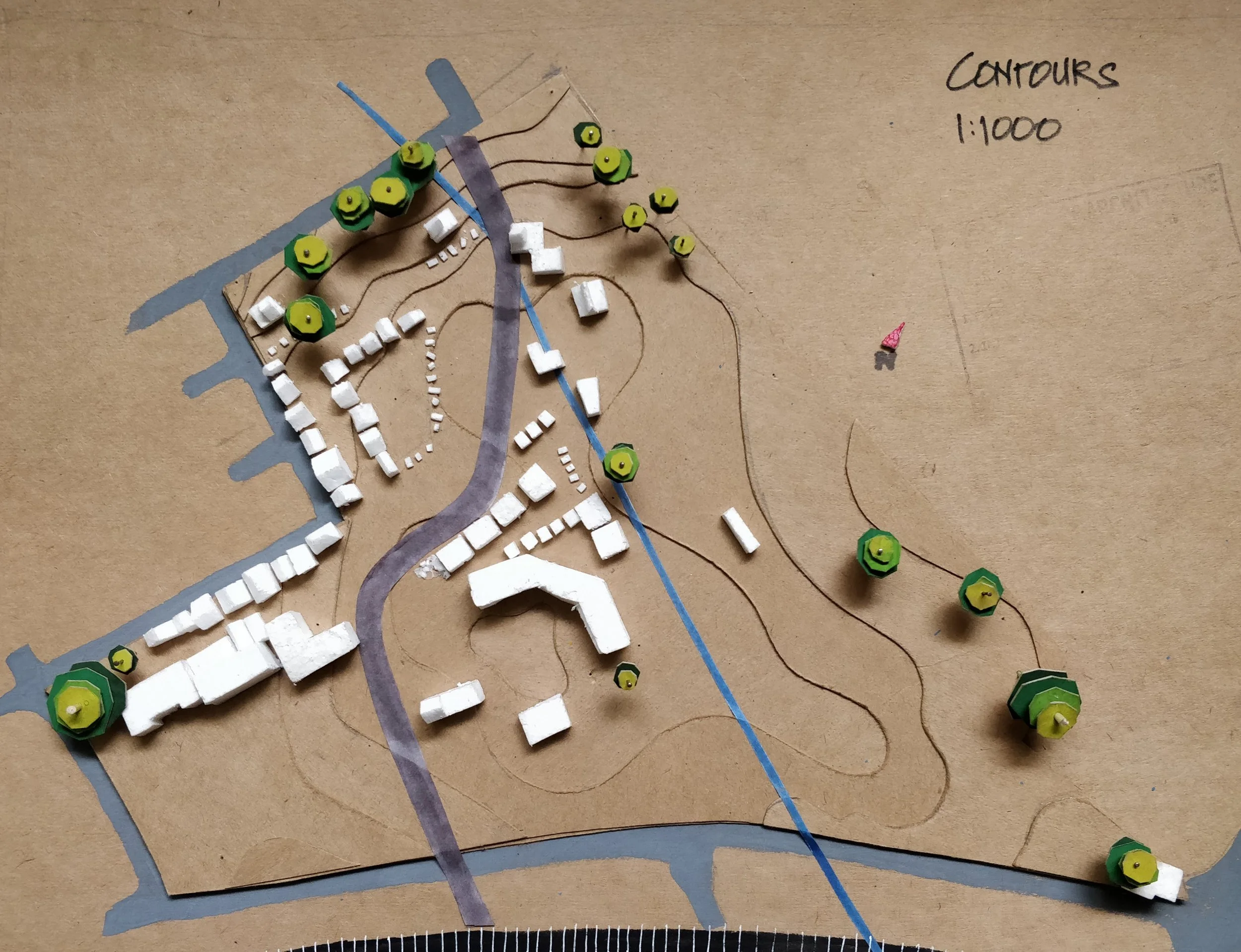
Pottery Town, established in the early 1900s to serve the Mysore royal family’s need for terracotta ware, remains one of Bengaluru’s few surviving craft-based neighbourhoods. Over the years, its once cohesive community of potters has dispersed, and the settlement now faces issues of congestion, poor sanitation and deteriorating living and working conditions. This design thesis reimagines Pottery Town as a revived urban craft precinct, one that strengthens livelihoods, improves housing and infrastructure, and preserves its cultural vibrancy. Drawing from site analysis, demographic surveys, existing spatial patterns and case studies, the design proposes sensitive reorganisation rather than replacement or displacement, balancing new housing, markets and shared studios, while maintaining the neighbourhood’s organic fabric & sense of place.
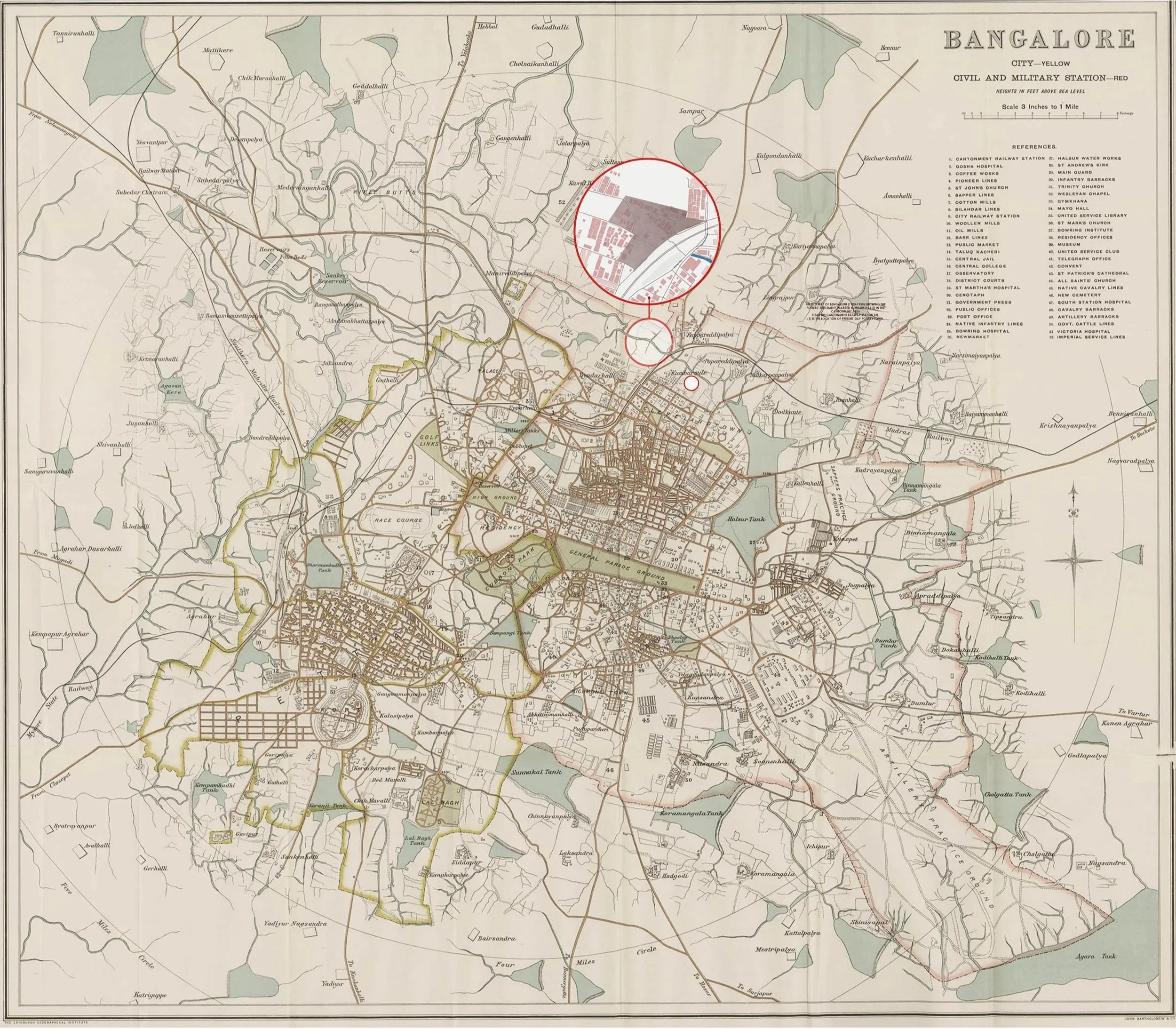
Old map of Bangalore showing the location of Pottery Town (Source: British Library)
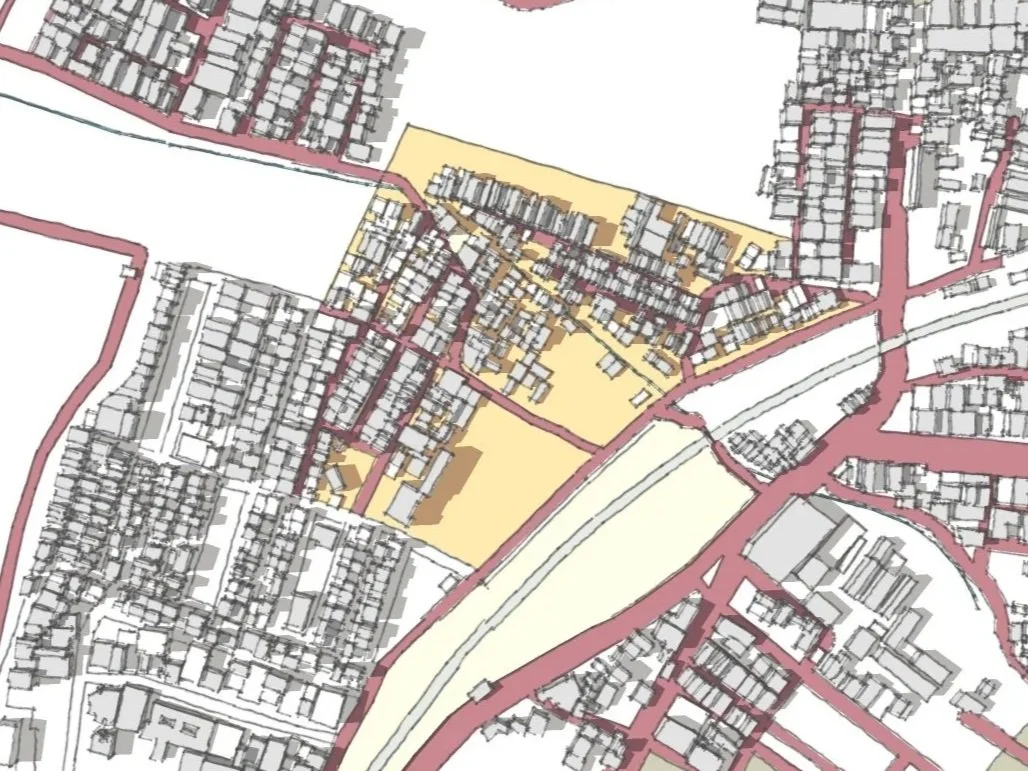
Present-day Pottery Town
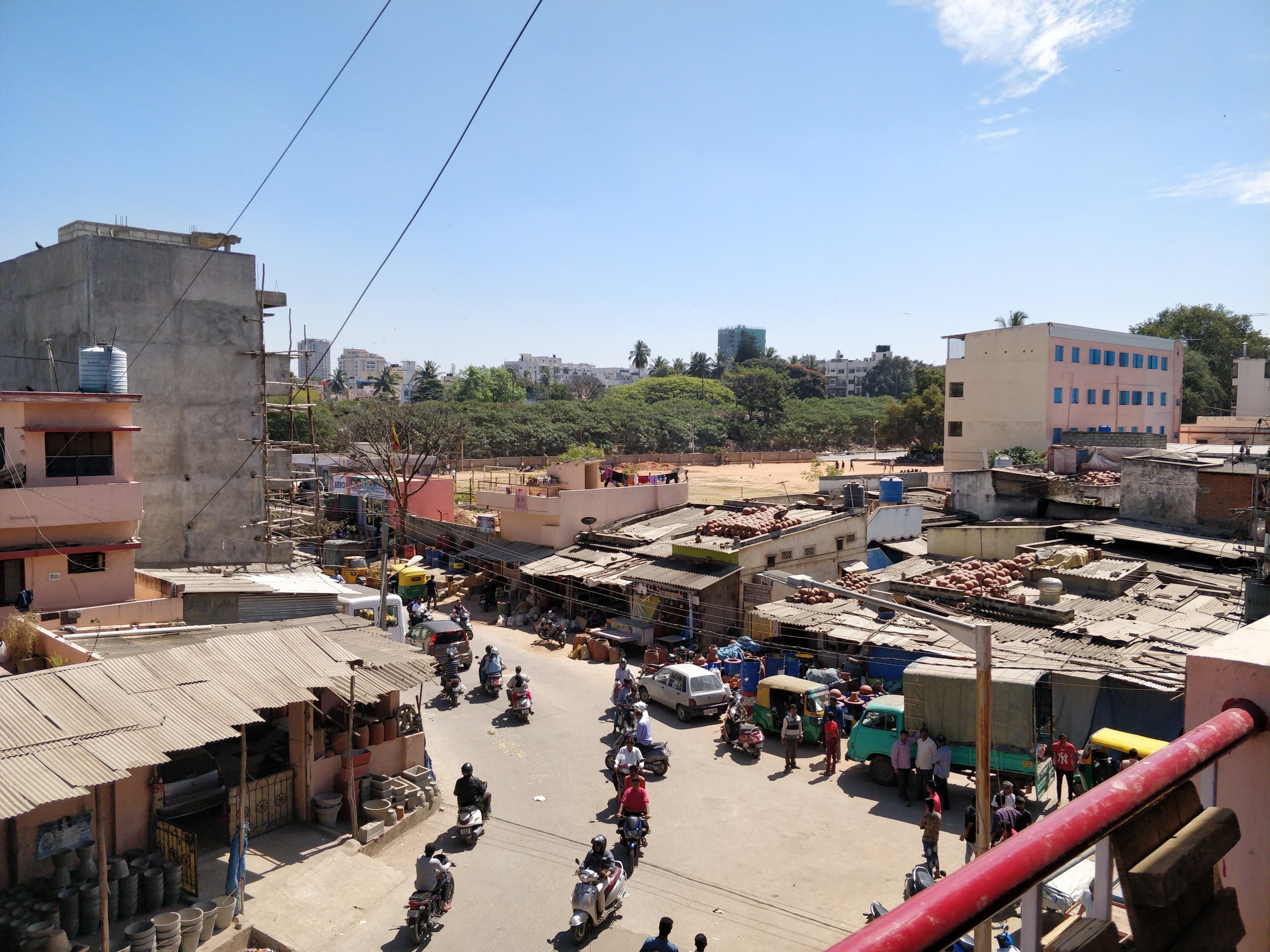
Pottery Lane
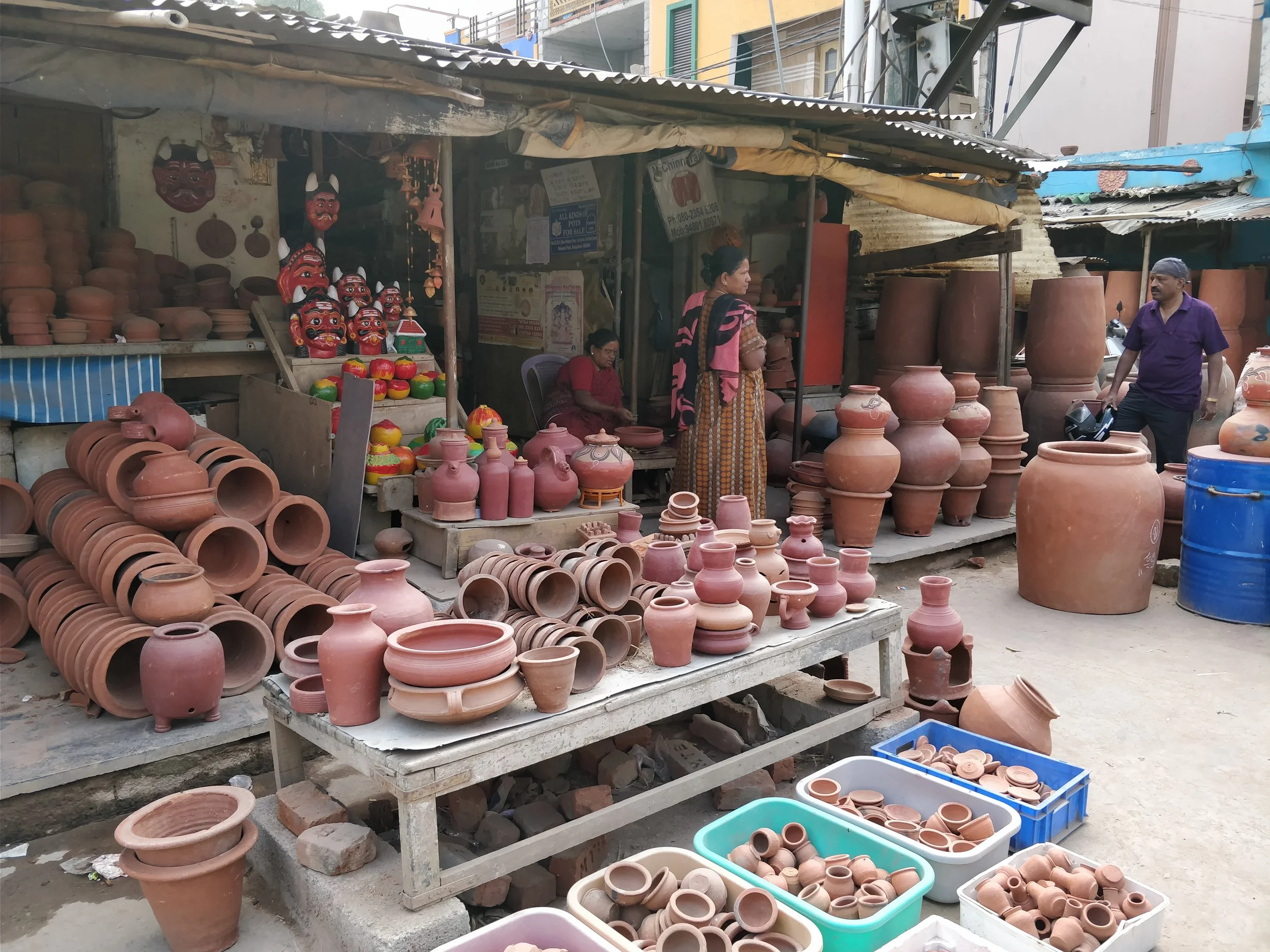
Sale areas in the front, studios in the back
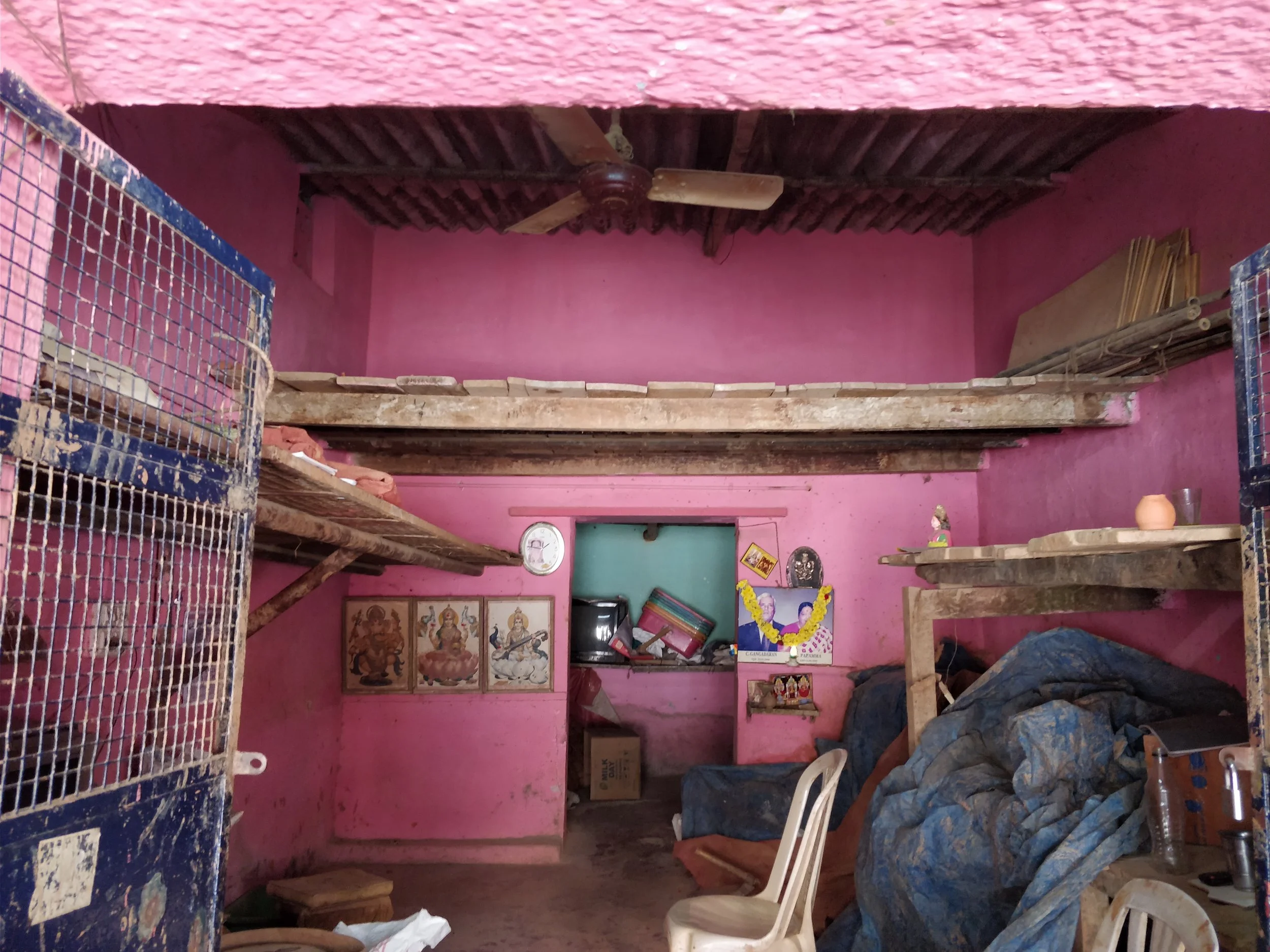
A typical workshop in Pottery Town
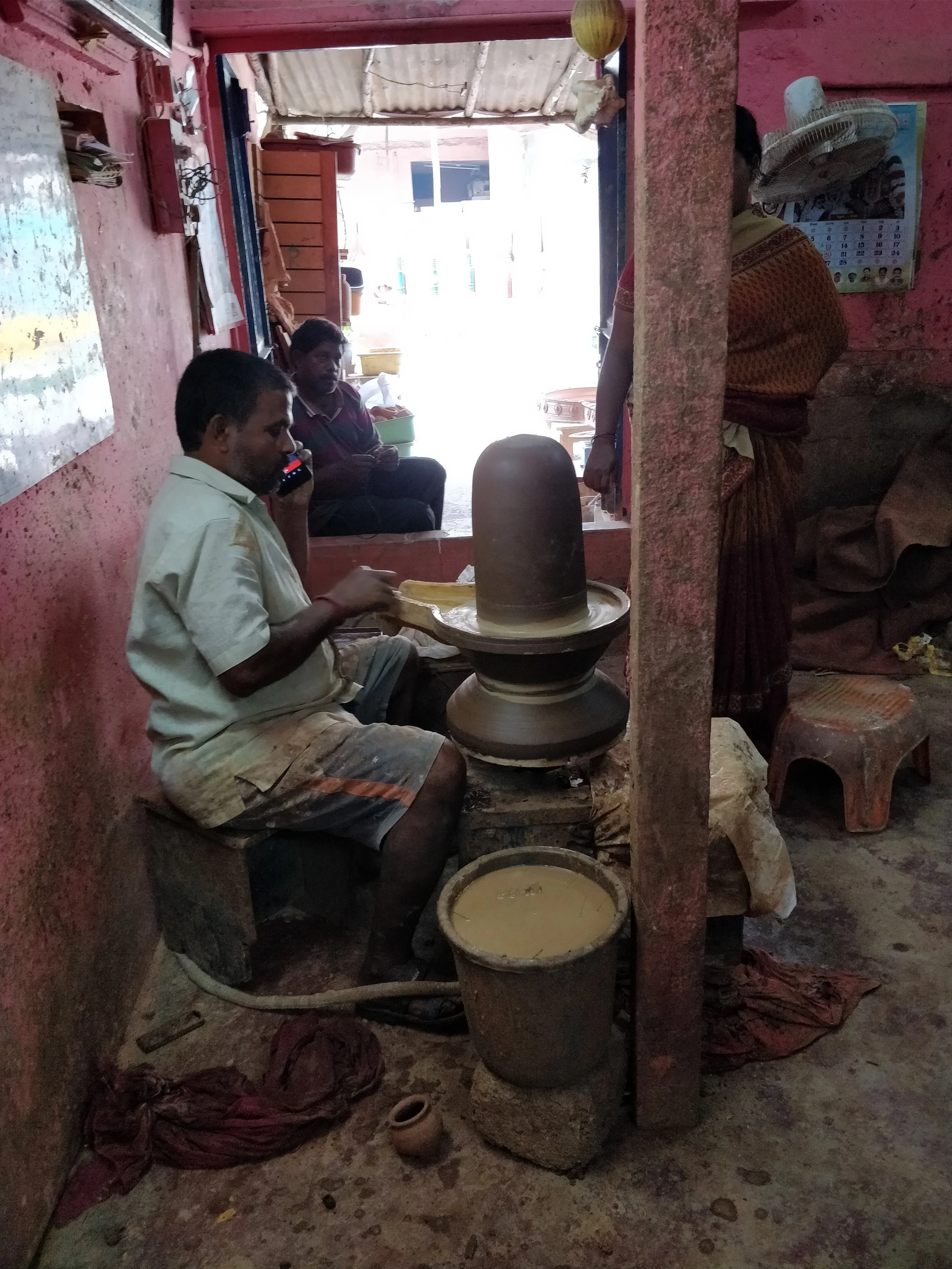
Potter Muniraju
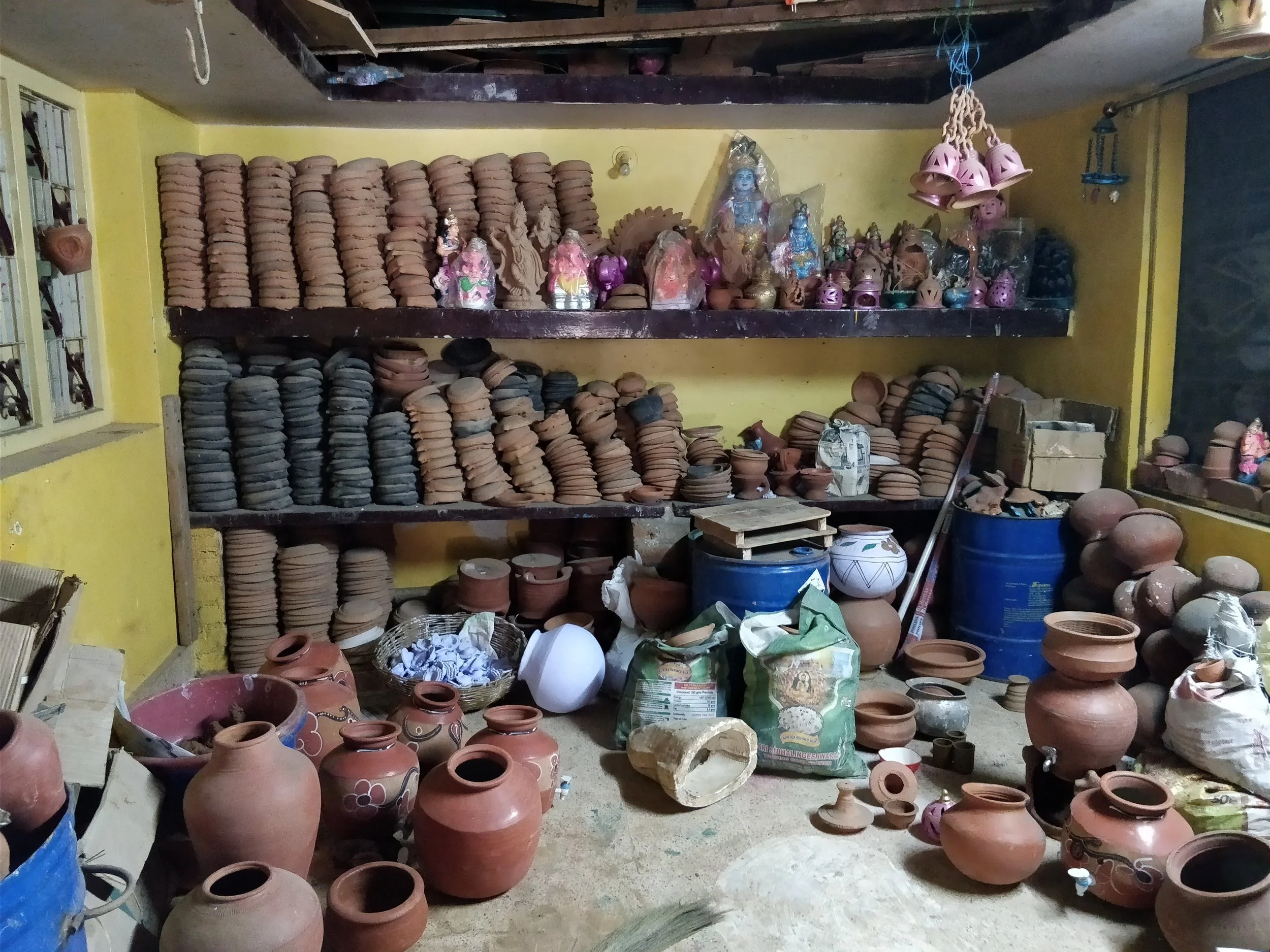
Storage godown
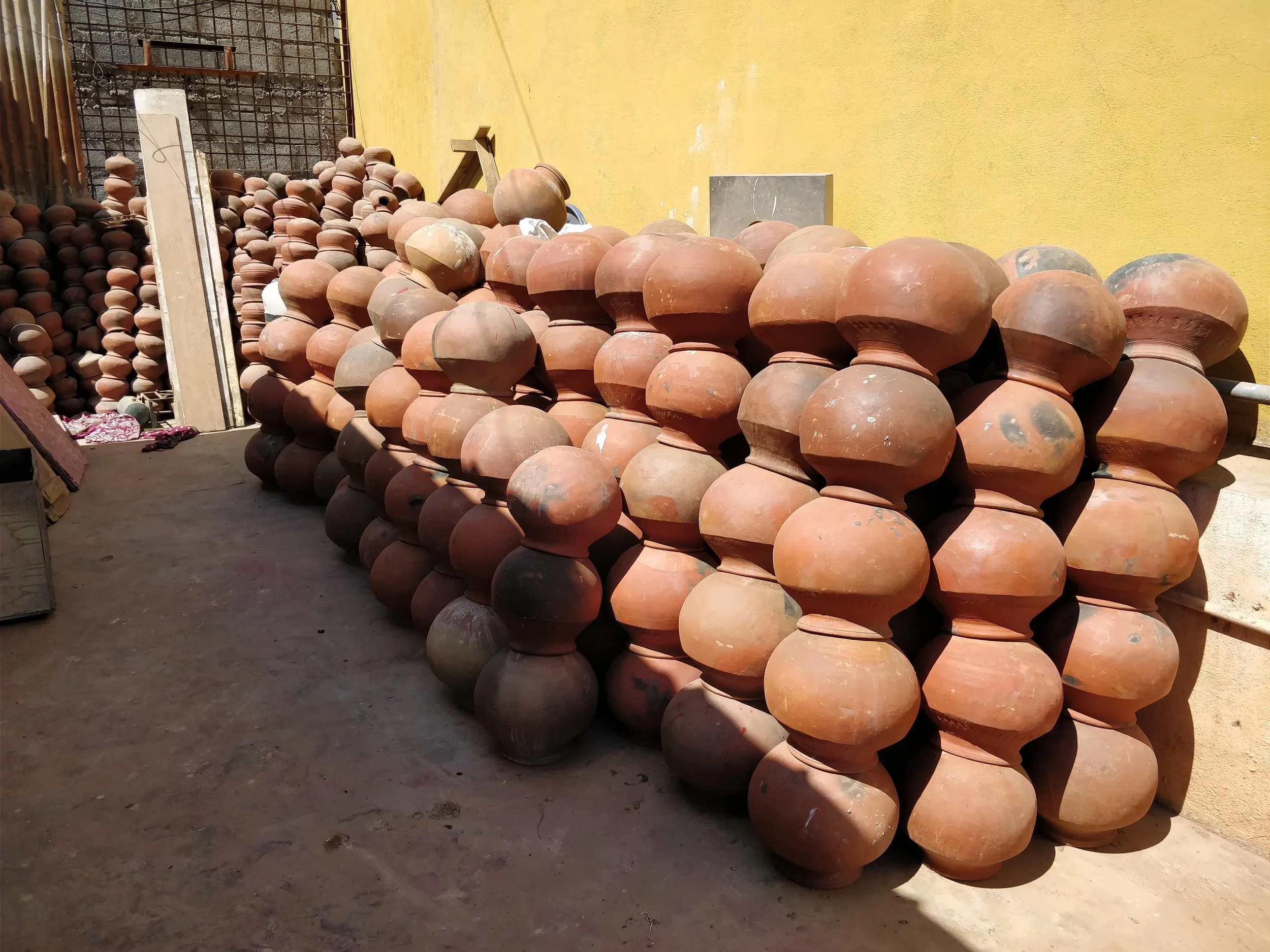
Baked pots
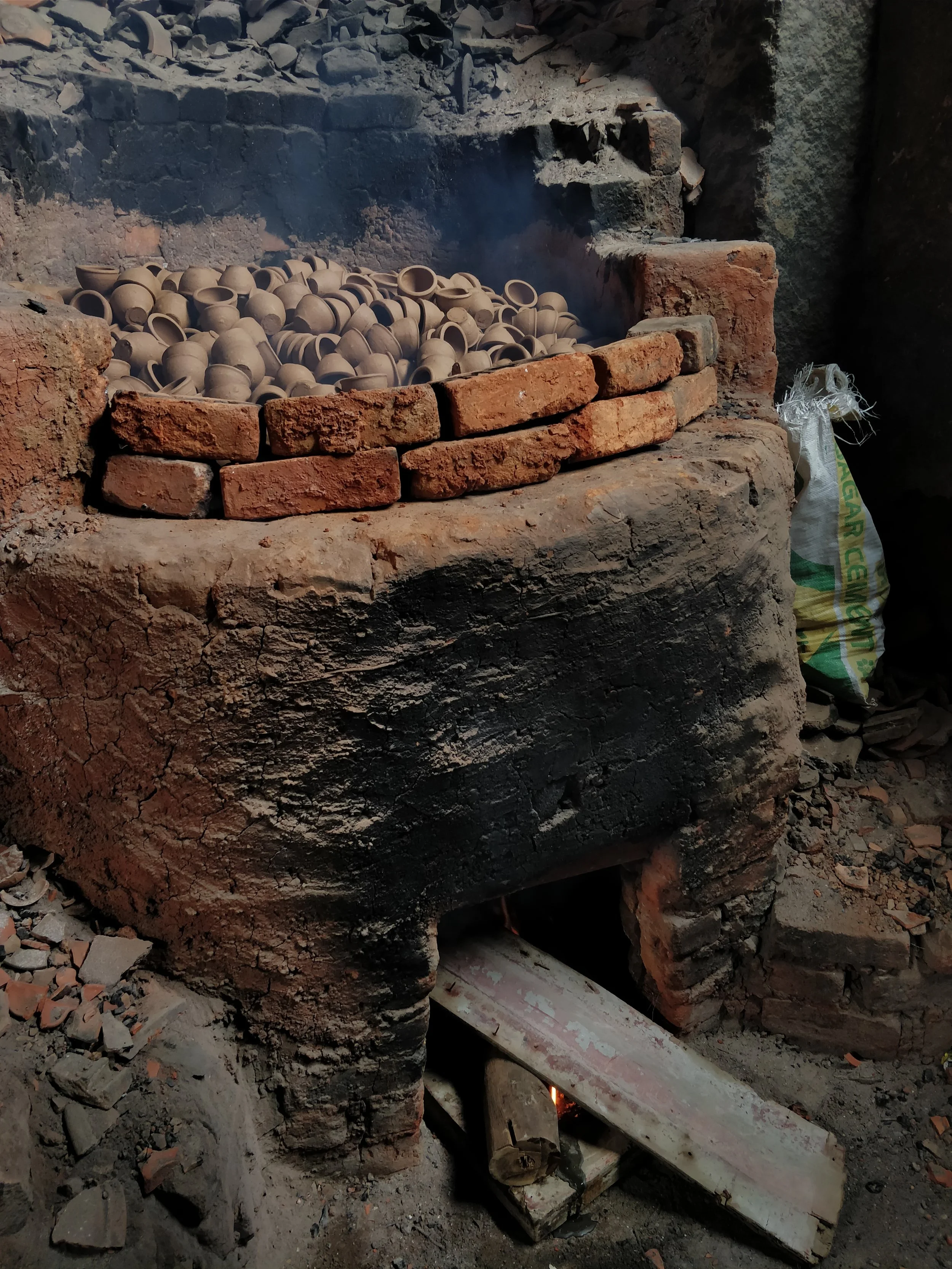
Kiln
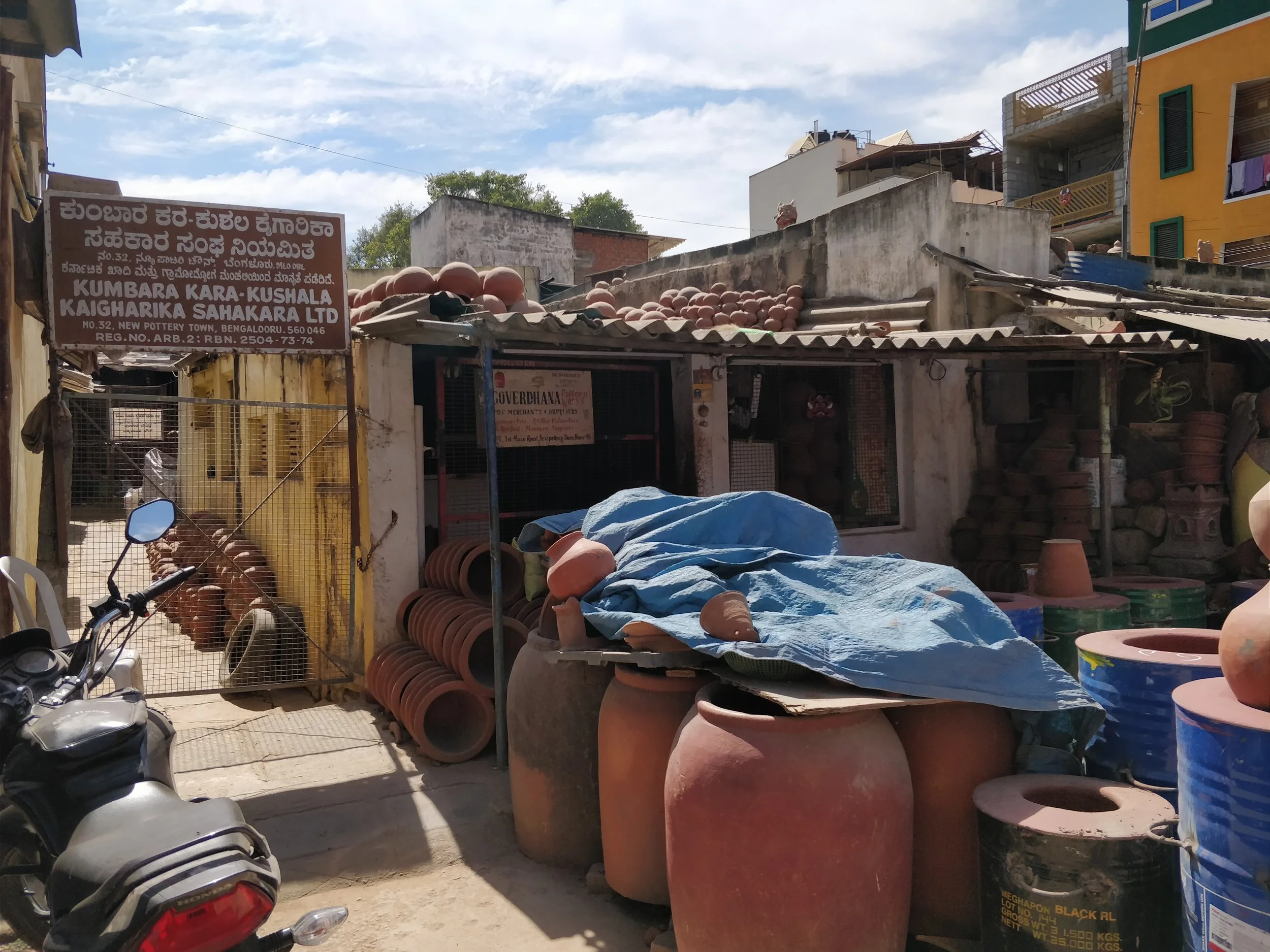
Areas for sale + storage
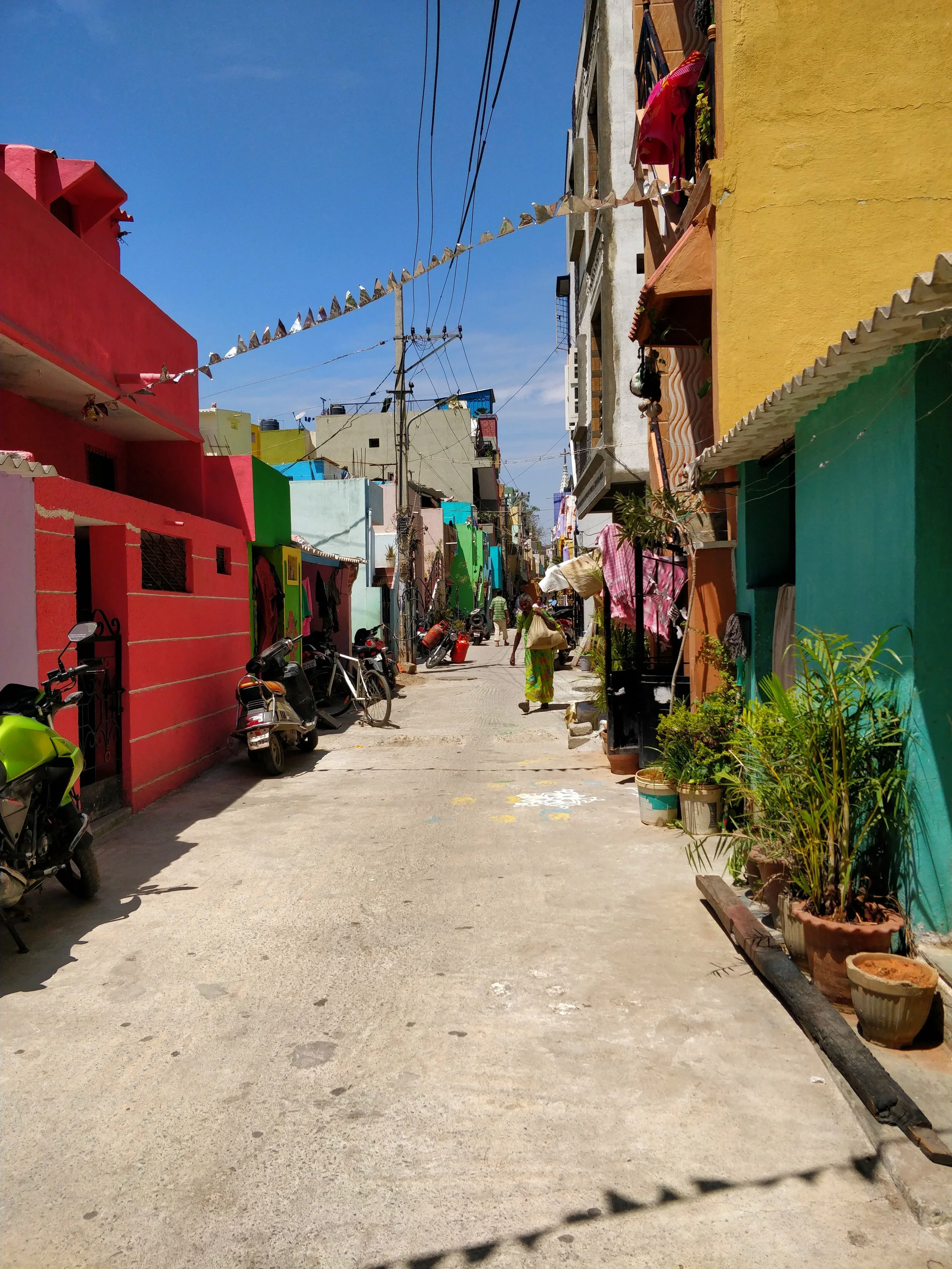
Residential area - colourful facades
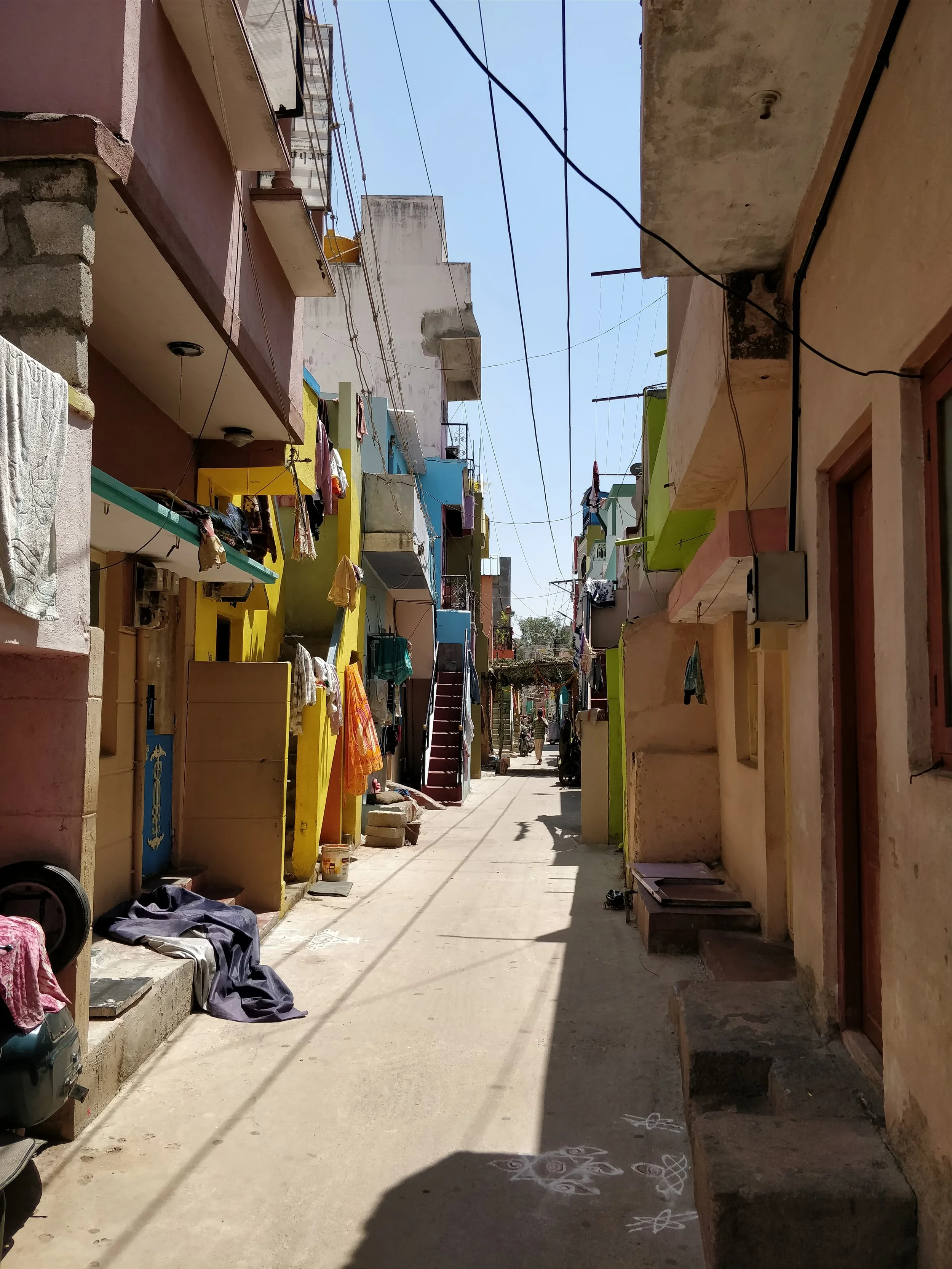
Residential area - narrow streets
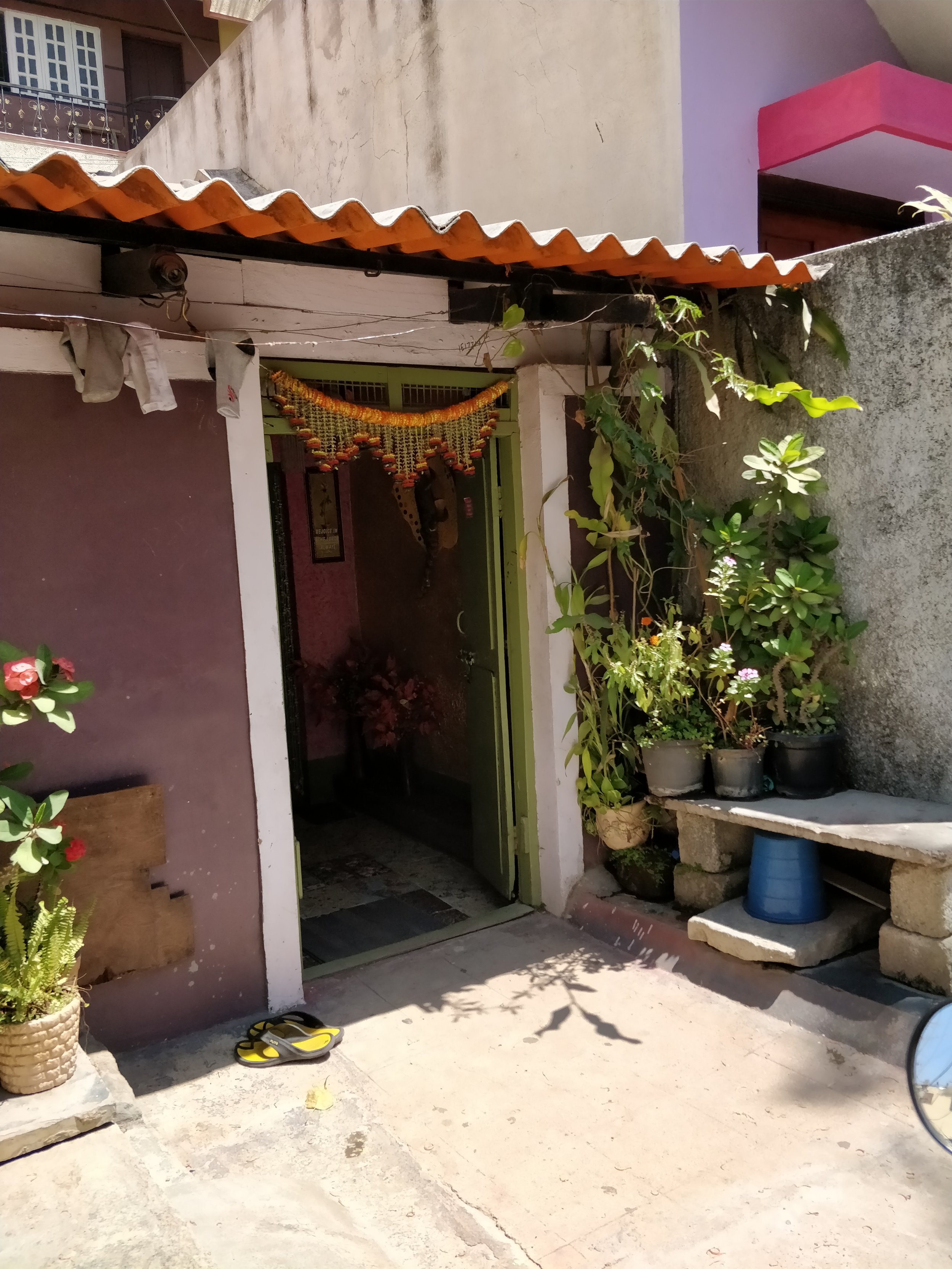
Home with informal outdoor interaction space
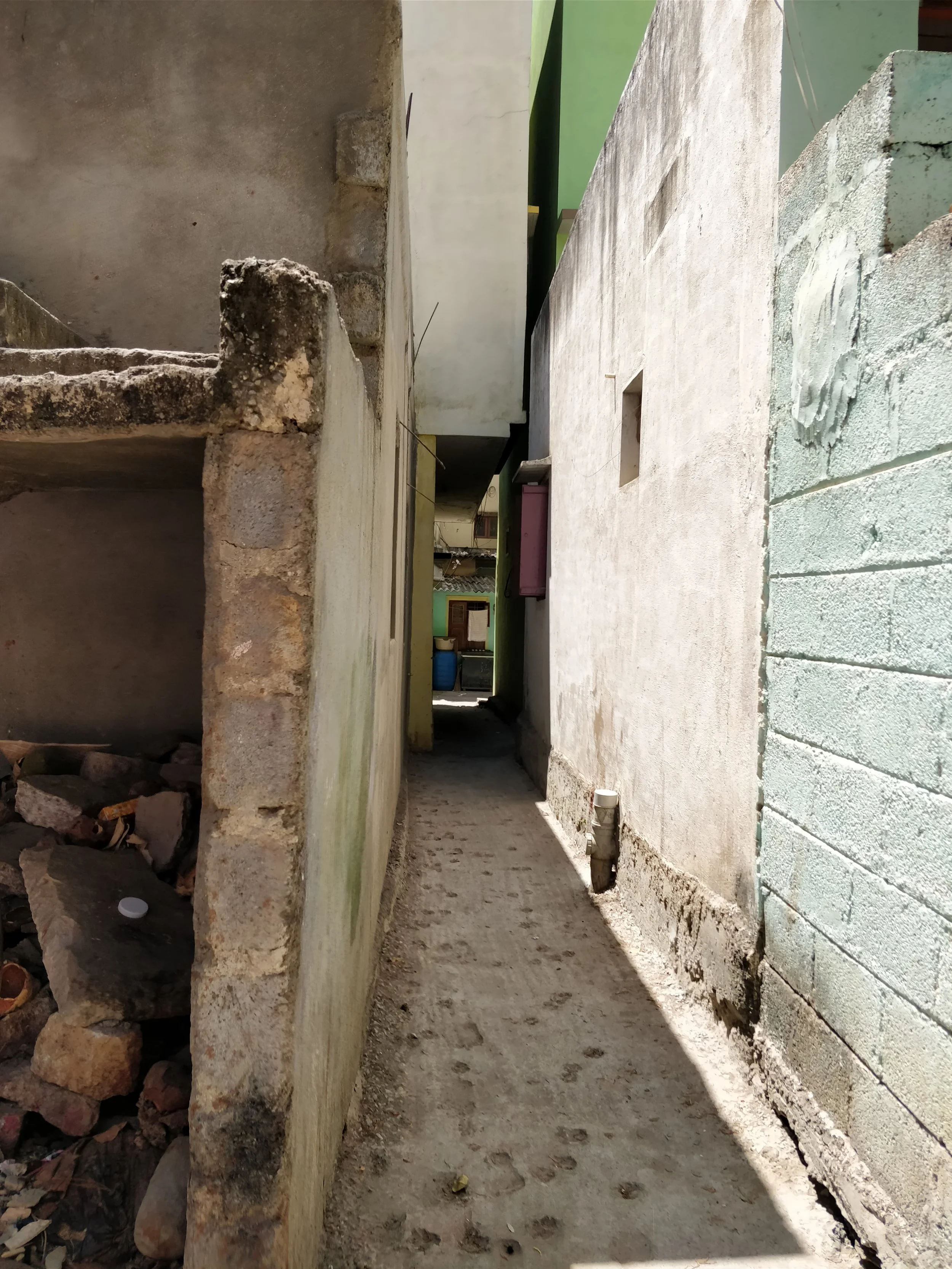
Residential area - inter-street connections
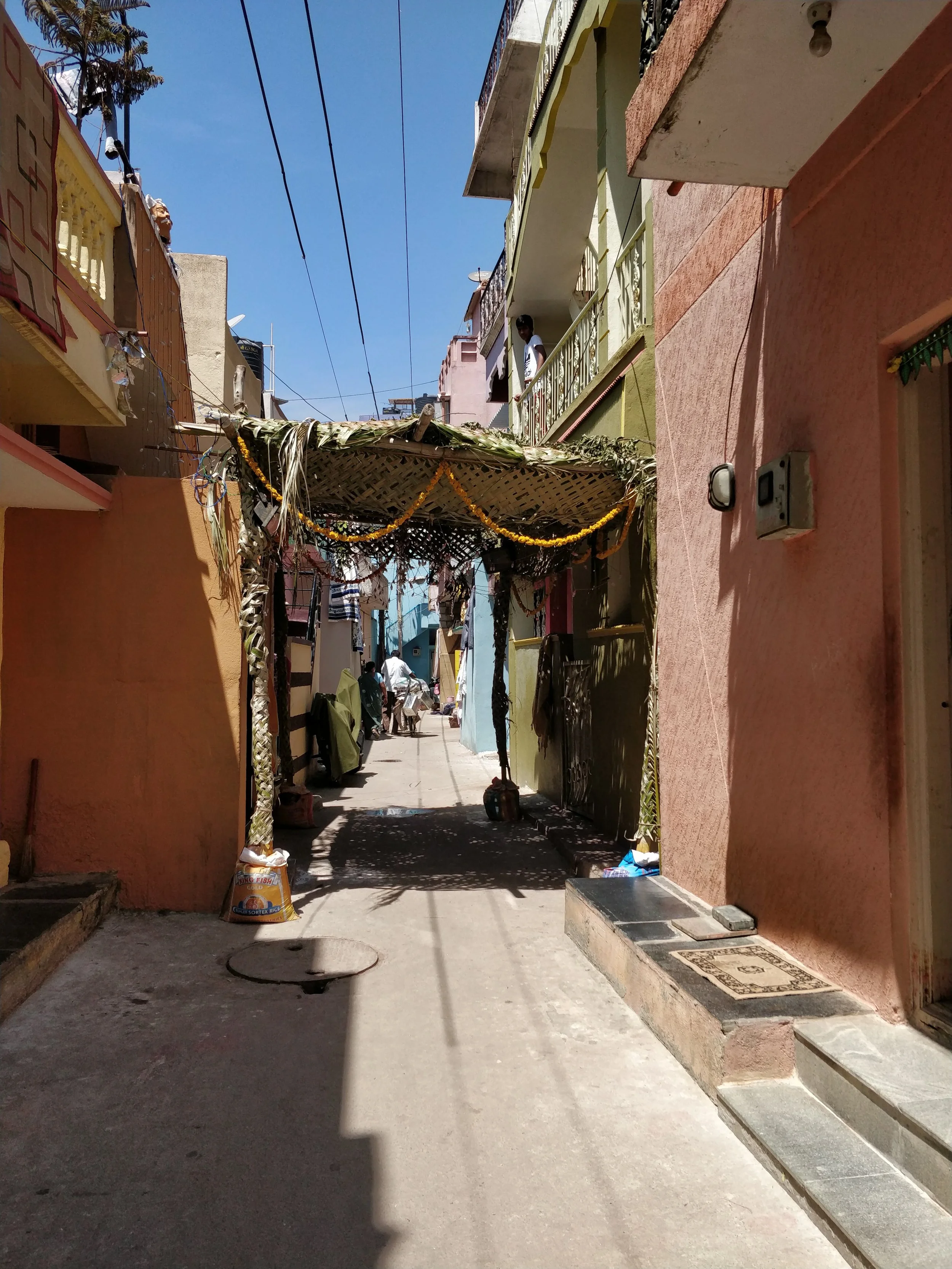
Residential area - street as a celebration space
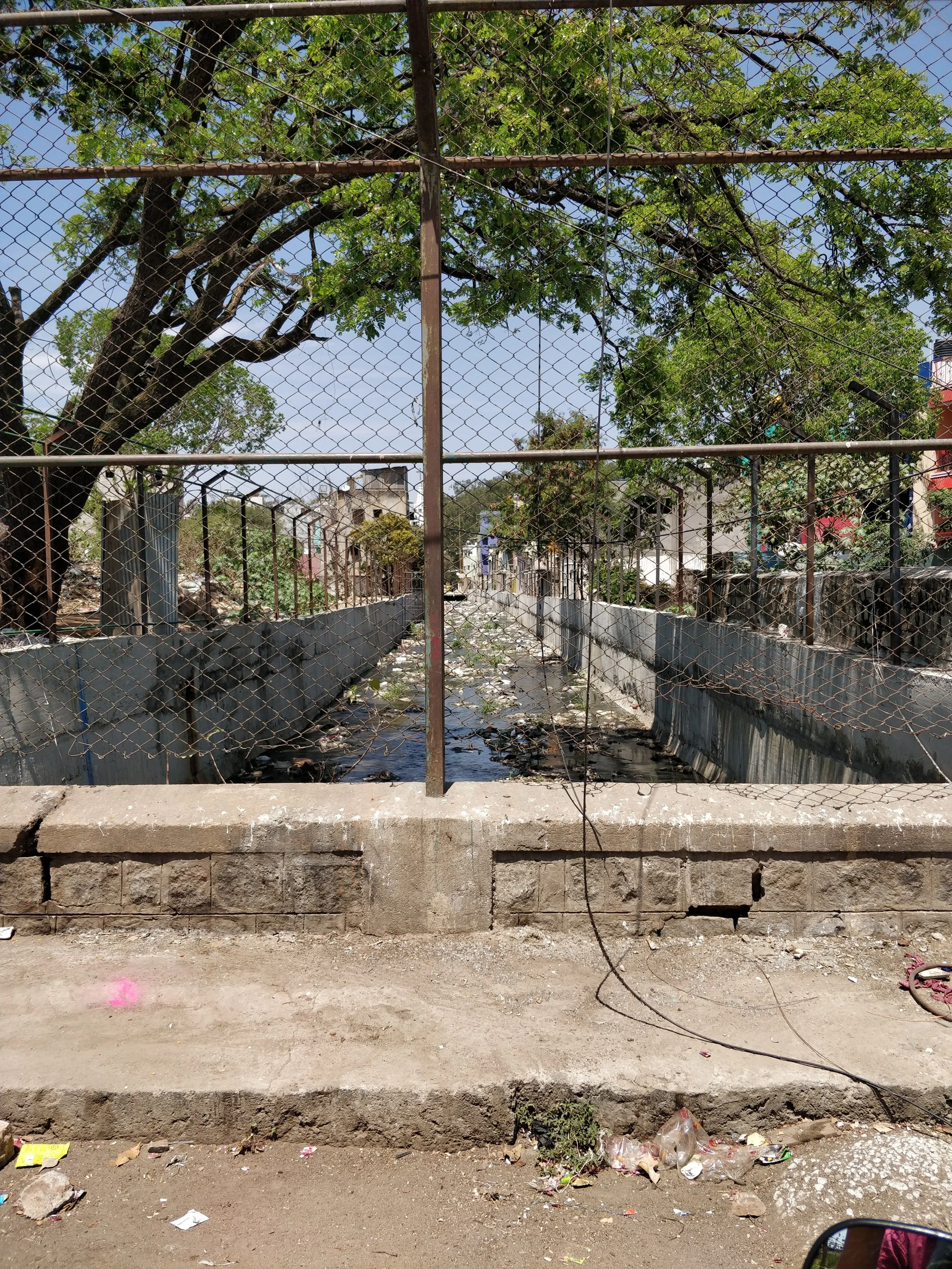
Uncovered drain
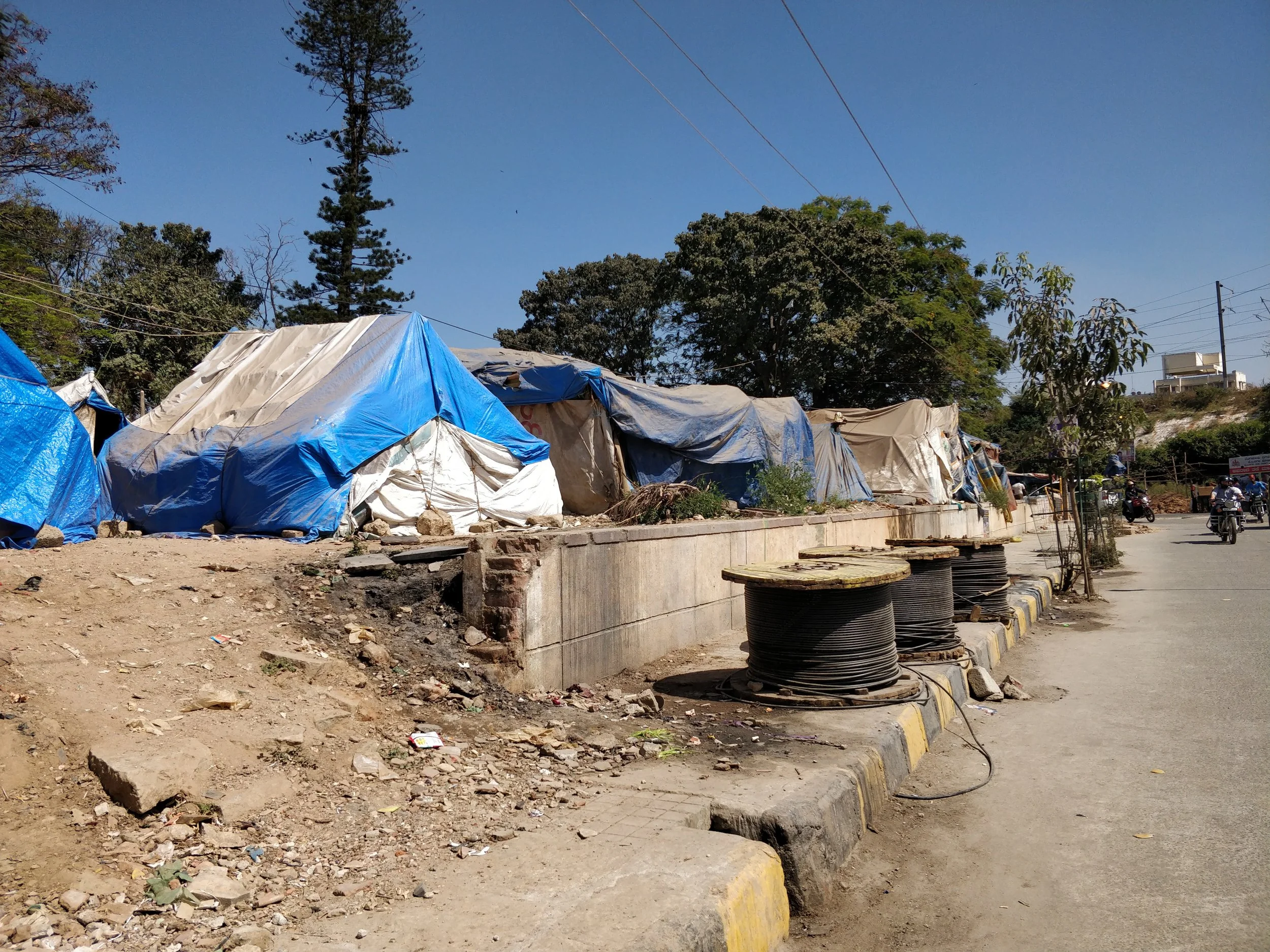
Informal housing and lack of proper pedestrian pathways
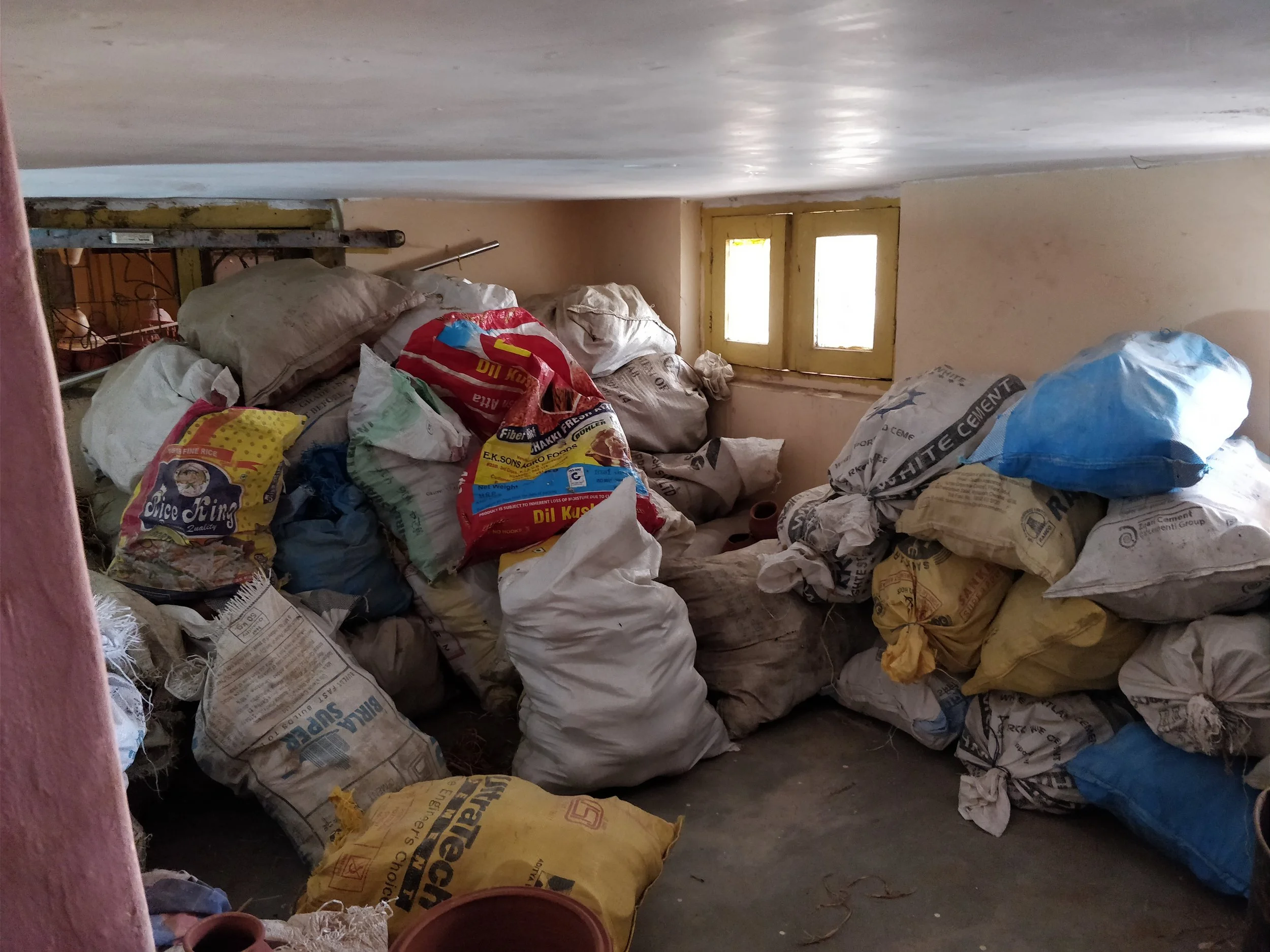
Inadequate storage spaces
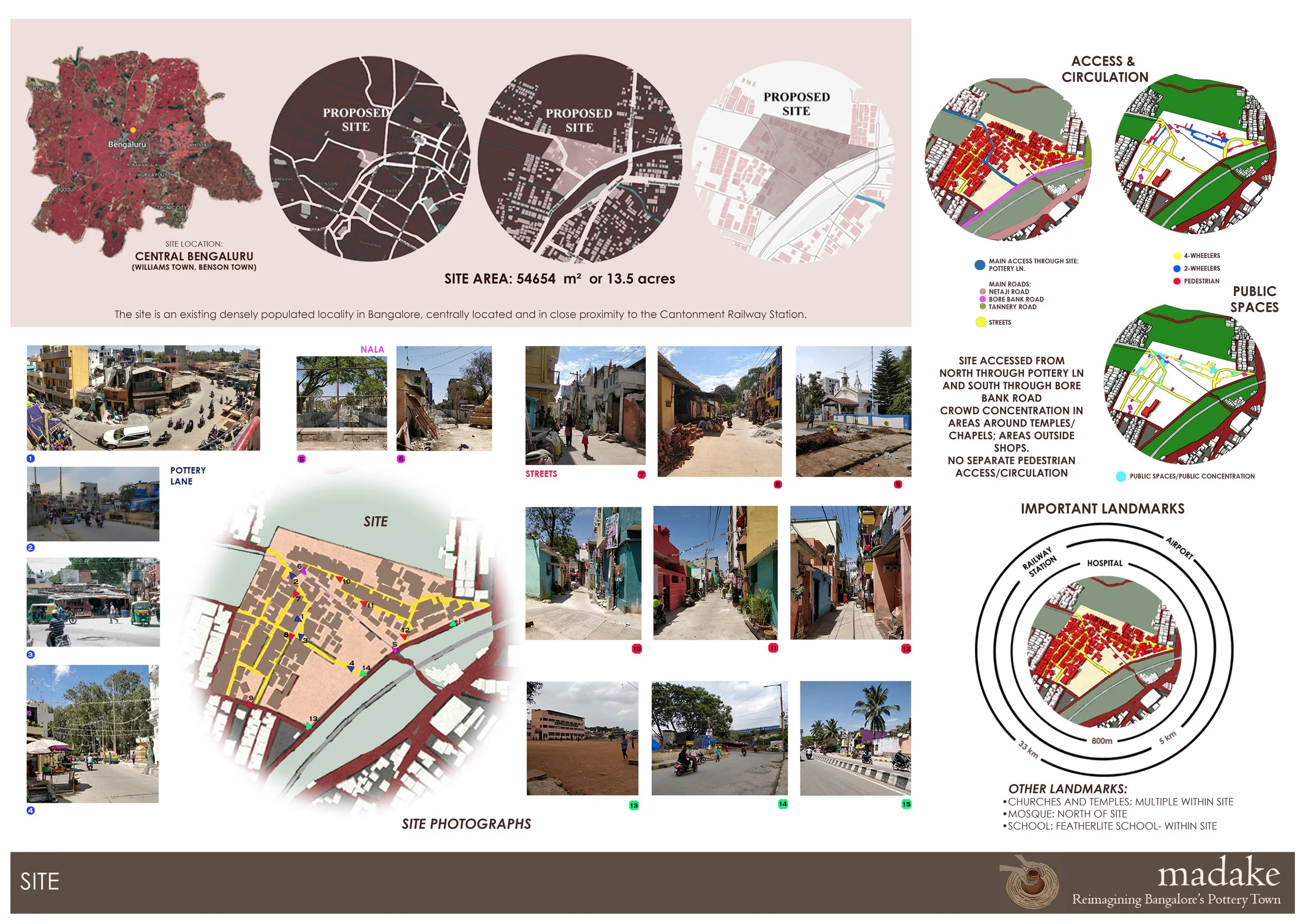
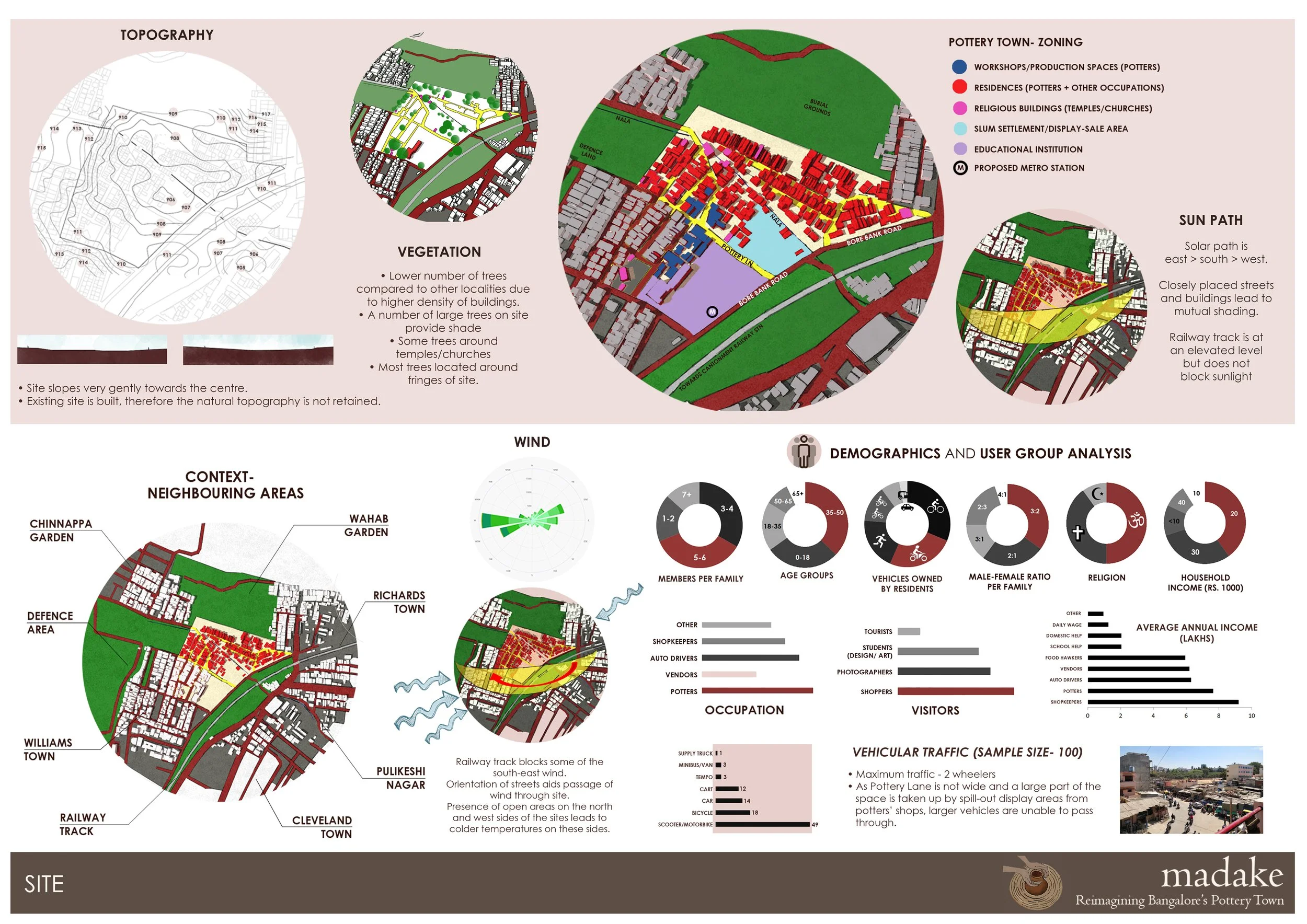
Site and user analyses
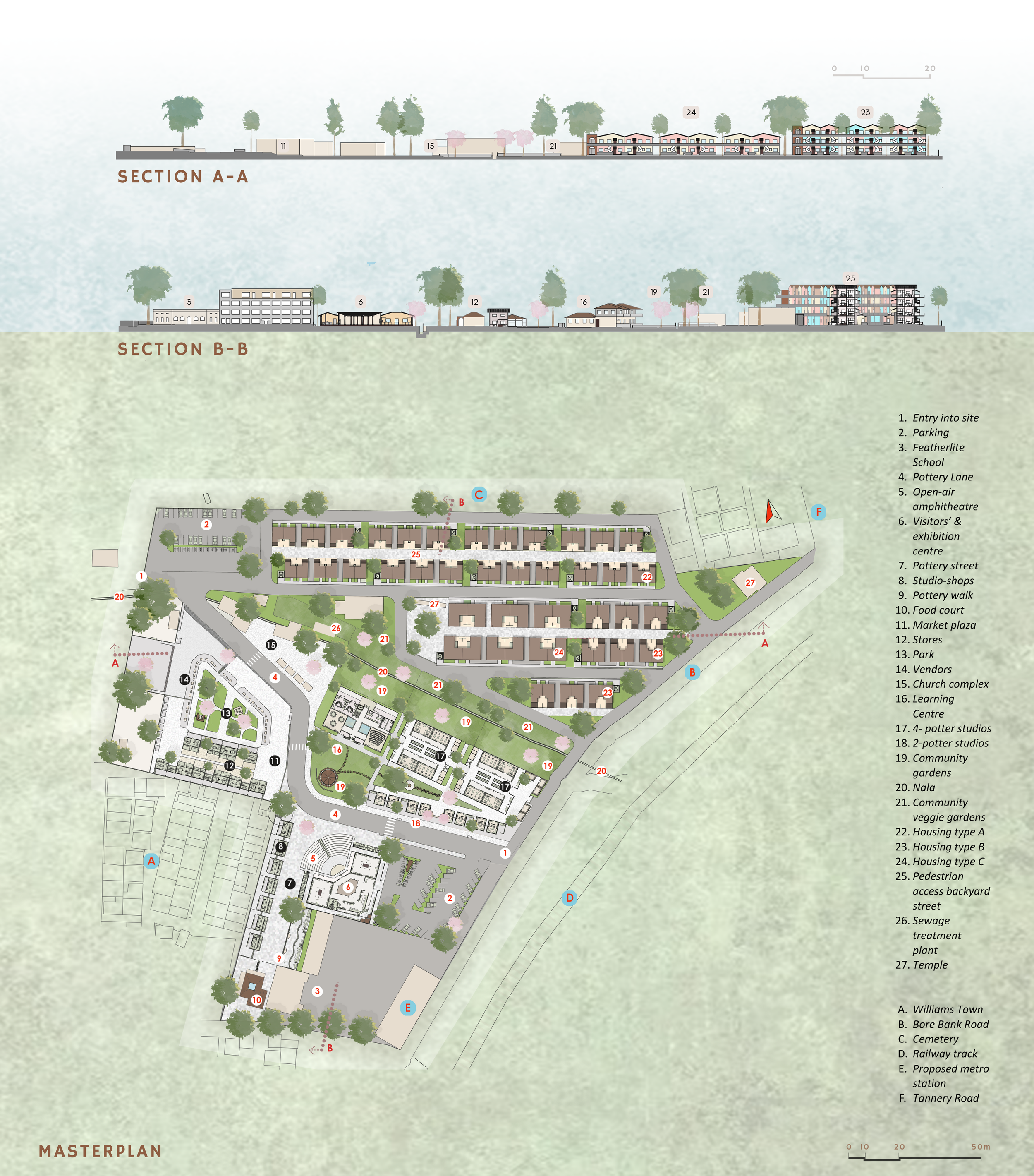
Masterplan
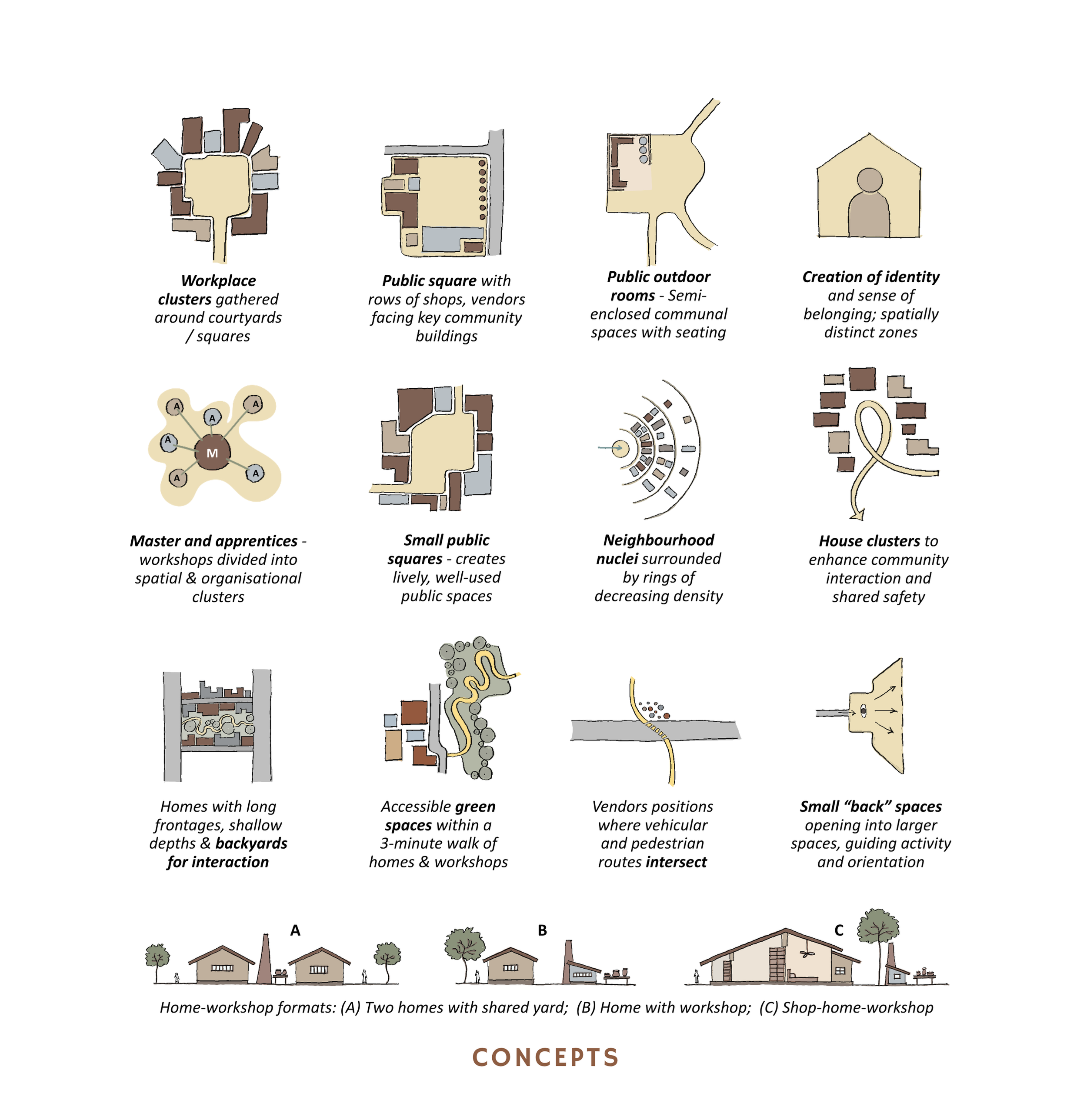
Design concepts
Built spaces - commons
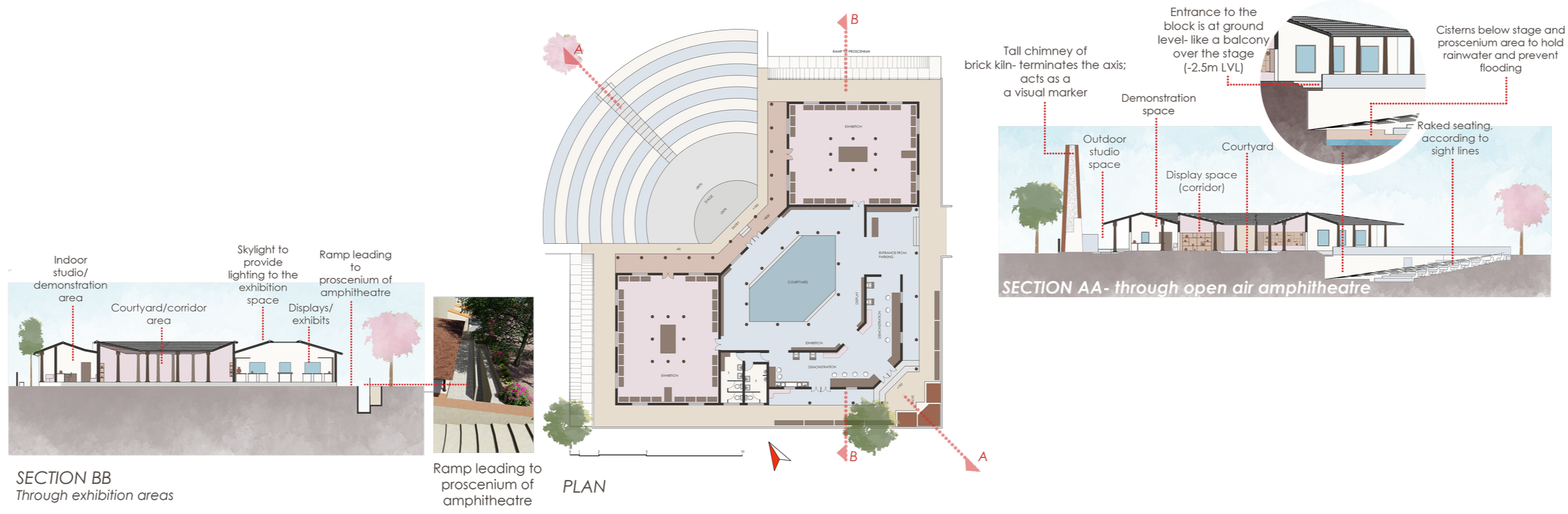
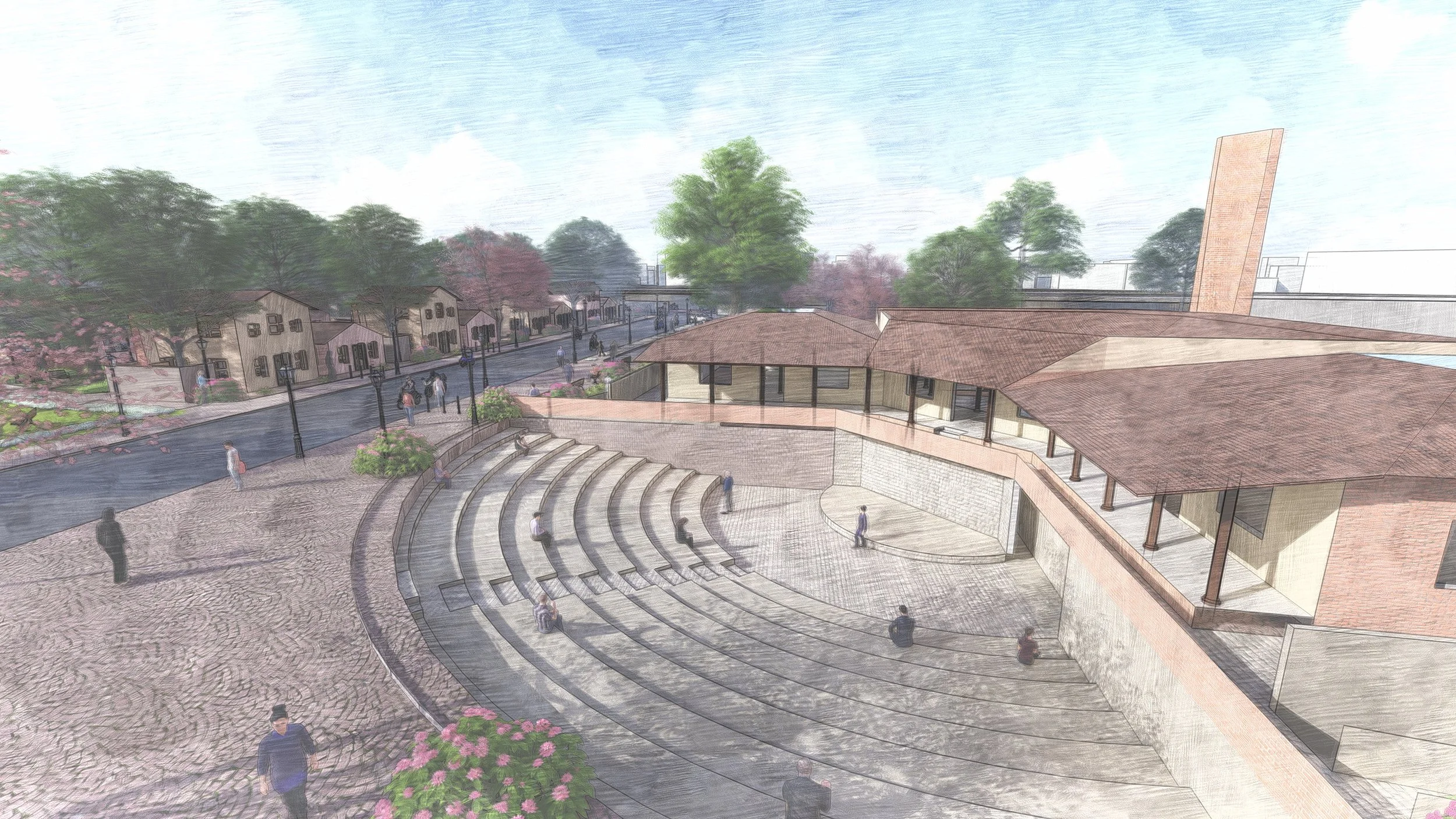
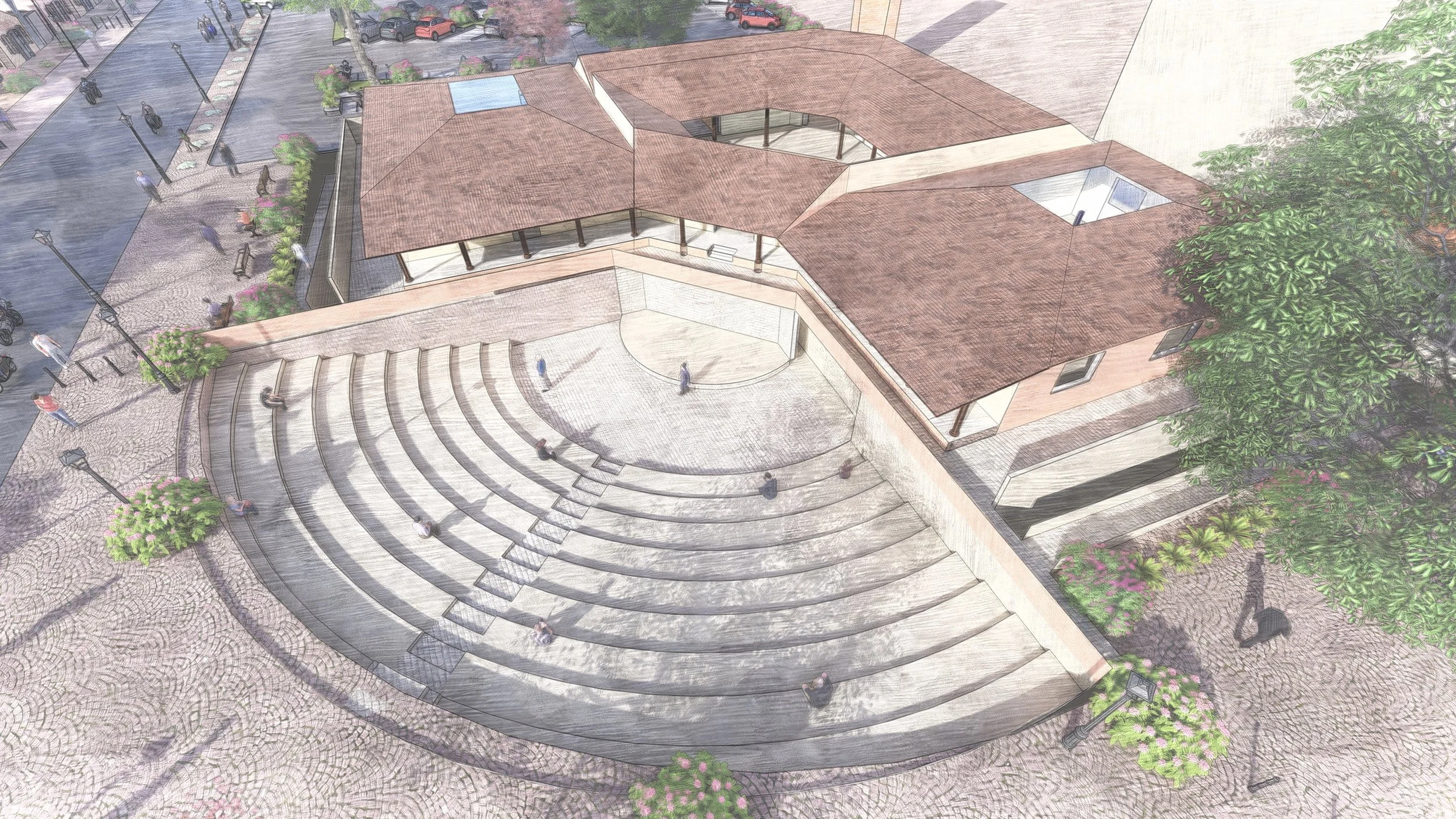
The entrance to the exhibition/visitors’ centre is through an open-air amphitheatre that begins at ground level and gradually steps down such that the stage is directly beneath the front façade of the block (like a balcony). Entry into the block is along the sides of the amphitheatre. Designed based on a visual axis, derived from the sequential door feature found in traditional south Indian homes, as well as the courtyard concept.
VISITORS’ CENTRE AND EXHIBITION SPACE
LEARNING CENTRE

Includes classrooms, studios, glass and wood workshop and seminar/activity halls, for formal training and lectures/demonstrations, by potters from various parts of the country for the potter community of Pottery Town, as well as students. It has been planned using the courtyard concept, as well as the verandah concept, with a thinnai or seating platform in the verandah.
POTTERY WALK
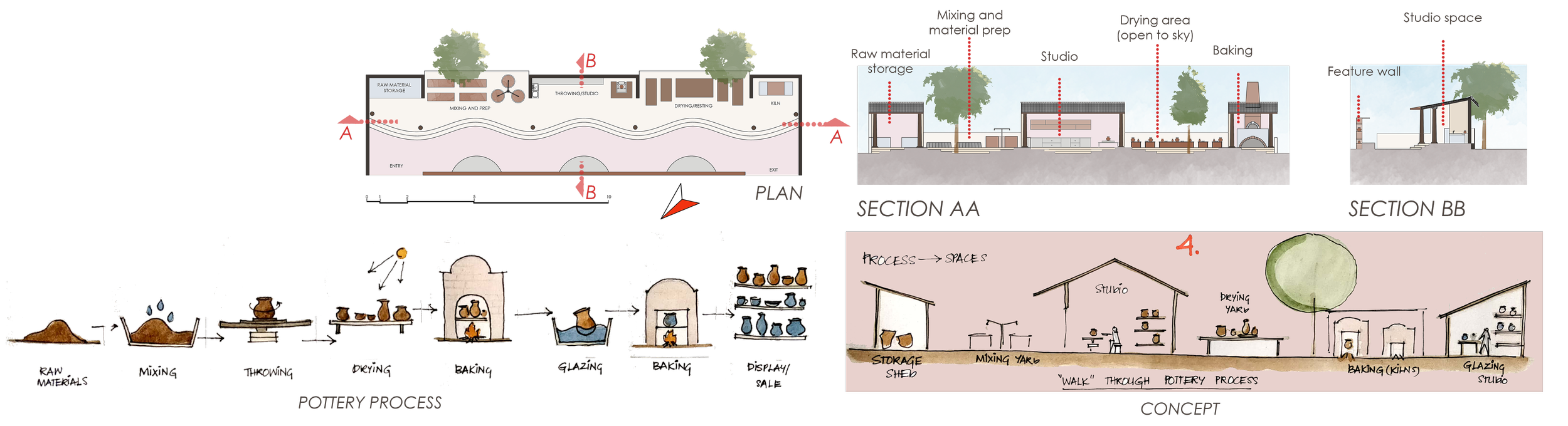
The process of pottery is represented using spaces, in the Pottery Walk. It includes space for live demonstrations, storage, drying, baking, etc. A feature wall separates it from Pottery Street. This wall has cutouts for displaying pottery work.
STUDIO-SHOPS
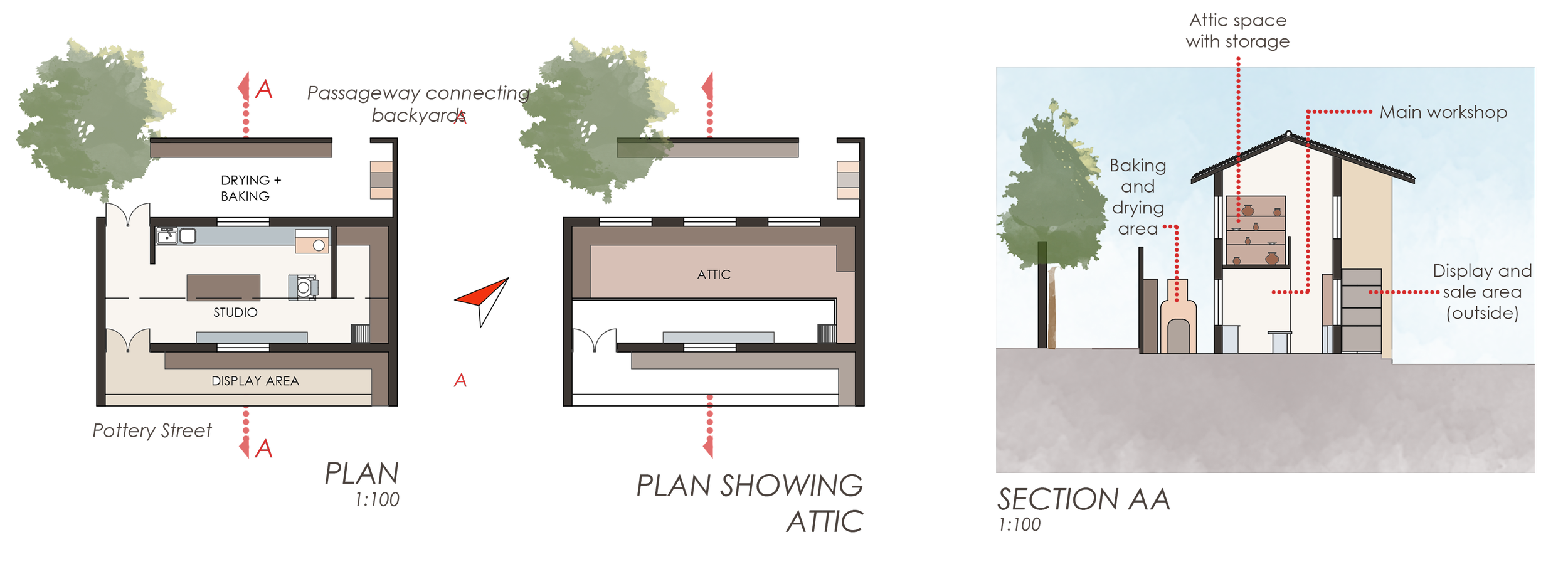
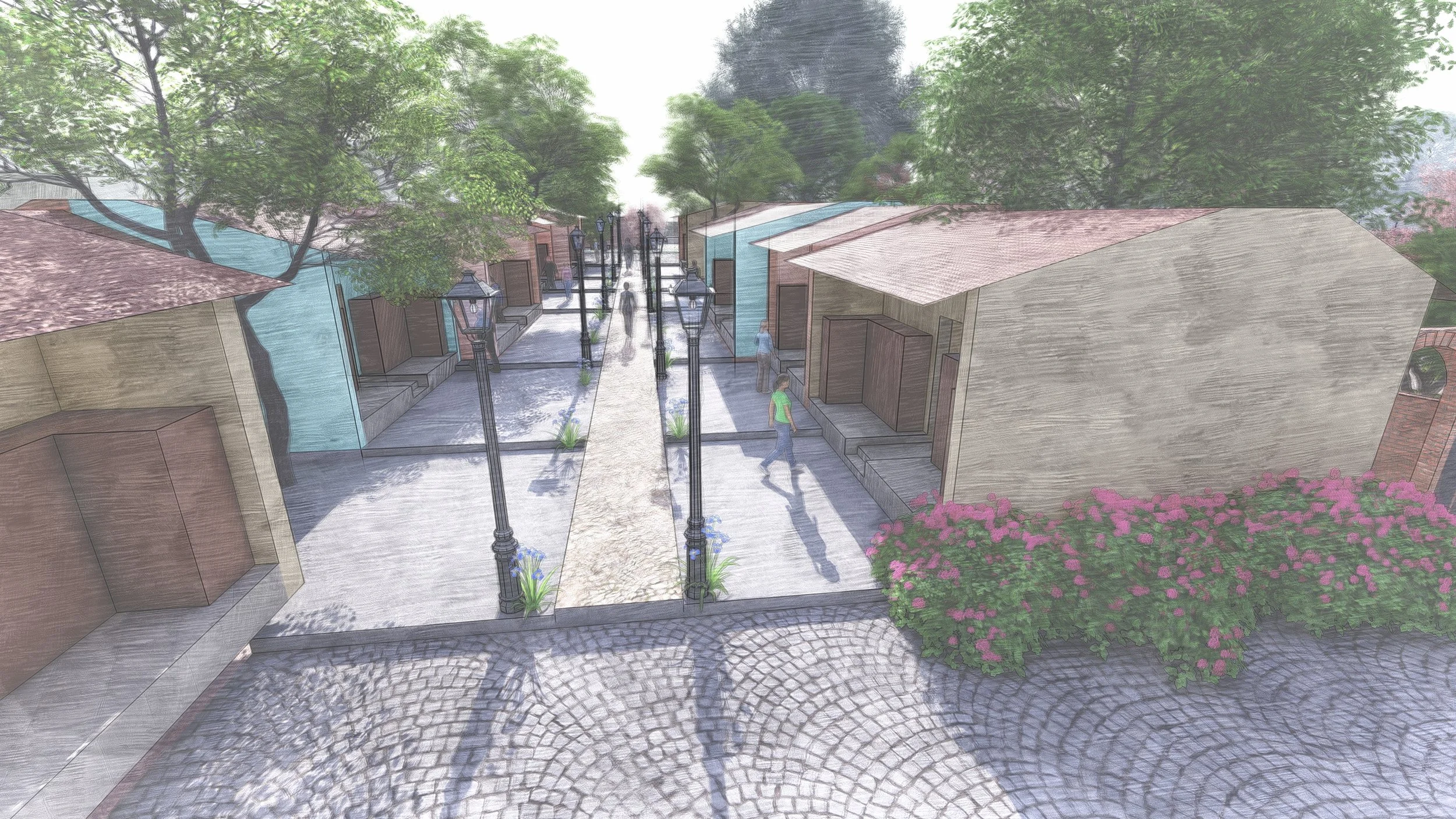
Single-potter studios/workshops with sale areas in the same space, the architecture and system following the existing Pottery Town workshop-shop pattern. This zone also includes old restored workshops.
The interior is divided into two spaces vertically using an attic (used for storage). The rear portions are connected through an alley, used by potters. Passageways provided between shops allow access to the backyards and baking, glazing and drying spaces
MARKET SQUARE SHOPS
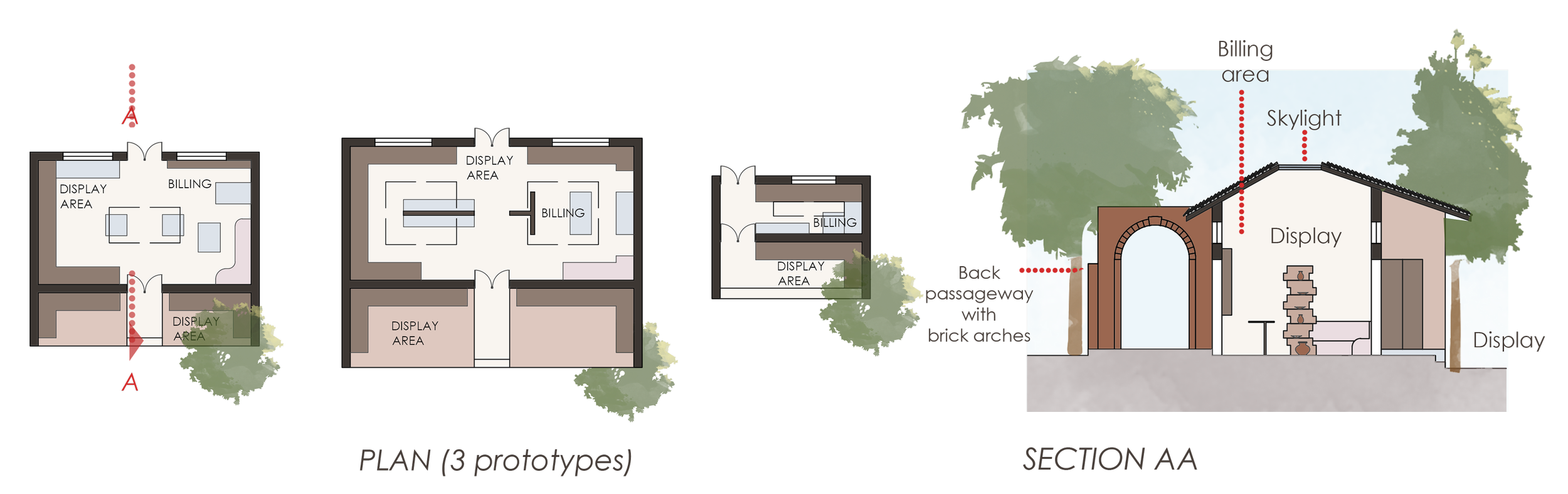
Space allocated for shops; prototype designed as a representation. The plaza gradually increases in level through the use of steps, according to the slope of the site. Thus, the walk along the shops is a gradual incline with steps as well as a ramp. Shops have access from the front (for shoppers) and from the back (for potters/shopkeepers). Skylights provide natural light to the interiors. The rear of the shops is linked by an arched alleyway, allowing shade cloths to be stretched across on sunny days for protection from the southern sun.
Built spaces - workshops and studios
STUDIO TYPE A
(4 POTTERS)
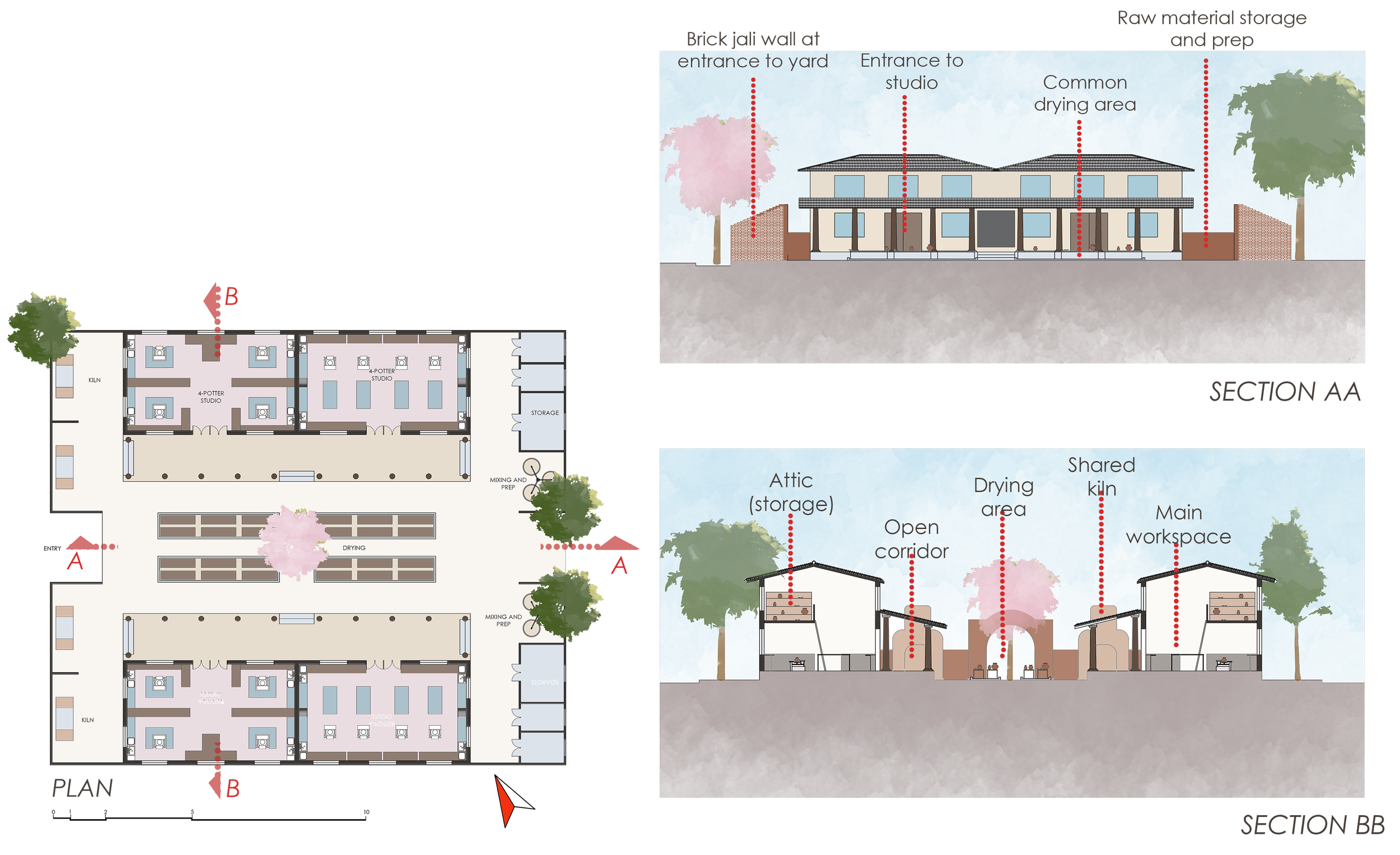
Planned around a central court, which is also used as a drying area by the two blocks facing it. Spaces are sequentially arranged, according to the pottery process (materials > throwing > baking).
Each block has two workshops, accommodating four potters each. Design cues were taken from existing potters’ workshops, like an attic accessed using ladders, for storage.
STUDIO TYPE B
(2 POTTERS)
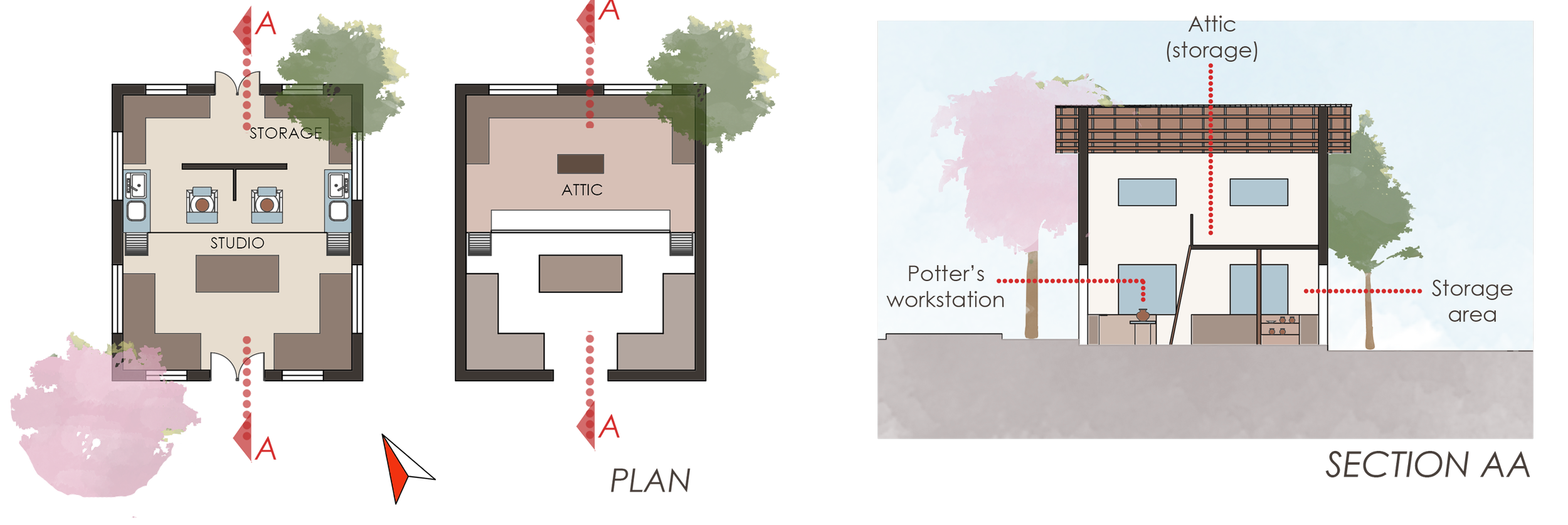
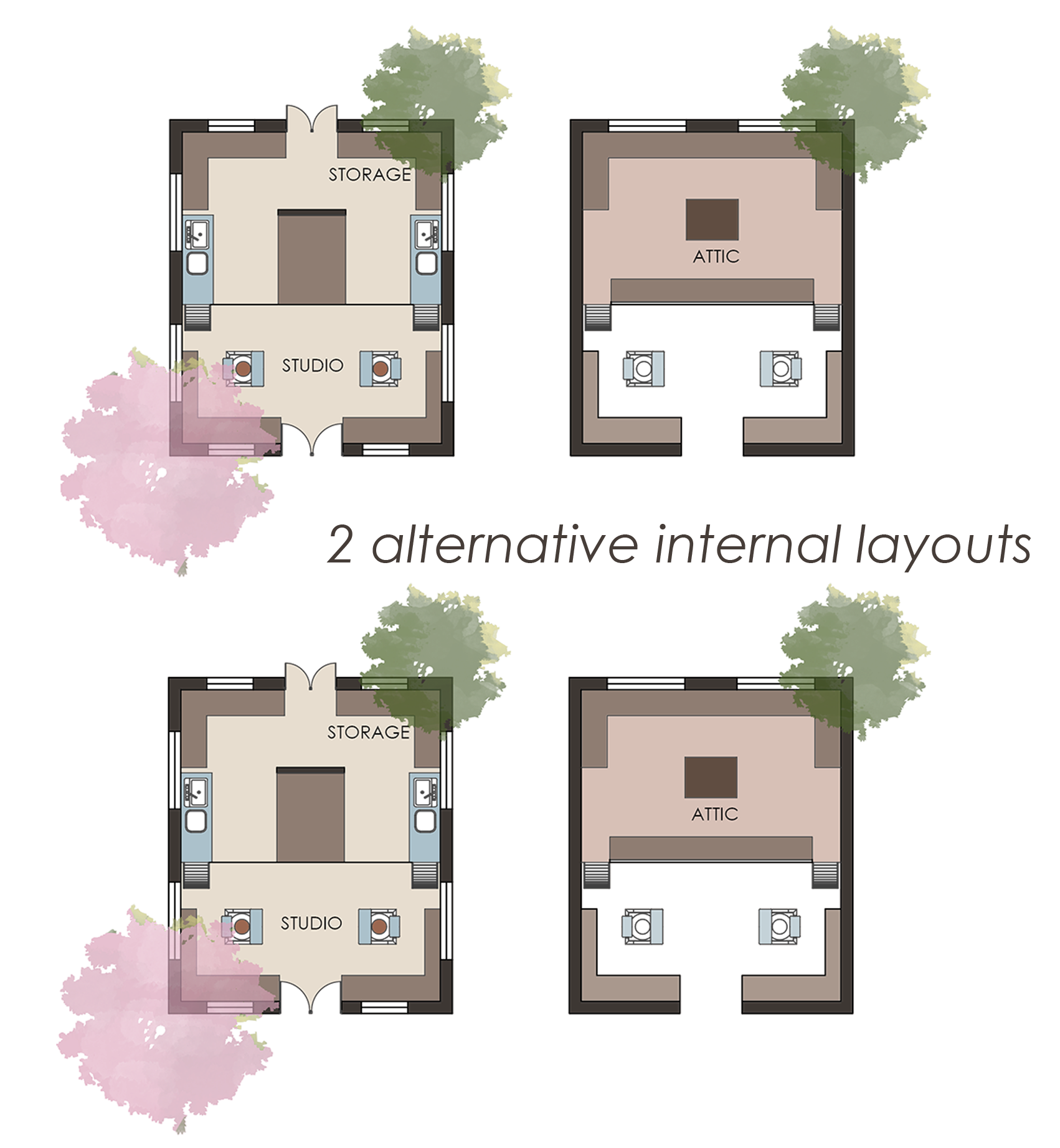
Also planned around a central court, used as a drying area by the two blocks facing it. Each block has two workshops, accommodating four potters each. Design cues taken from existing potters’ workshops.
Built spaces - housing
Number of existing houses: 180
Number of houses designed: 270 (1.5x increase)
Total number of potters: 120
Number of homes, type A: 192
Number of homes, type B: 54
Number of homes, type C: 24
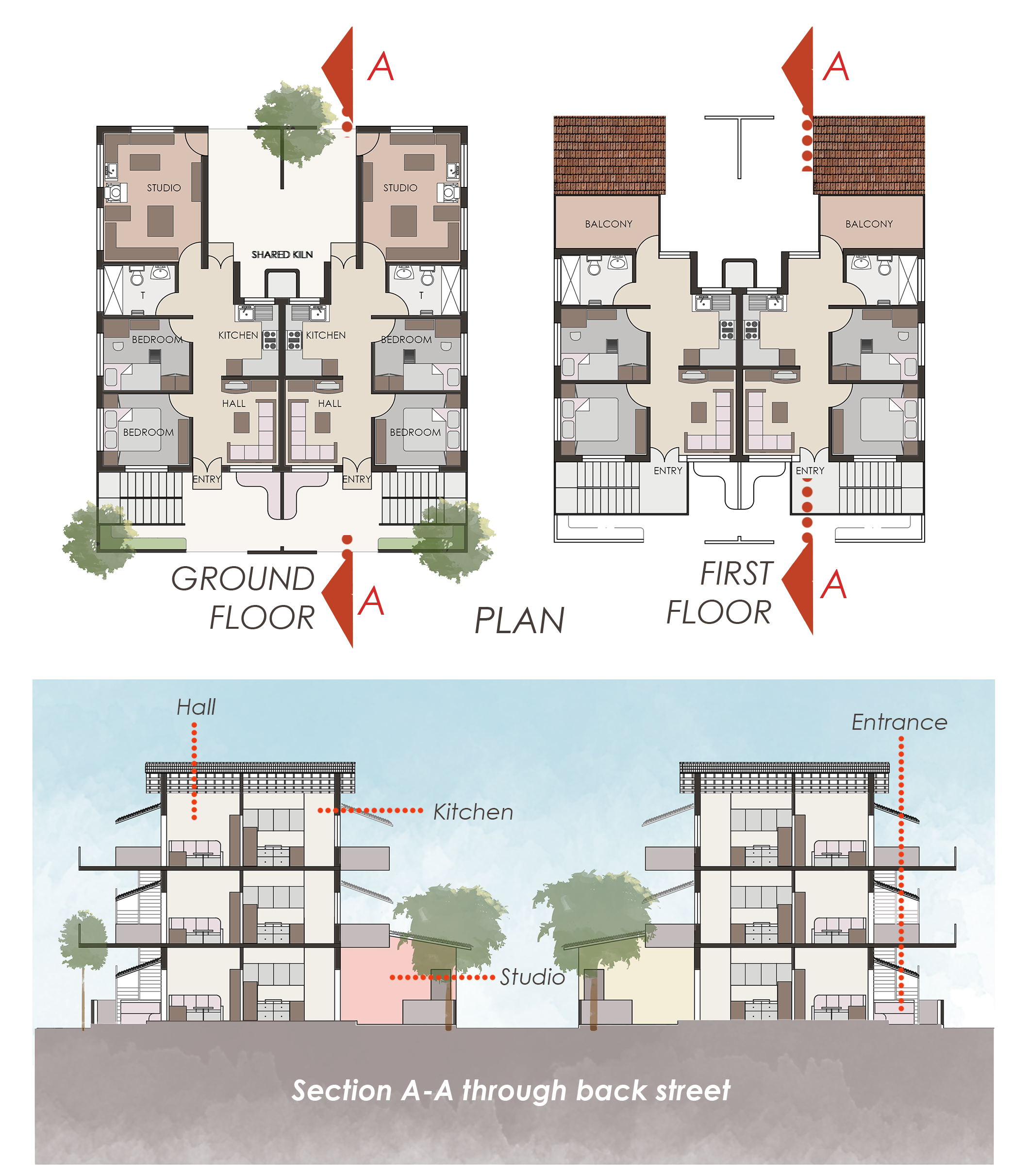
HOUSE TYPE A
(single bedroom)

Four storey houses (G + 3)
The ground floor modules have an attached potter’s studio- houses for potters.
The upper floors have a balcony to replace the studio- houses for non-potters and potters working in the production areas.
House planned based on the sequential door concept derived from traditional south Indian residences: doorways through the main part of the house (front door, back door) line up to form a visual axis, with a view into the backyard street.
HOUSE TYPE B
(two bedroom, with three storeys - G+2)
HOUSE TYPE C
(three bedroom, with two storeys - G+1)
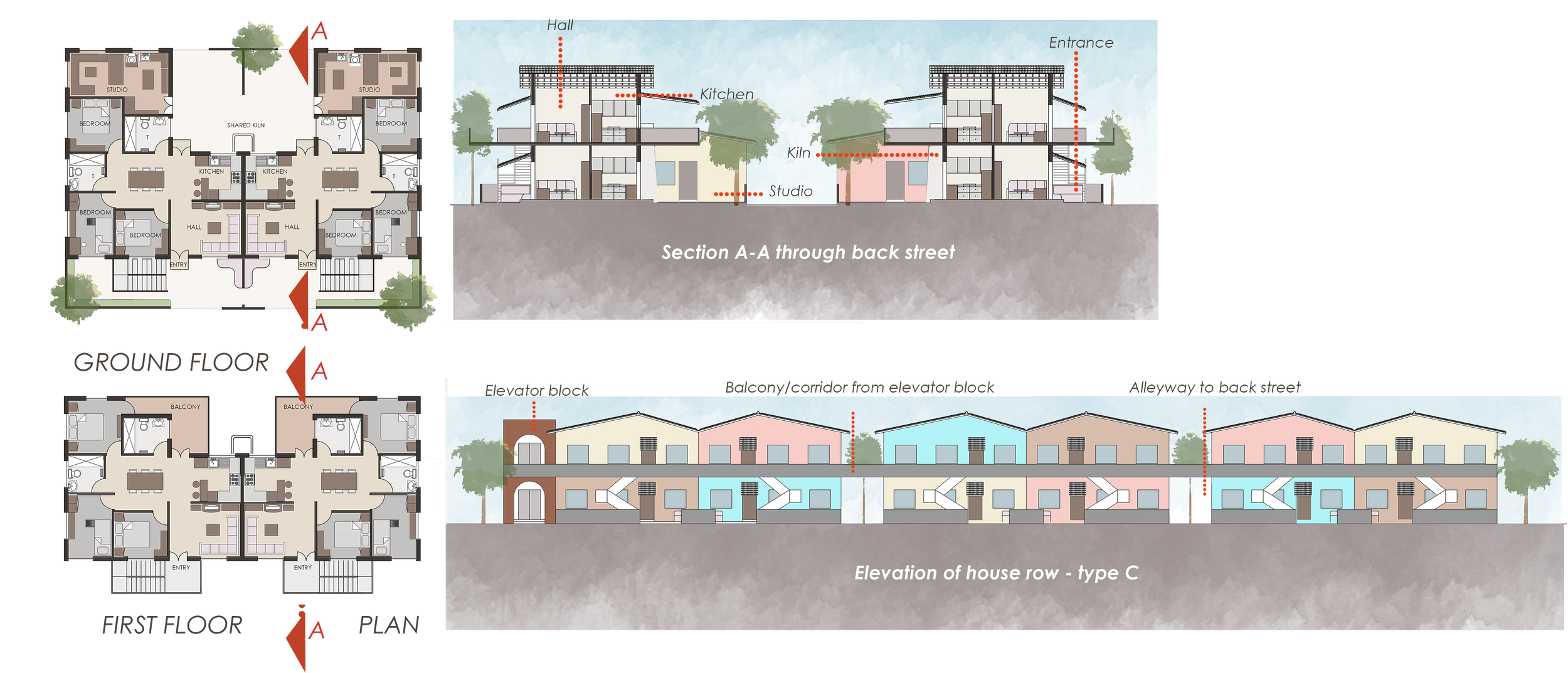
Ground floor - Potters’ residences
Upper floor - non-potters’ residences
Exhibition centre and amphitheatre
Exhibition centre and amphitheatre
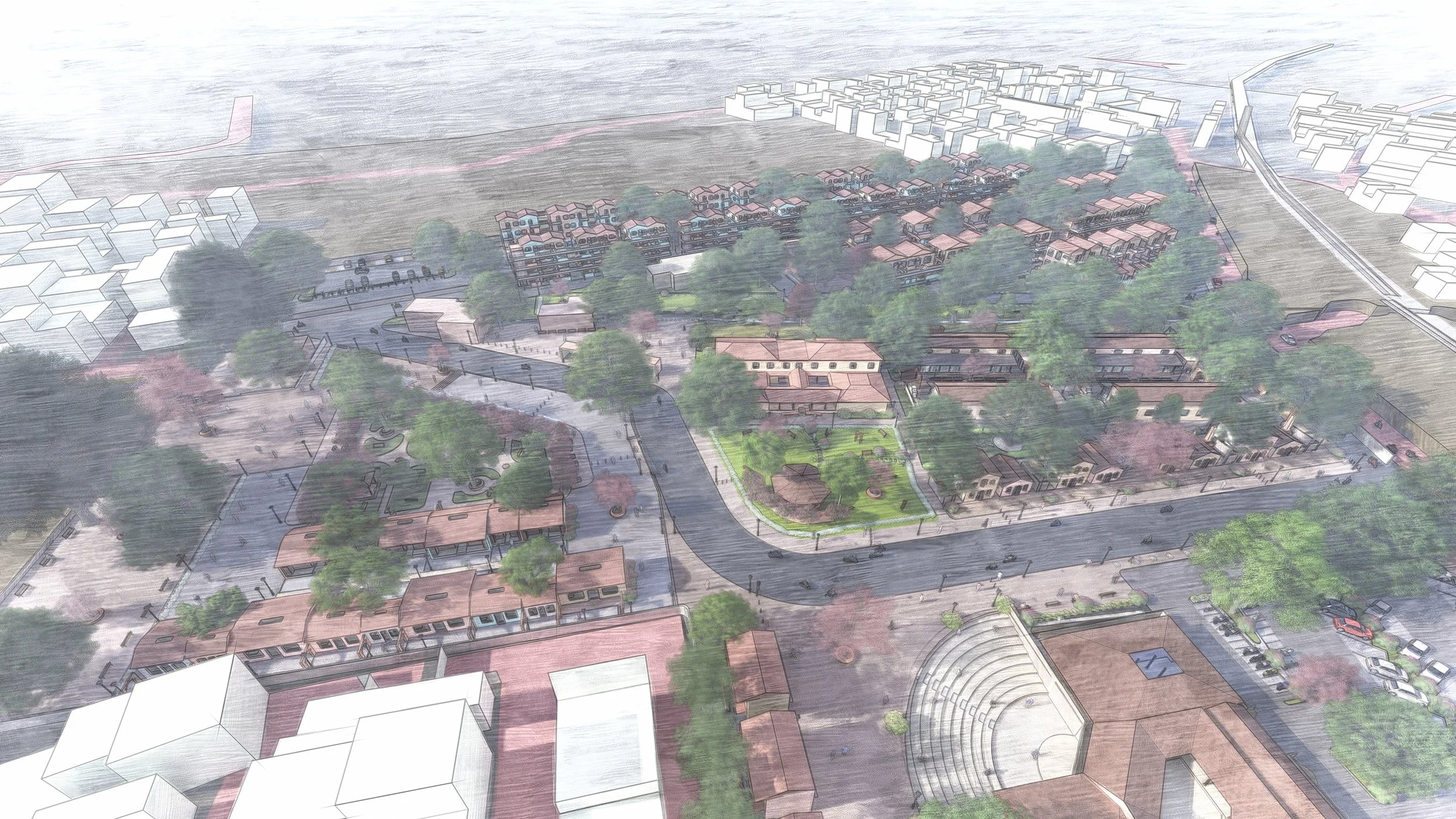
Aerial view of Pottery lane
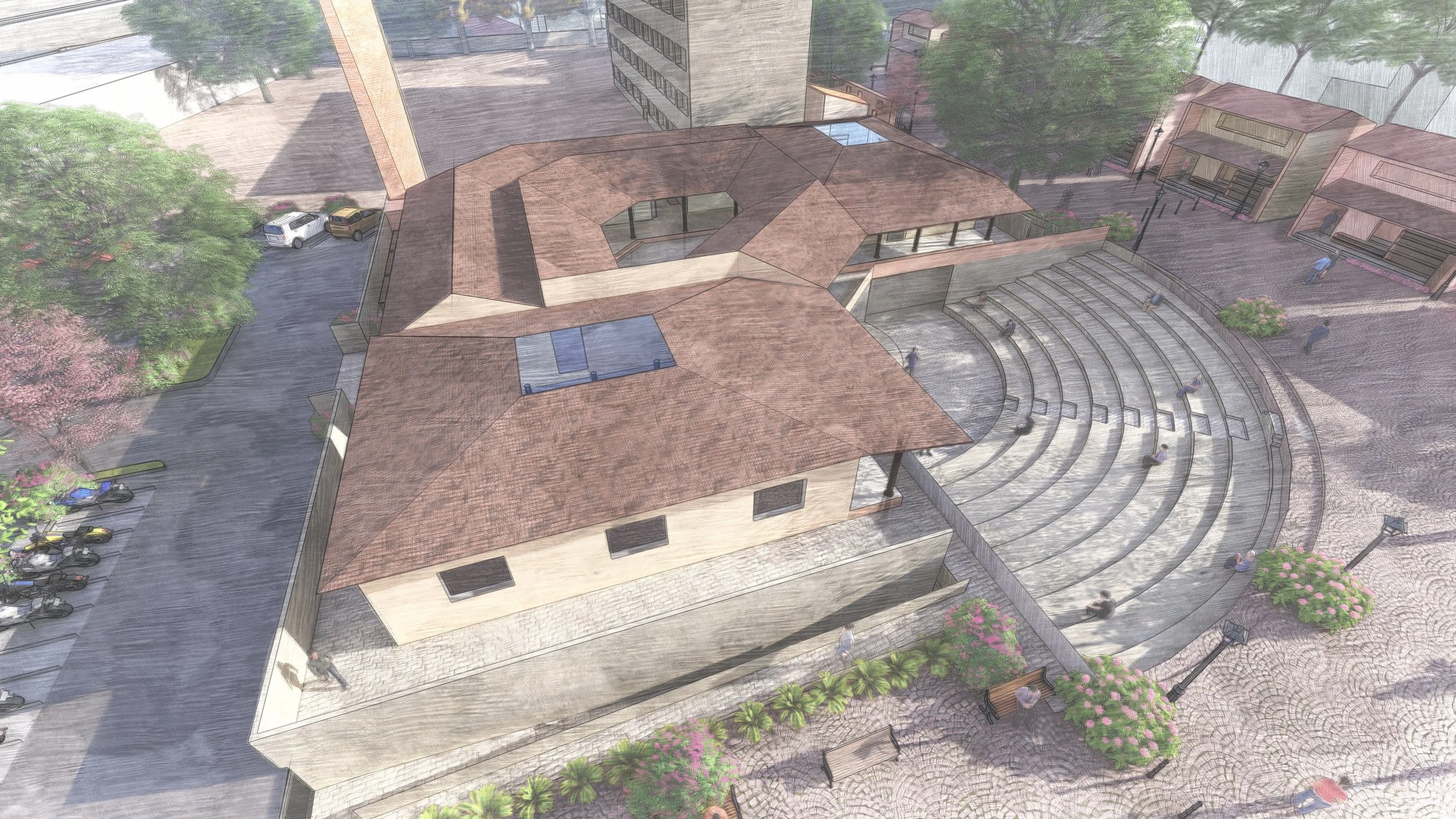
Exhibition centre and amphitheatre
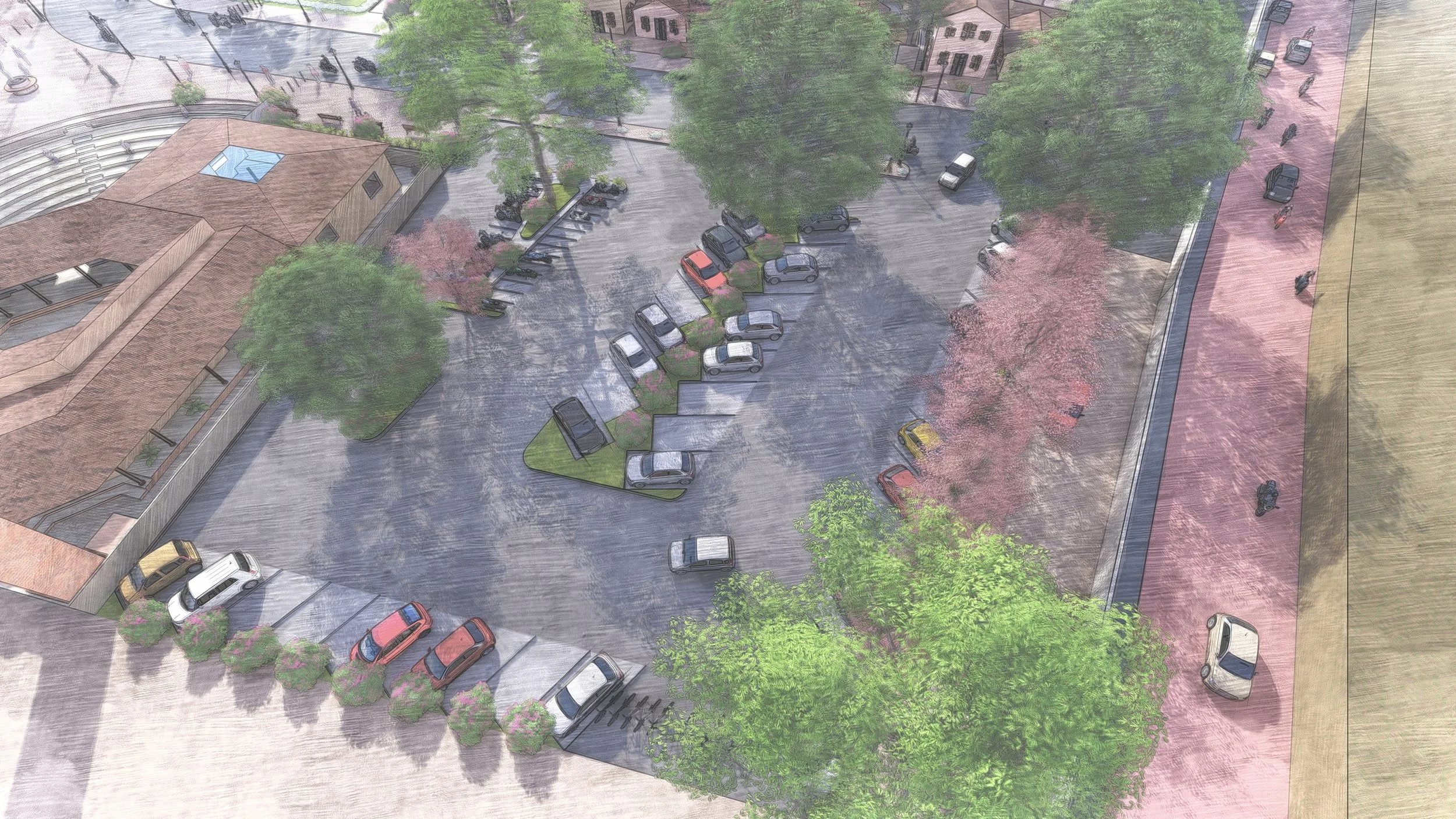
Parking to the east of the exhibition centre
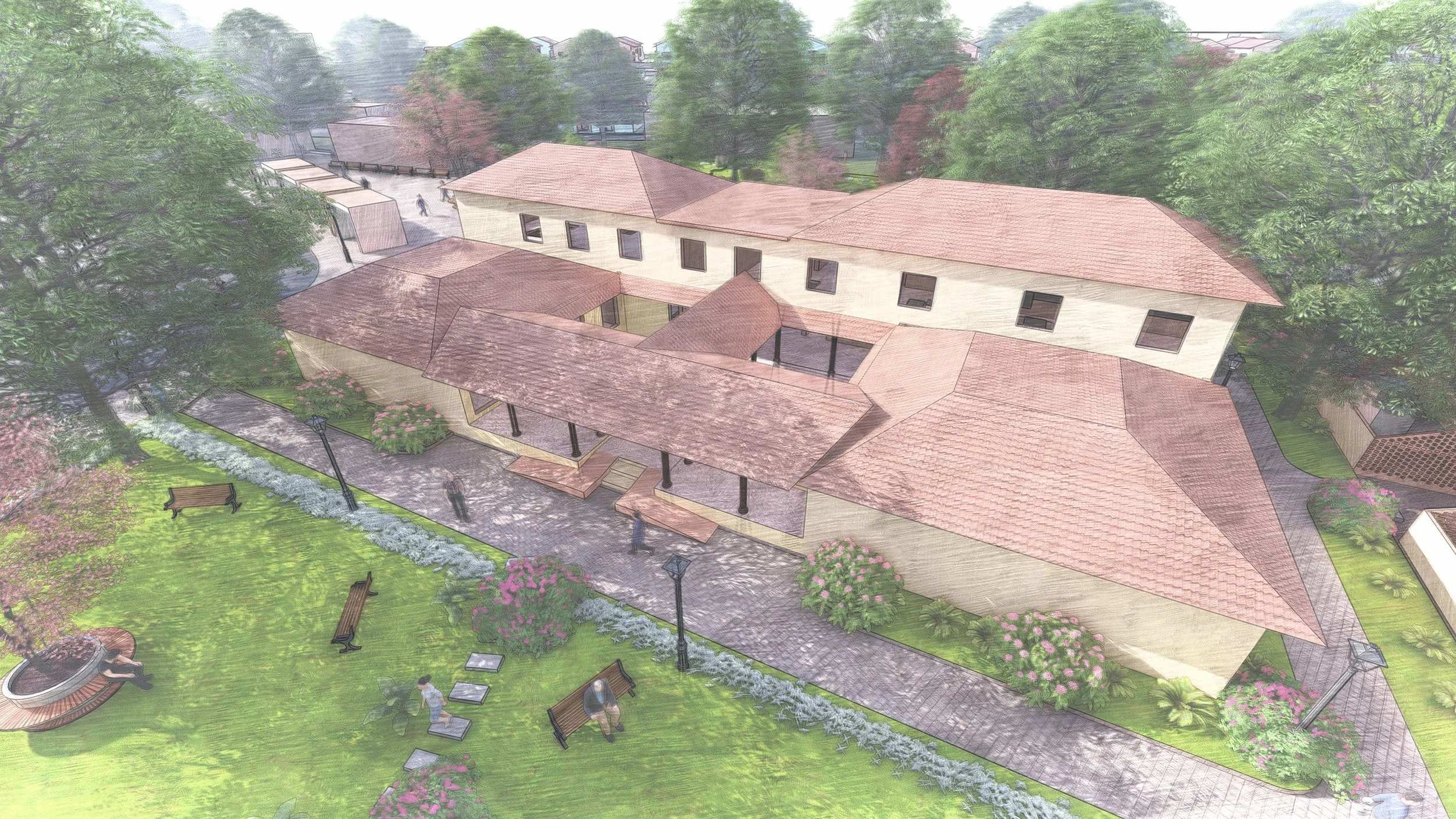
Learning centre
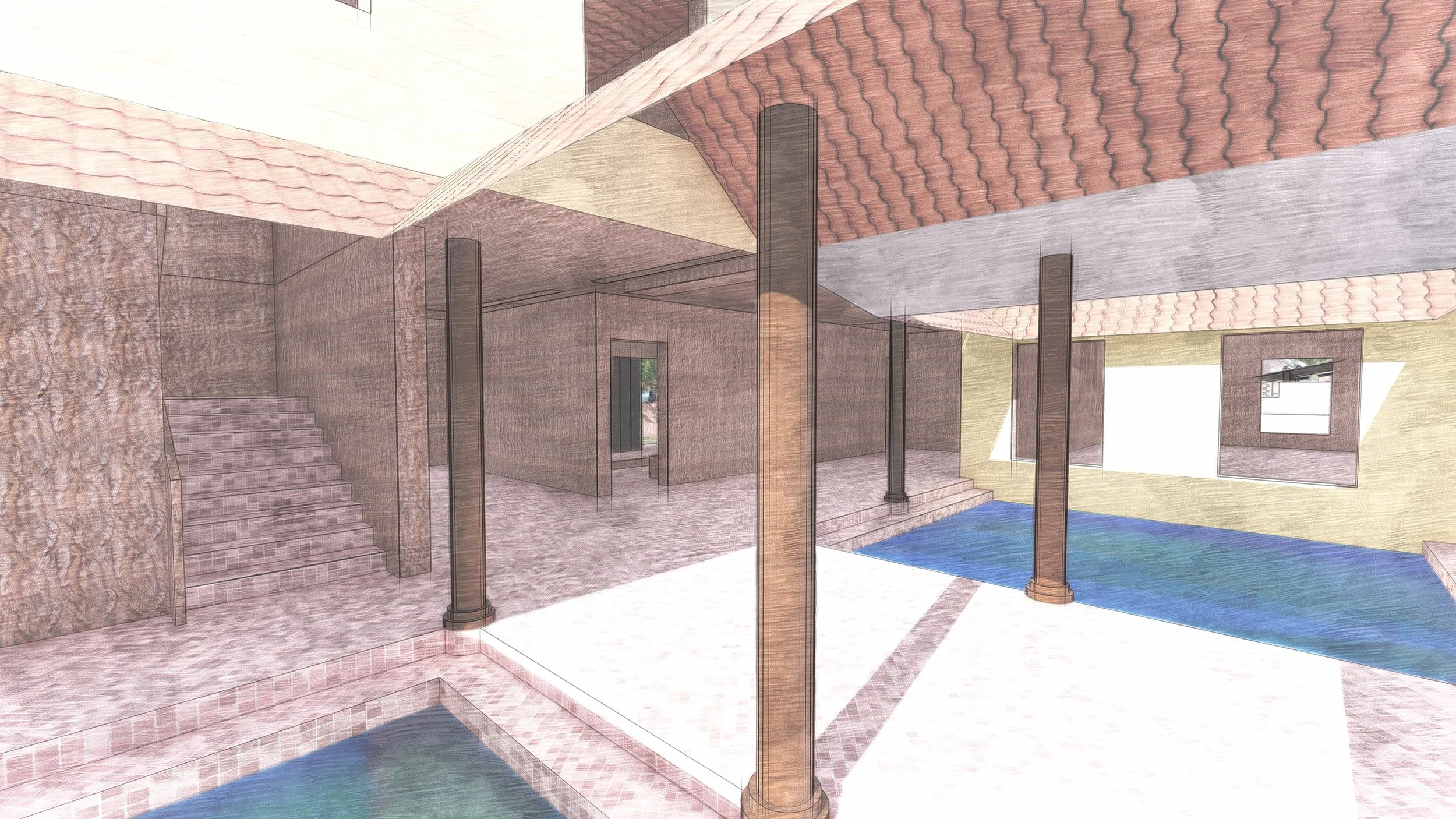
Learning centre - interior
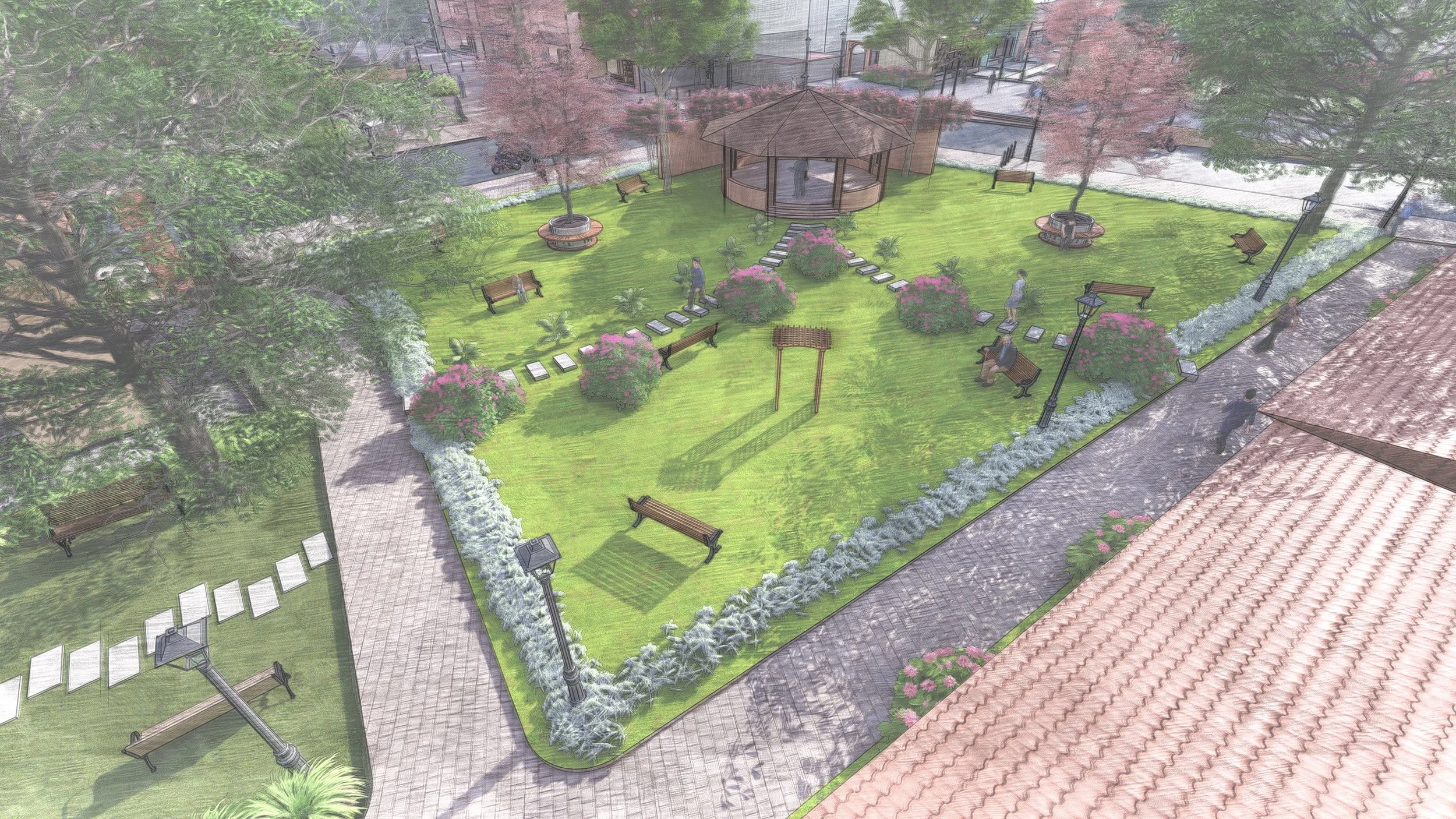
Garden facing learning centre
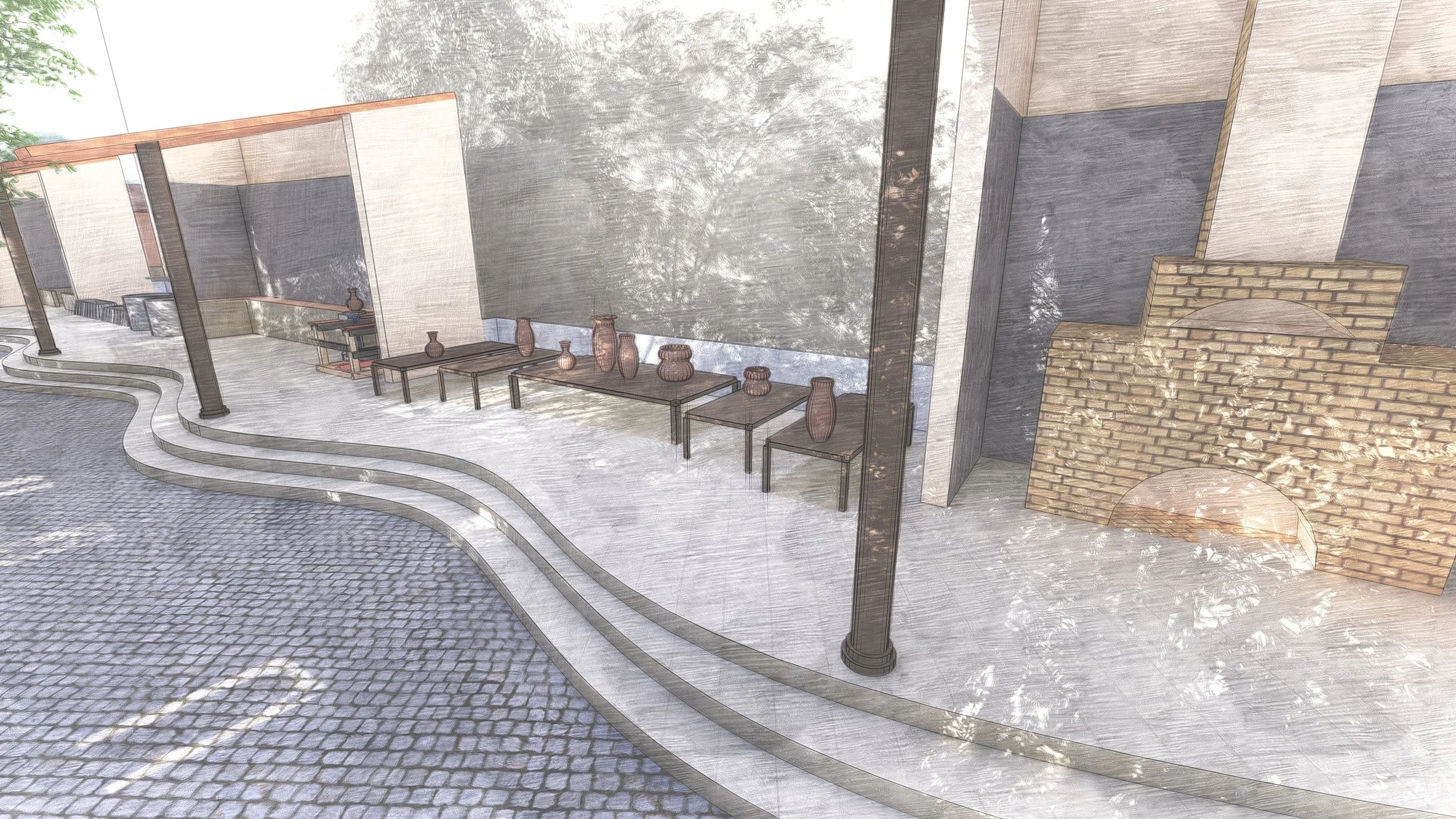
Pottery walk - exhibition space + demonstration of the pottery process
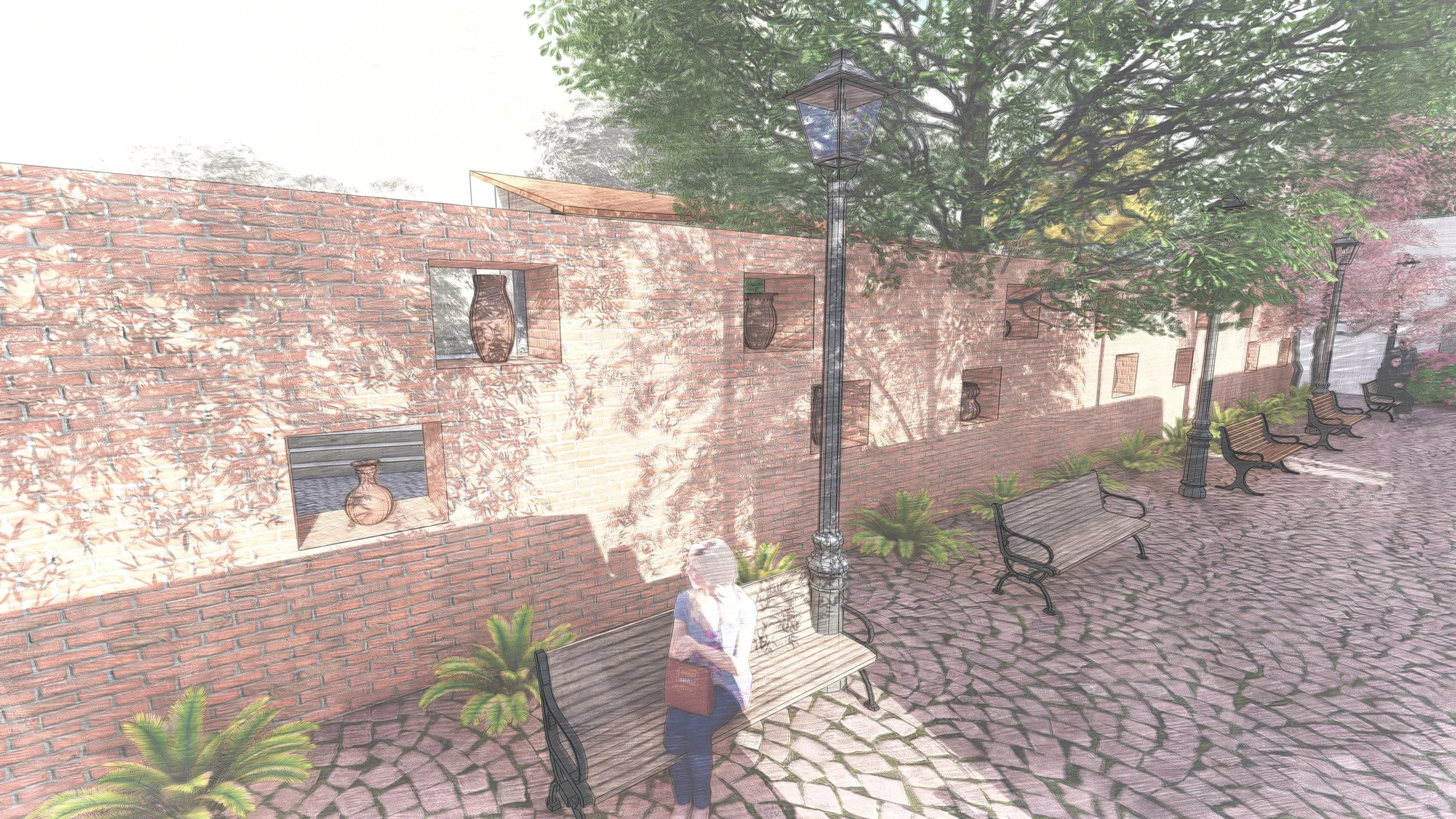
Pottery walk - exterior wall, on Pottery Street
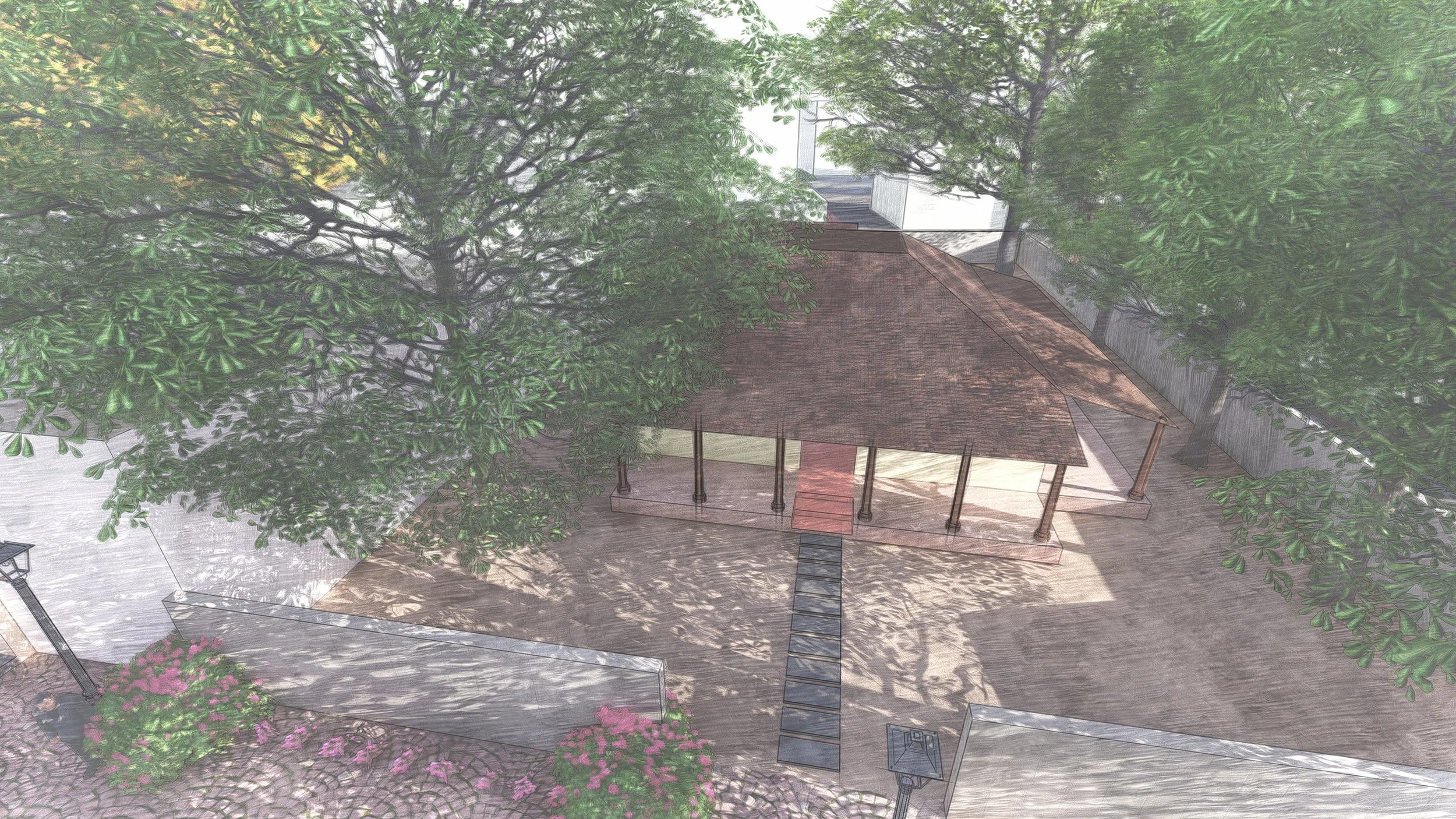
Food court, at the south end of Pottery Street
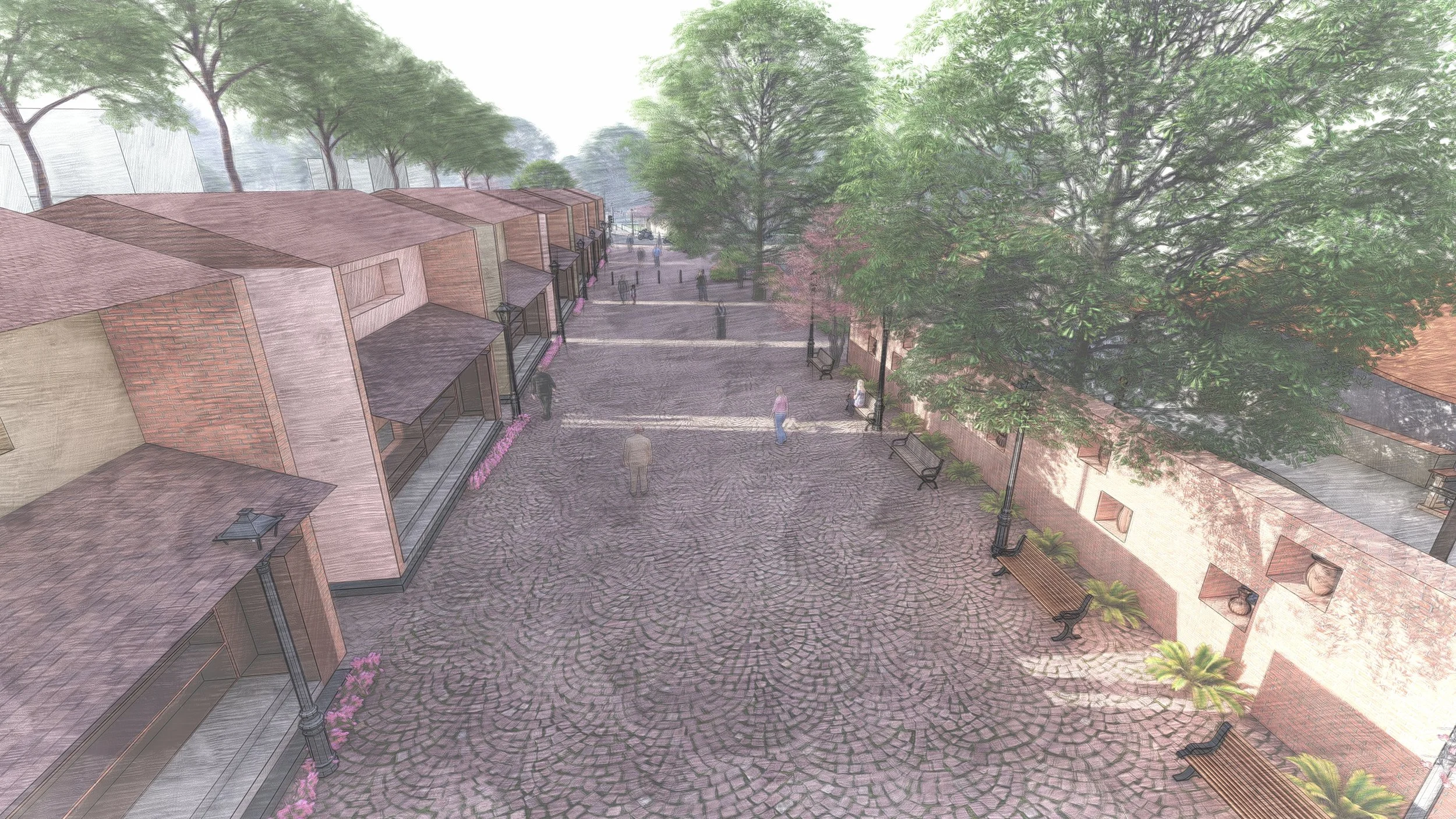
Pottery street with the Pottery walk (right) and studio-shops (left)
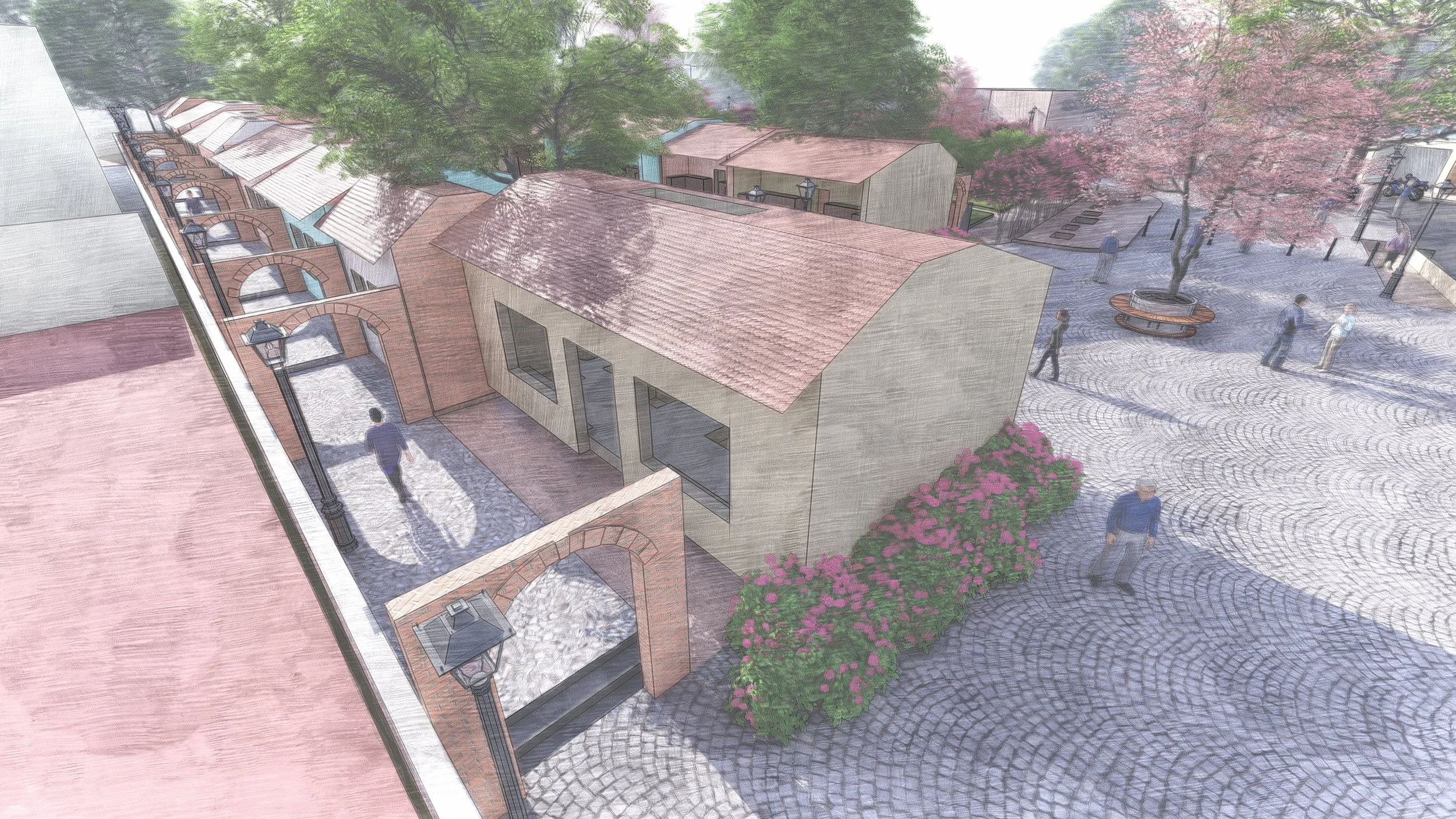
Market square shops with brick arches lining the rear alleyway
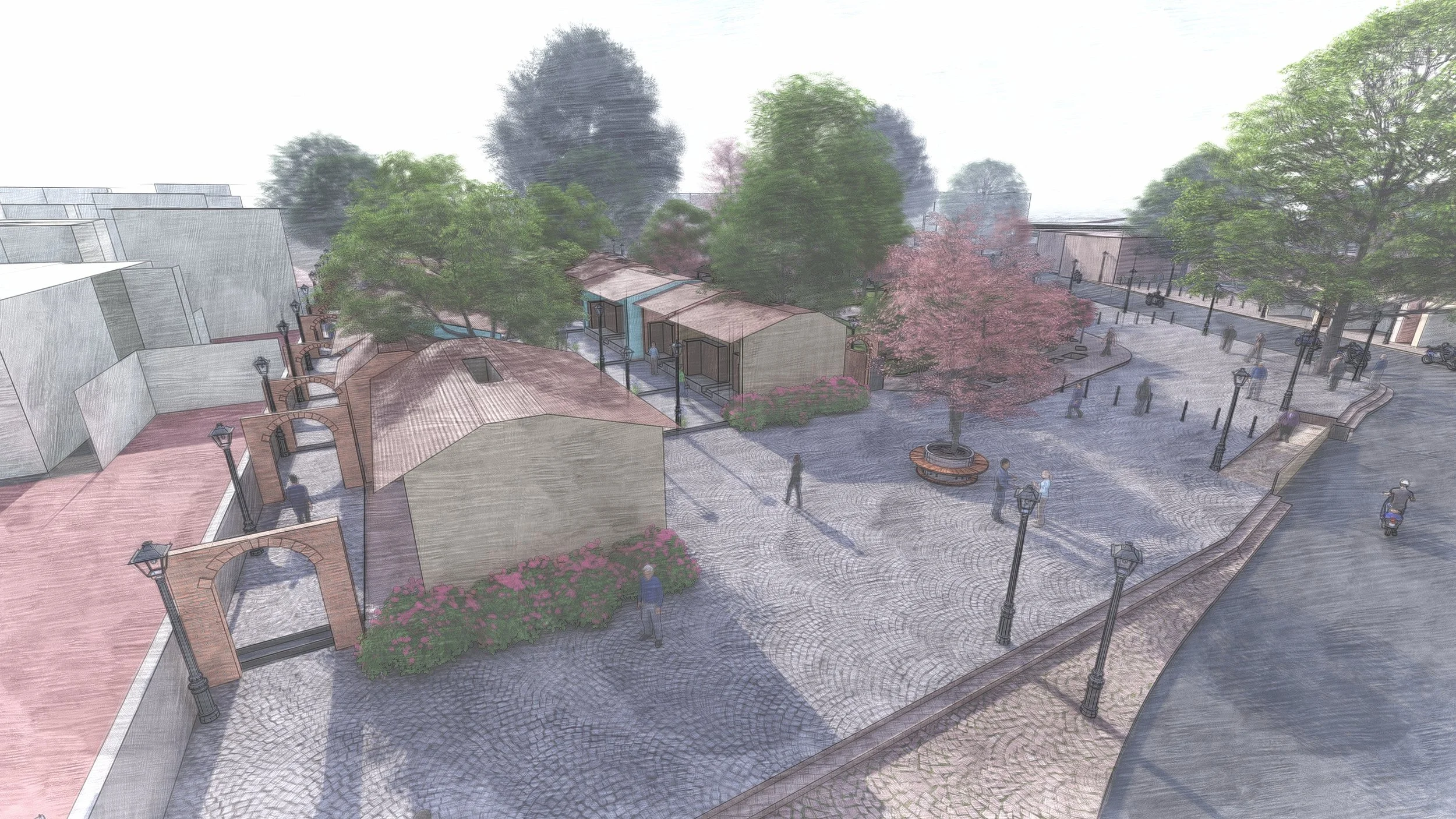
Market square shops
Market square shops
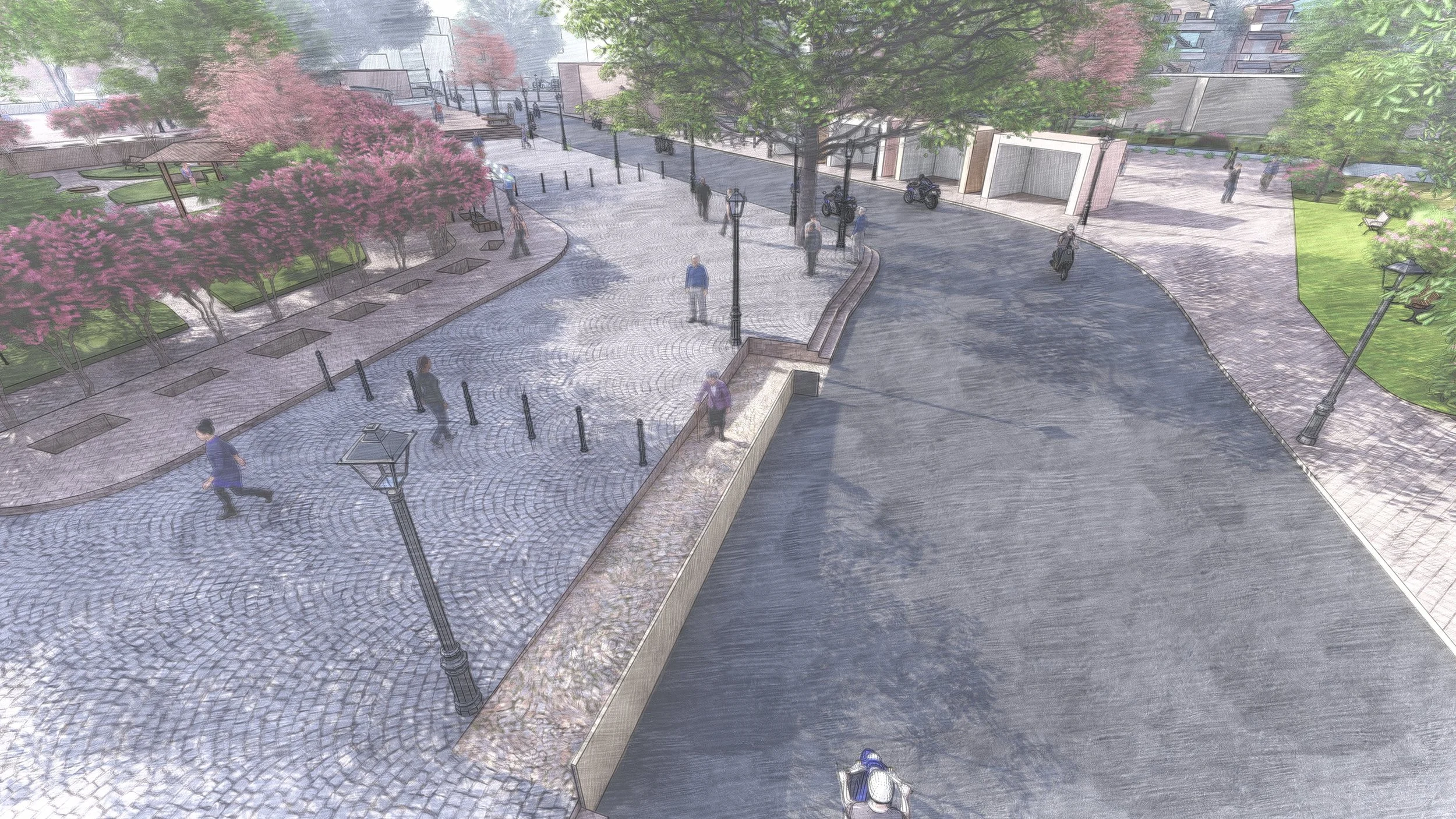
Market square (left) along Pottery Lane (right)
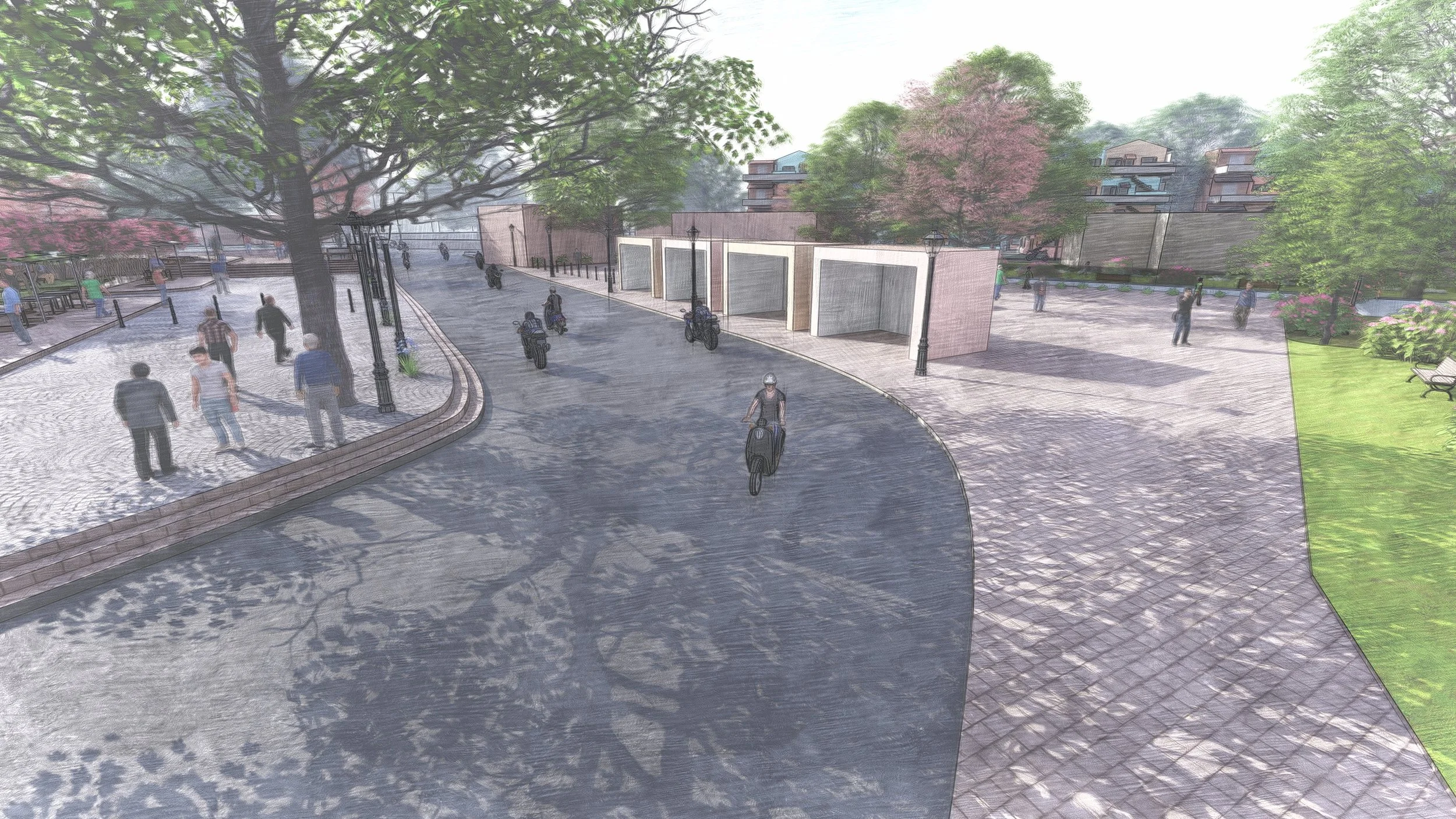
Pottery Lane
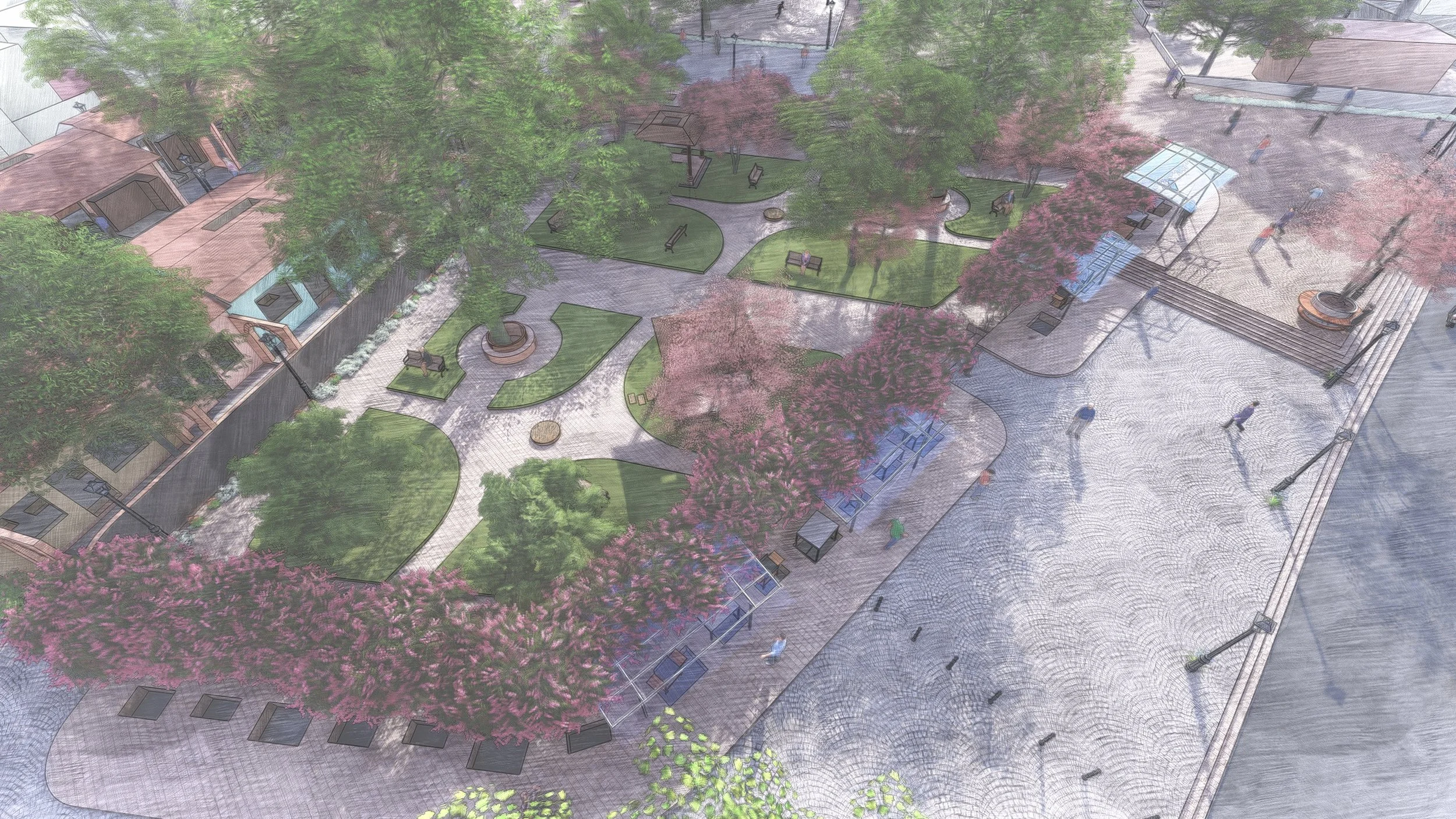
Pottery Lane park
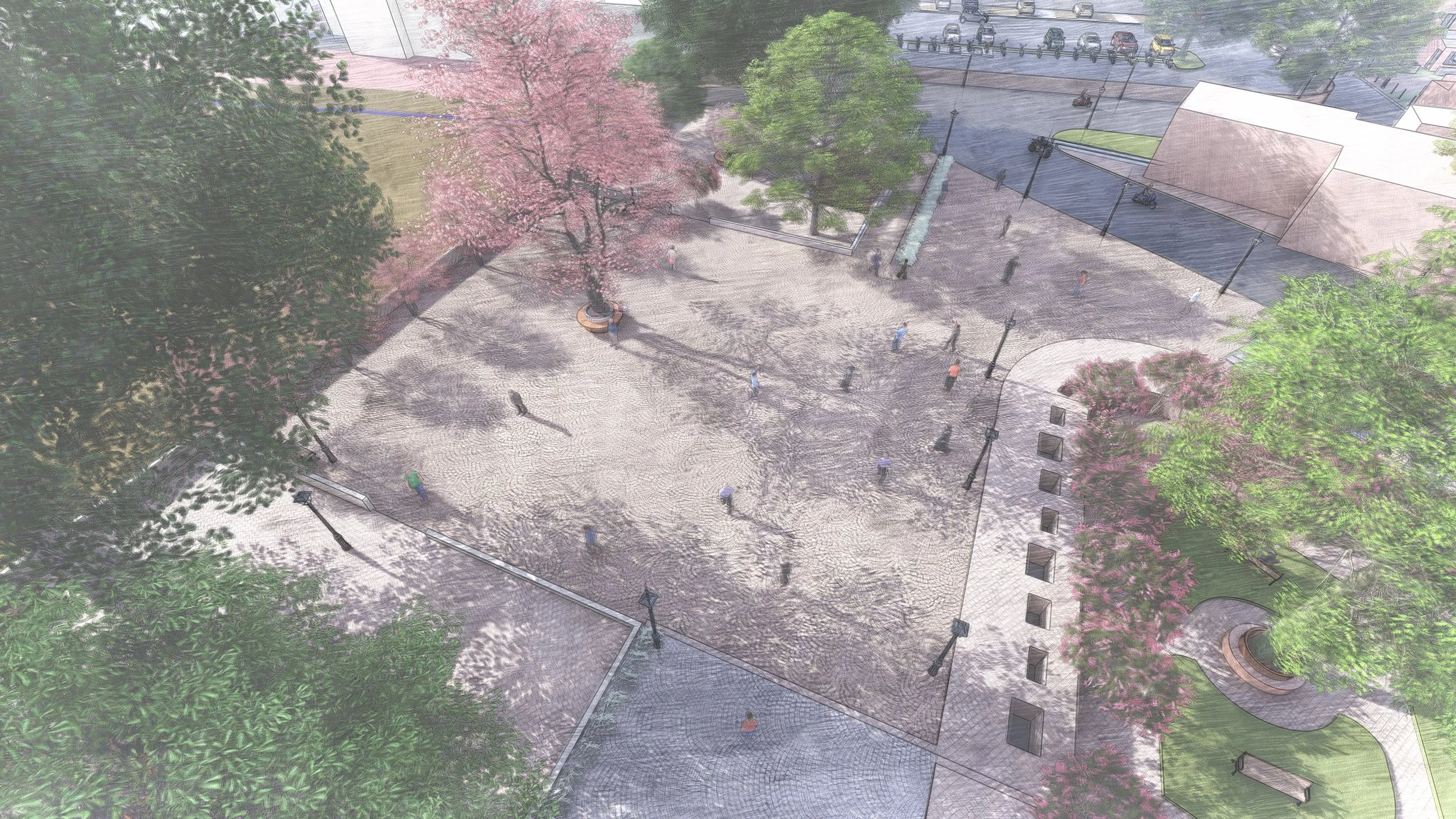
Market plaza with open space and vendors
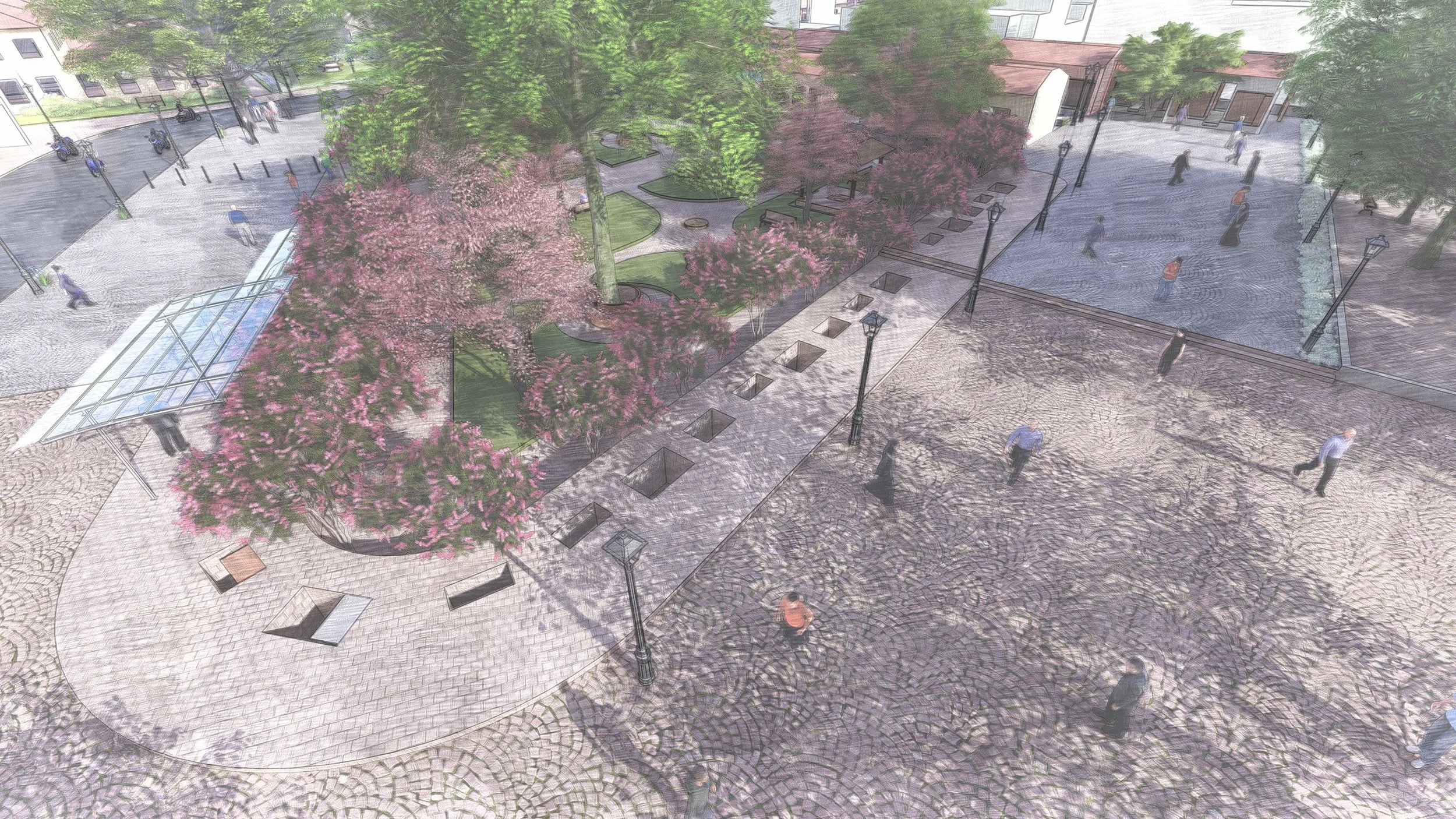
Market plaza with open space and vendors
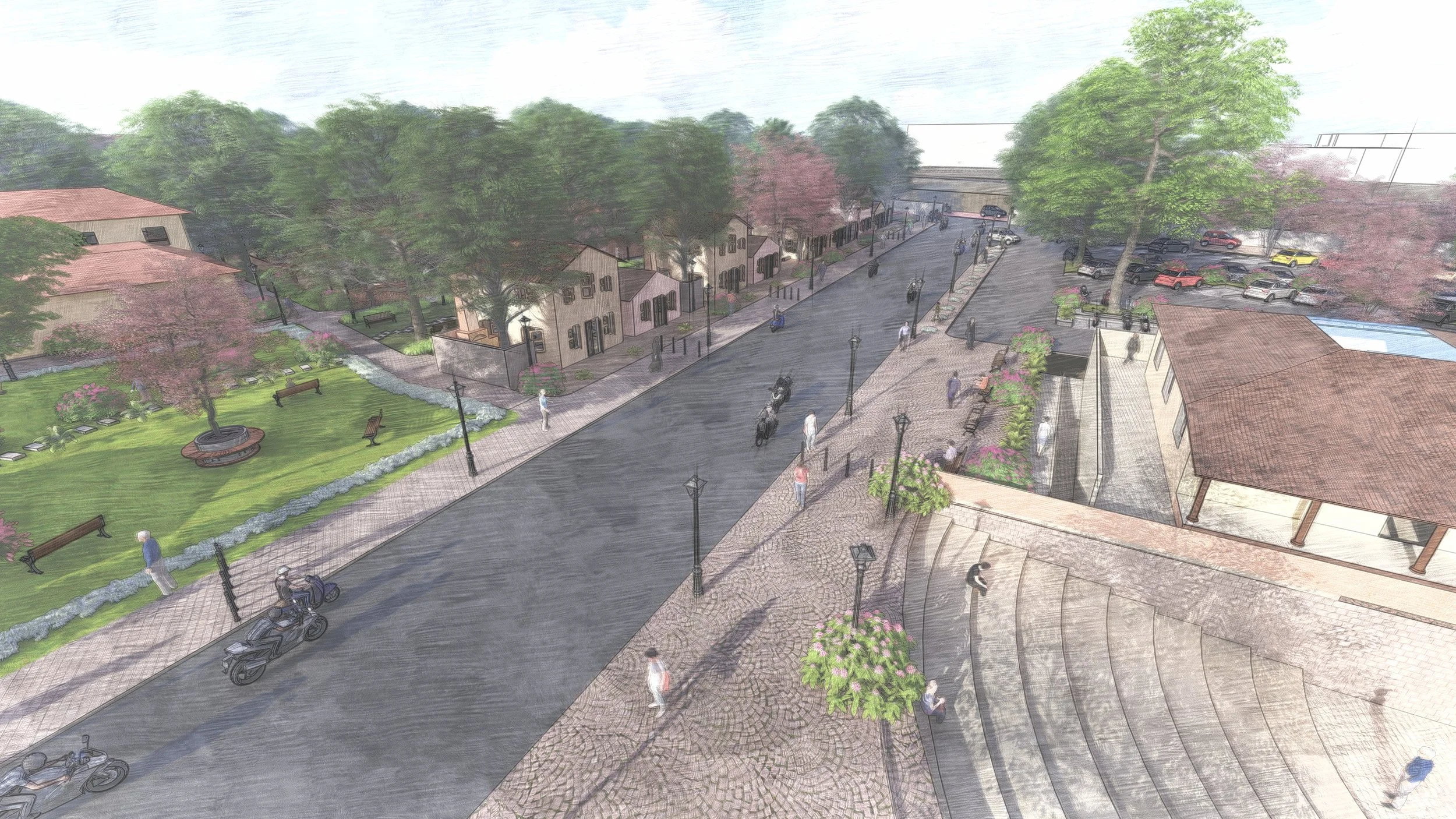
Pottery lane with studio/workshops
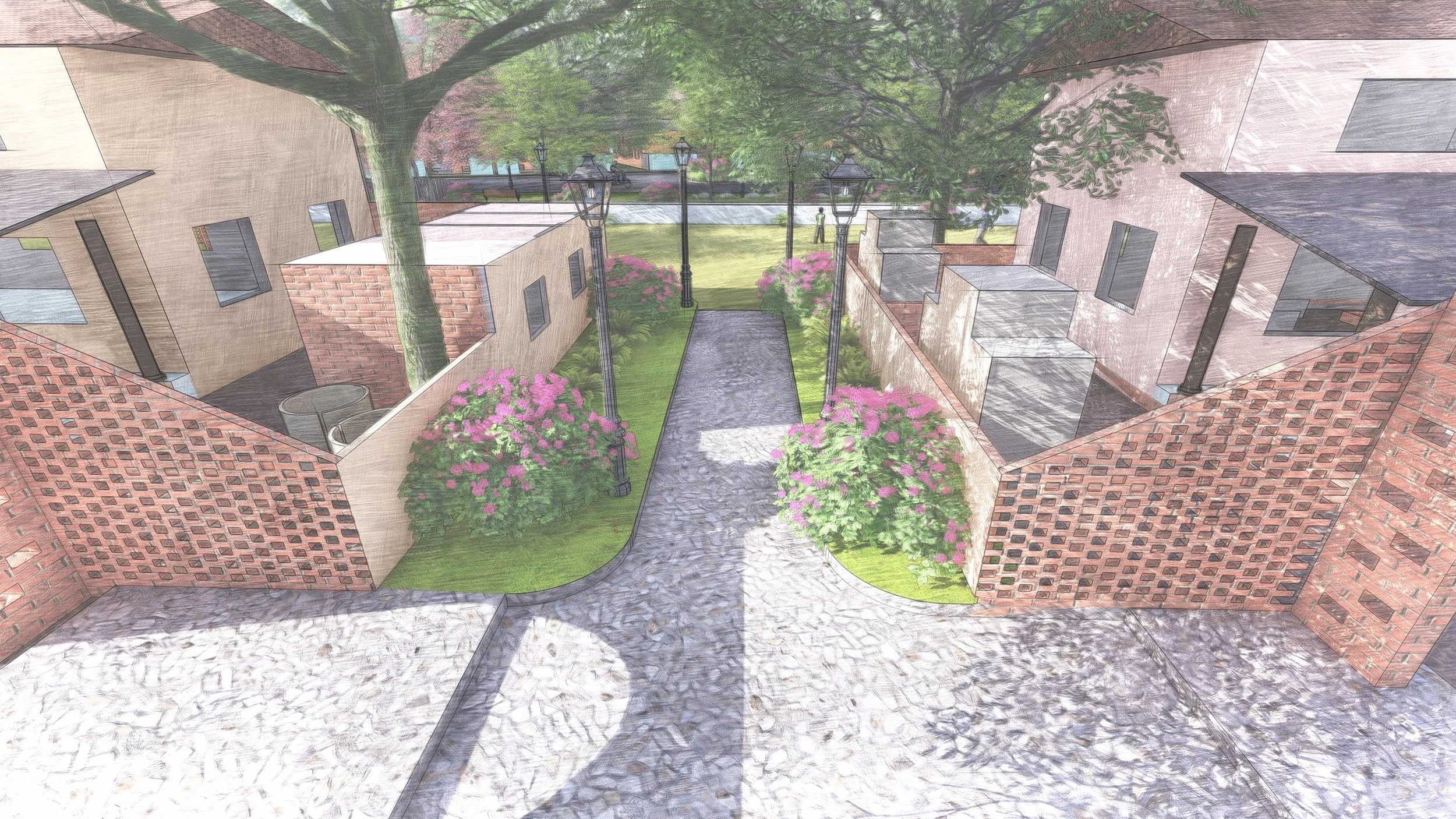
Workshop / studio: spaces between, leading to community greens
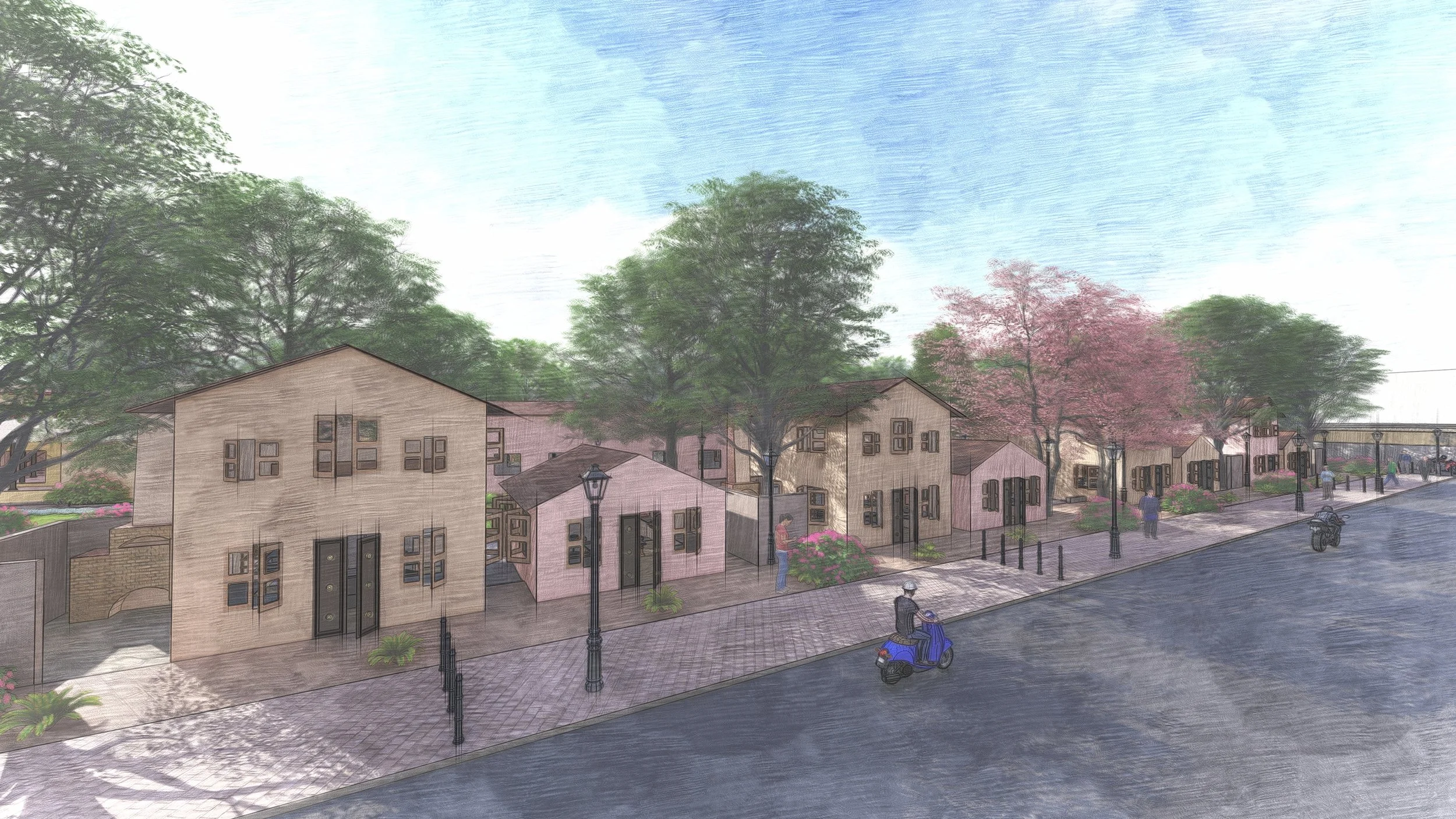
Pottery lane with studio/workshops
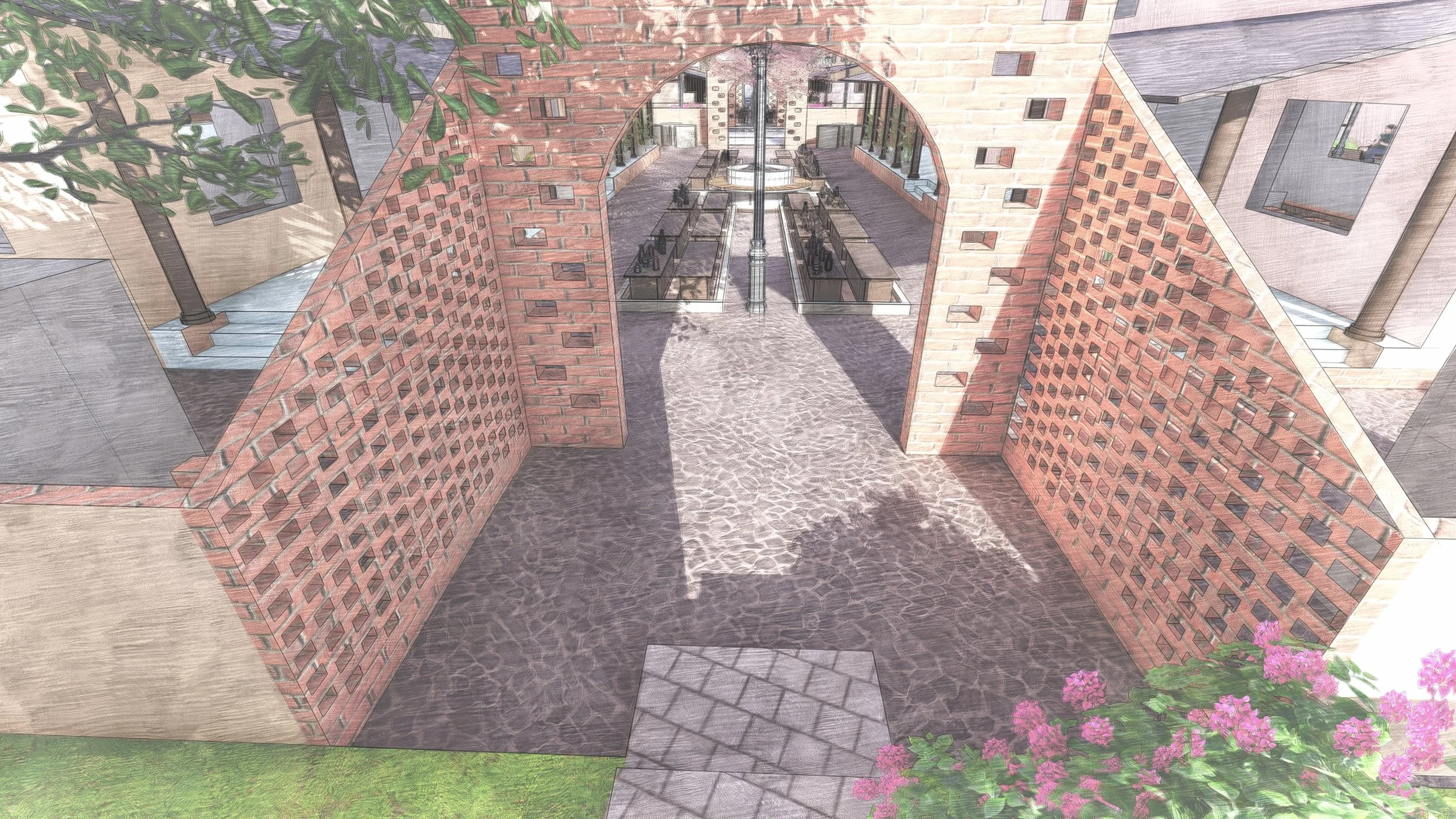
Workshop / studio: entrance jaali wall
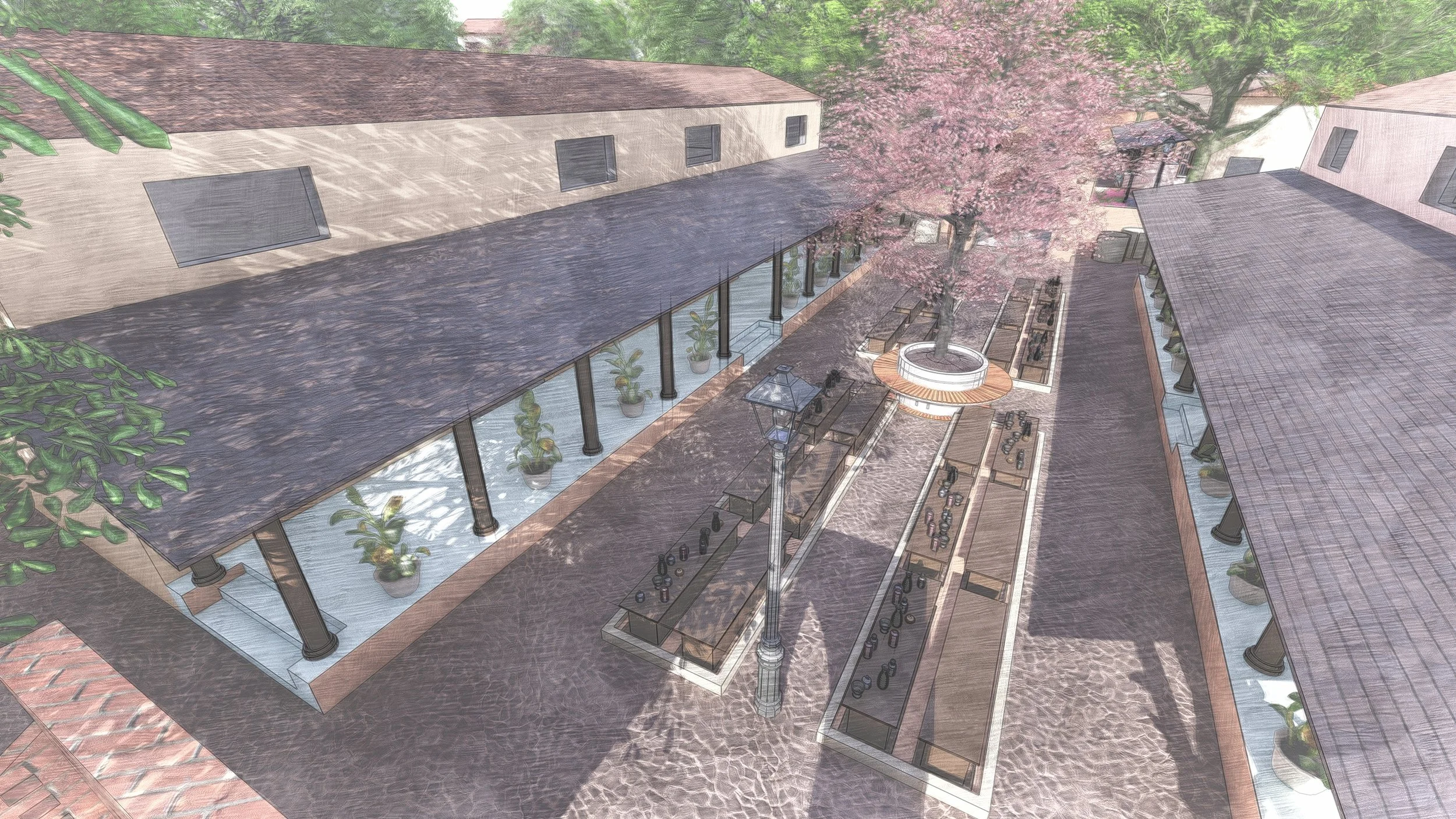
Workshop / studio: shared courtyard
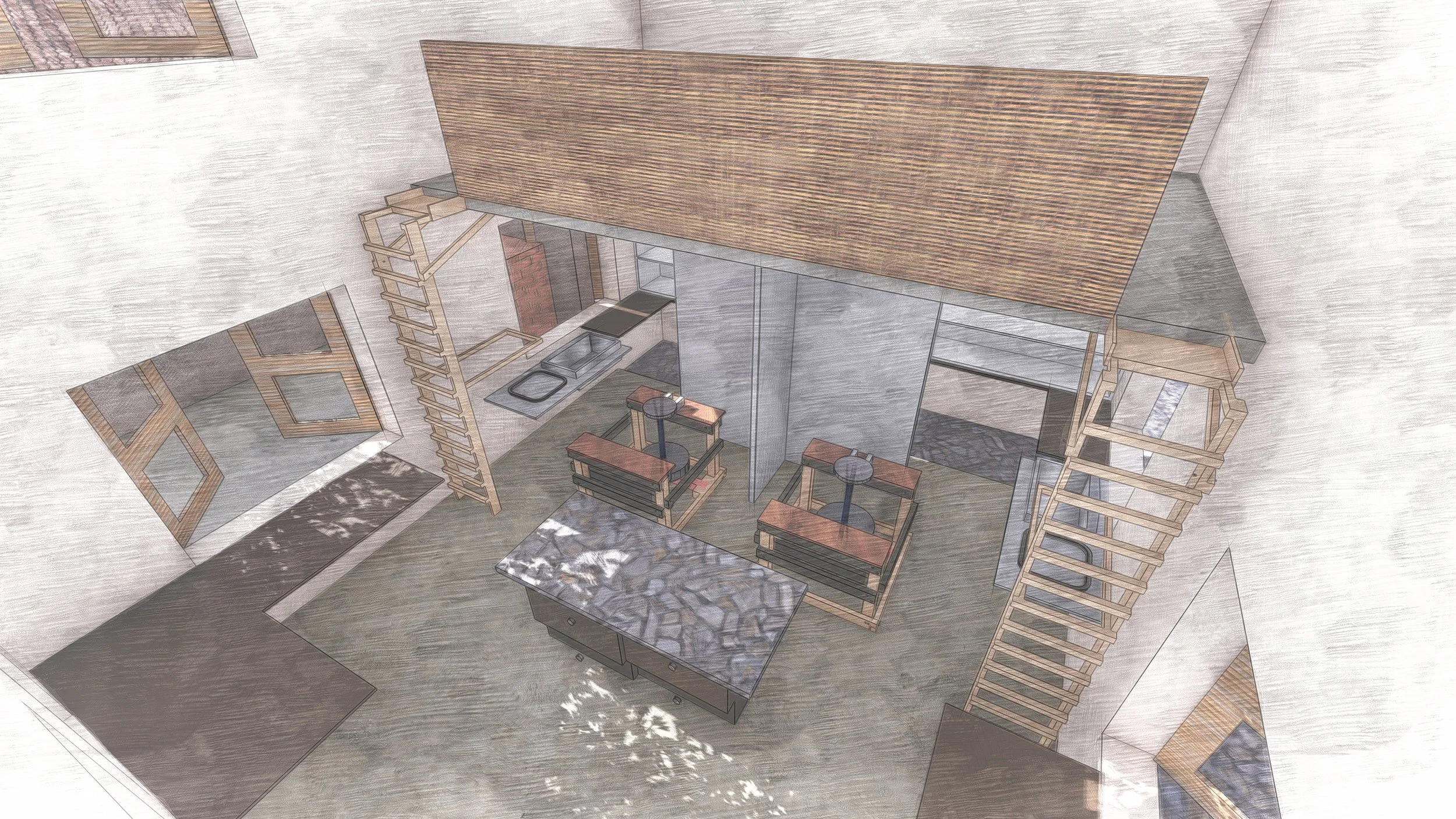
Workshop interior
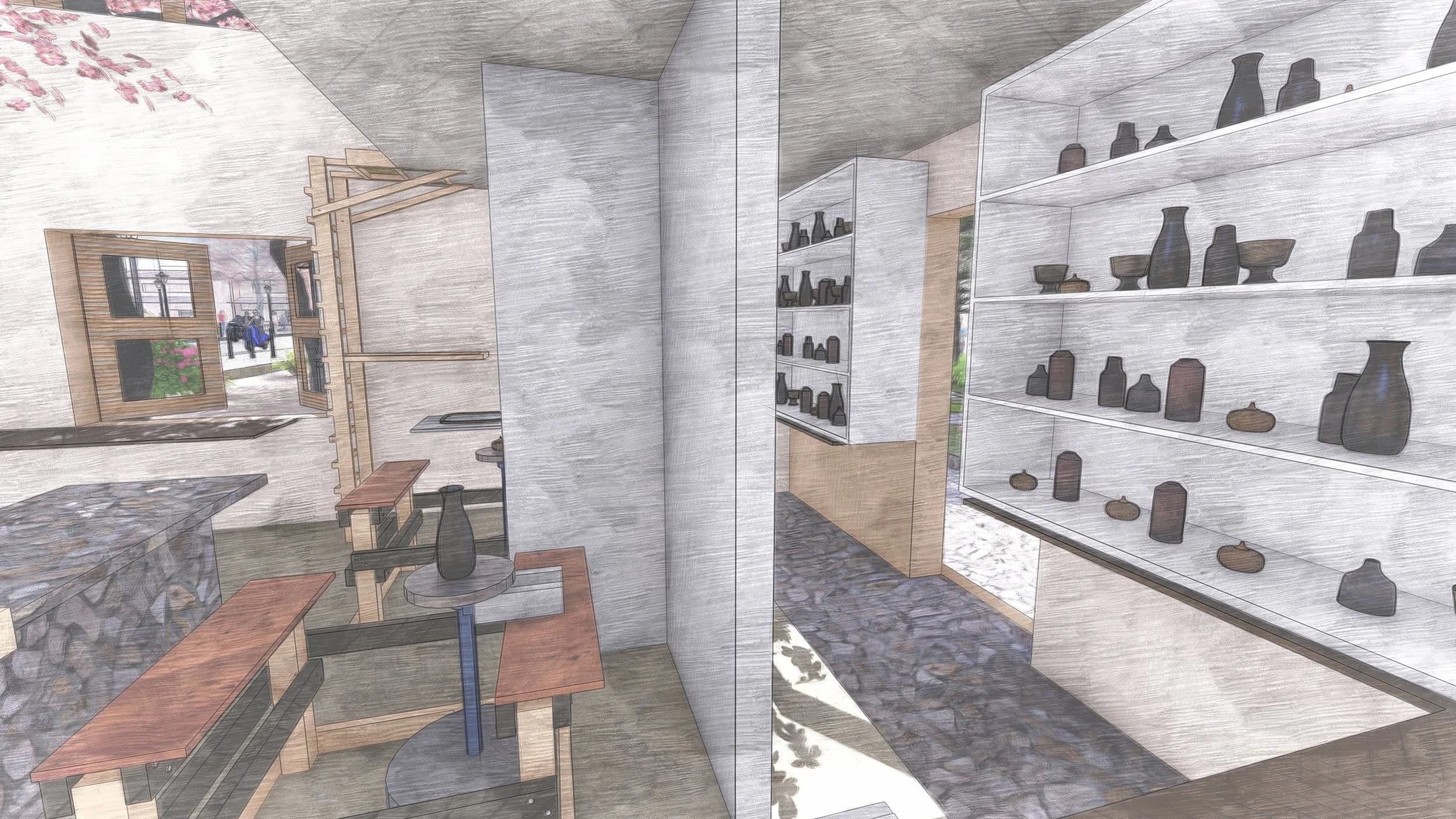
Workshop interior
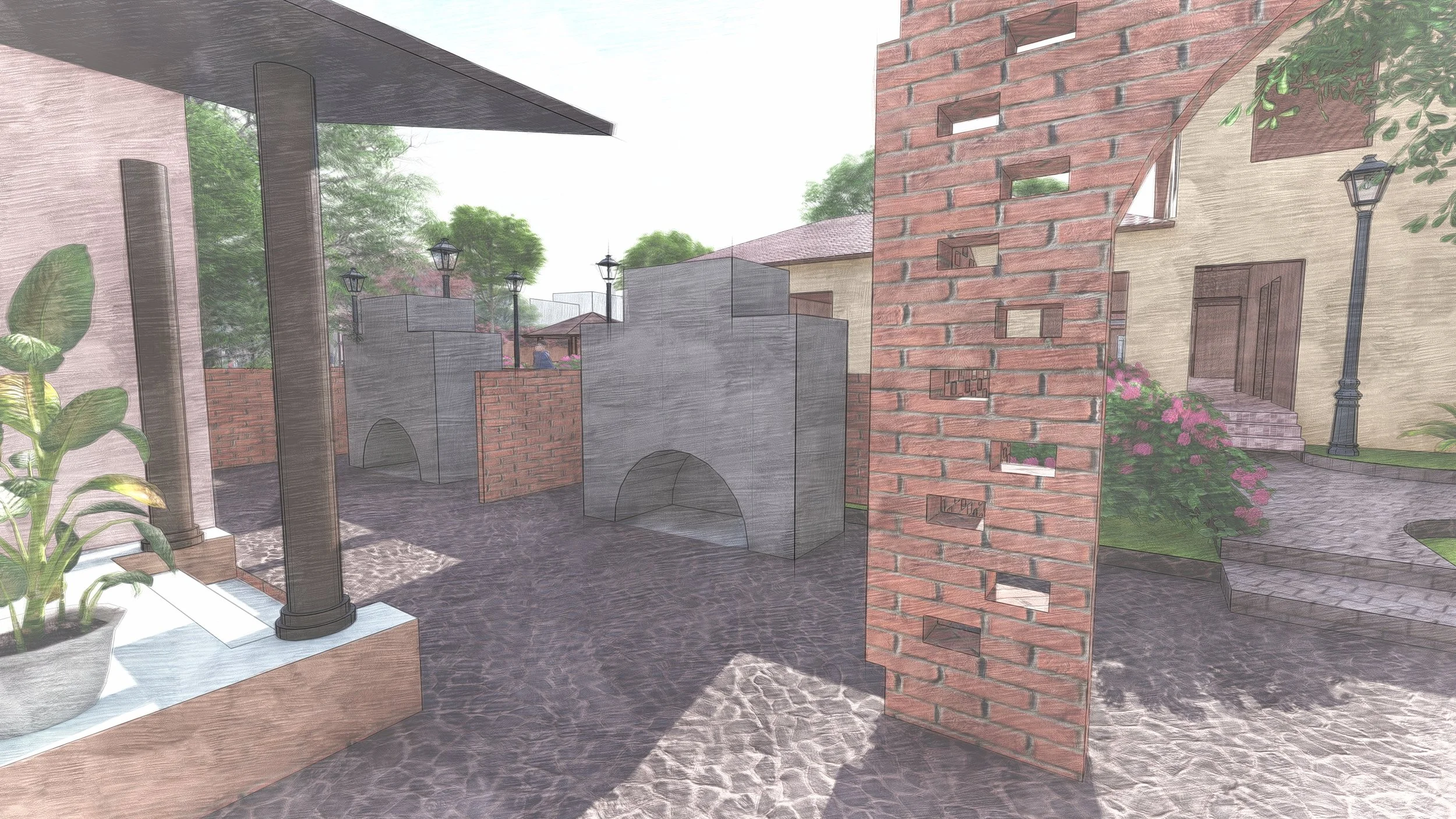
Workshops: Kilns
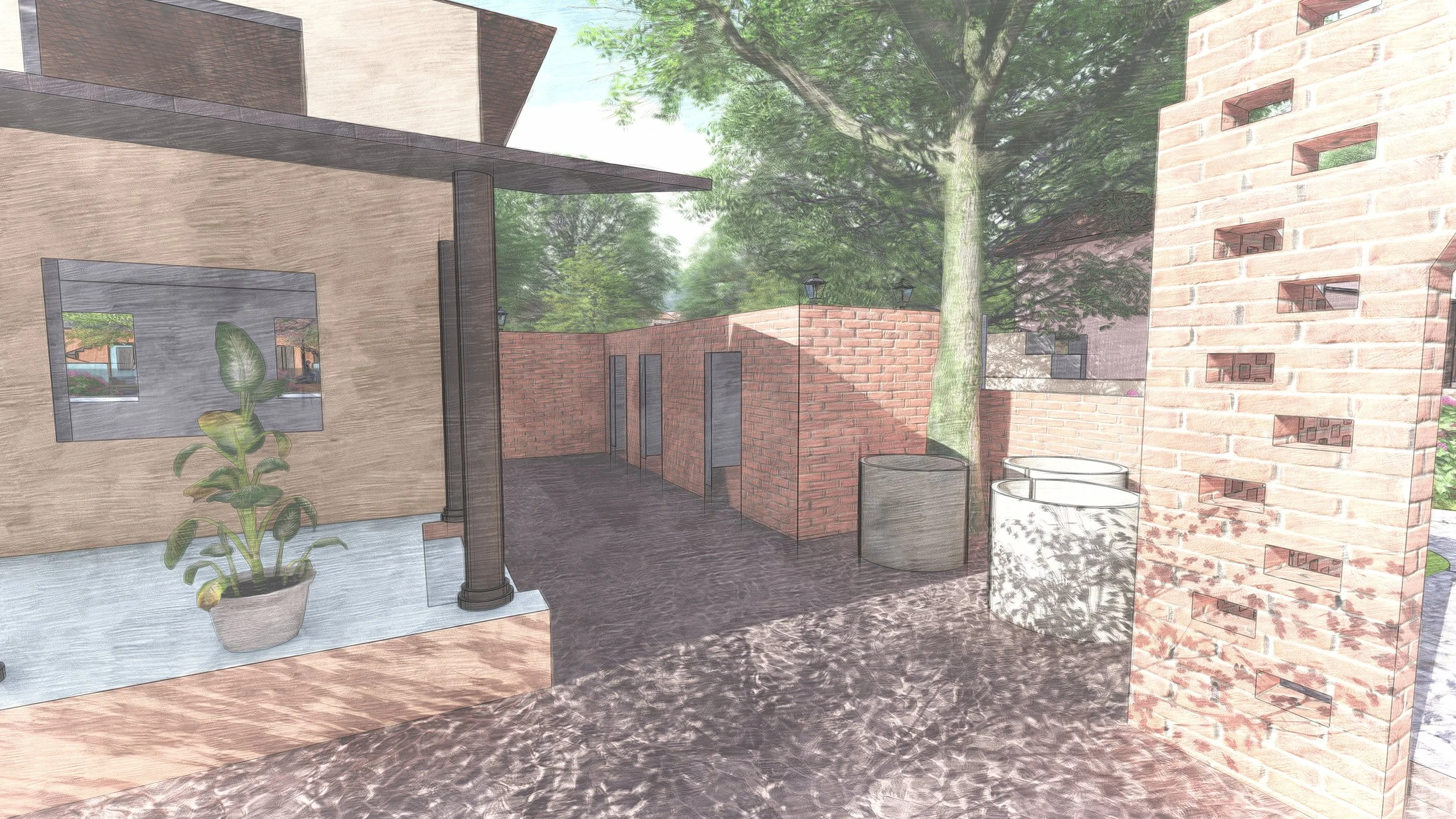
Workshops: Raw material and storage prep
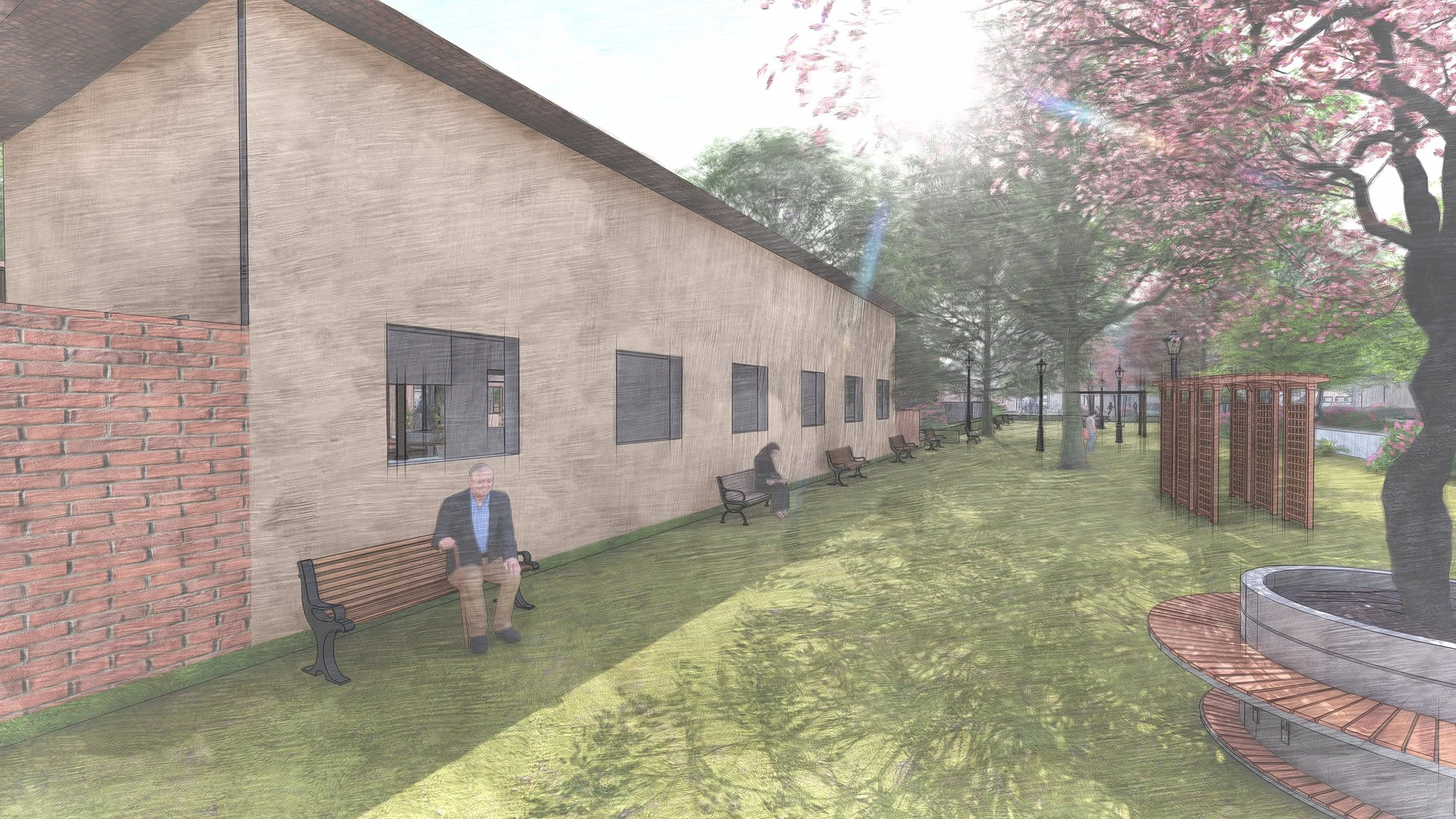
Community greens on the rear side of the workshops
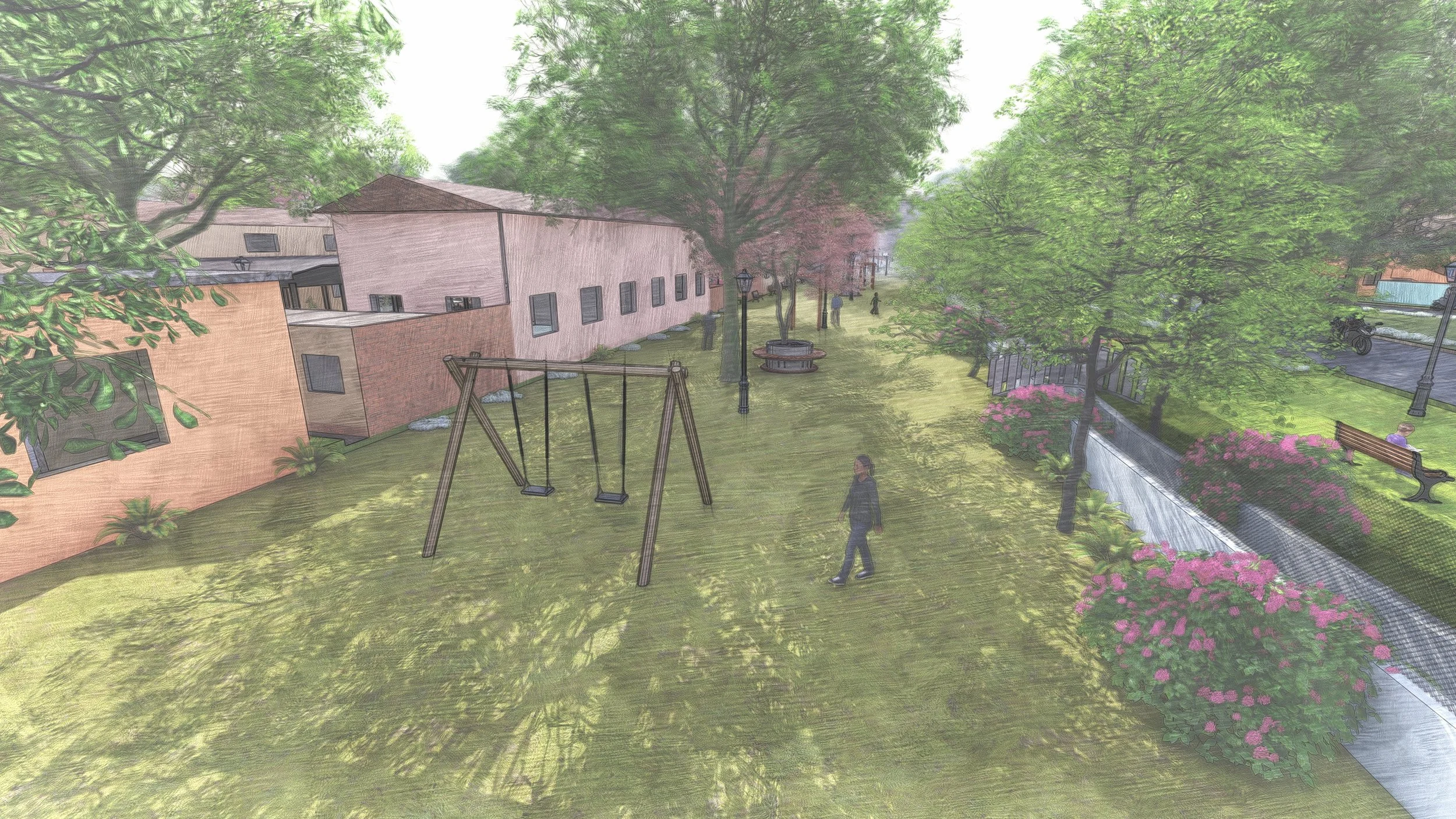
Community greens on the rear side of the workshops, running along the nala on the southern side
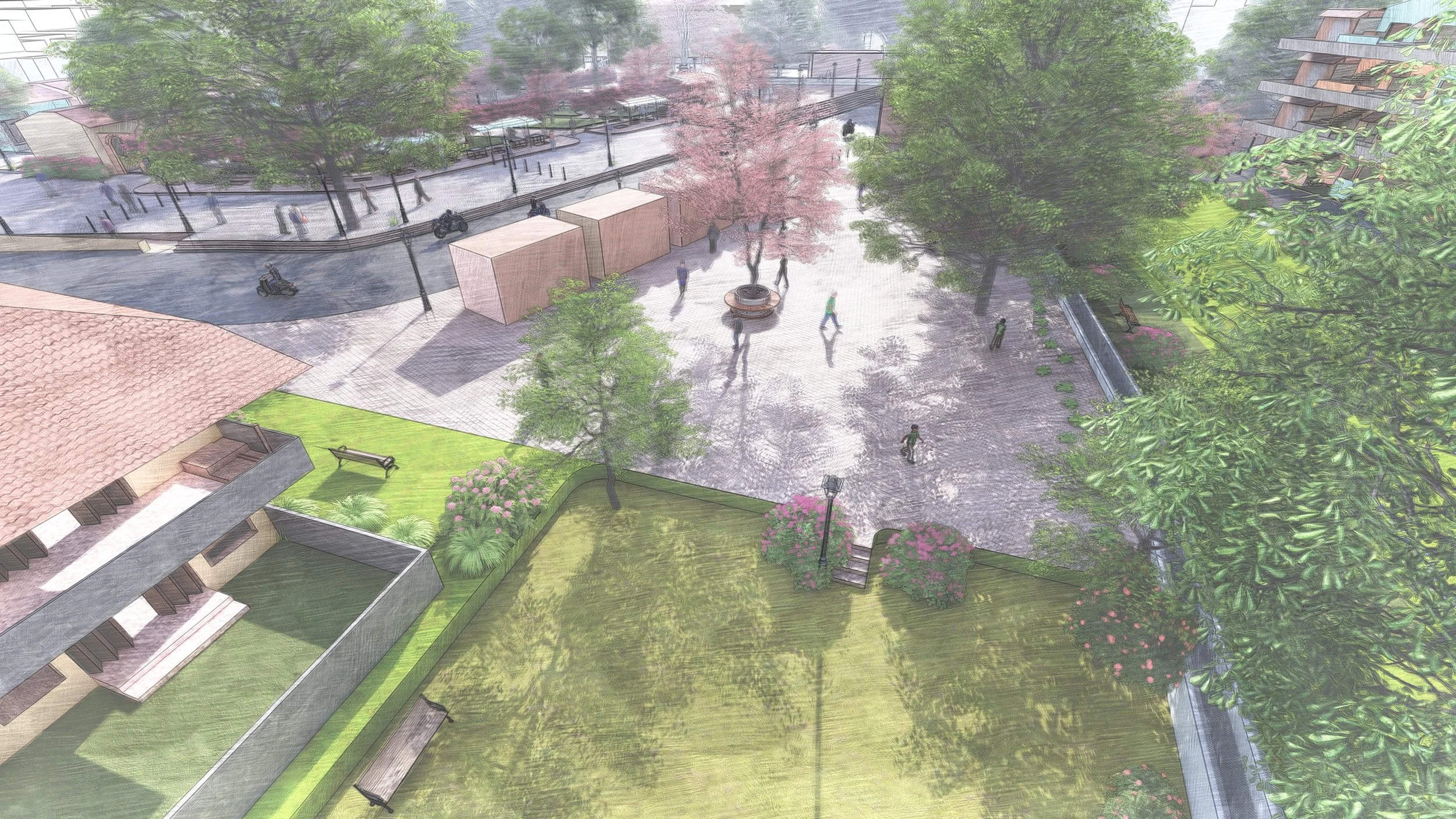
Community greens extending till the market square
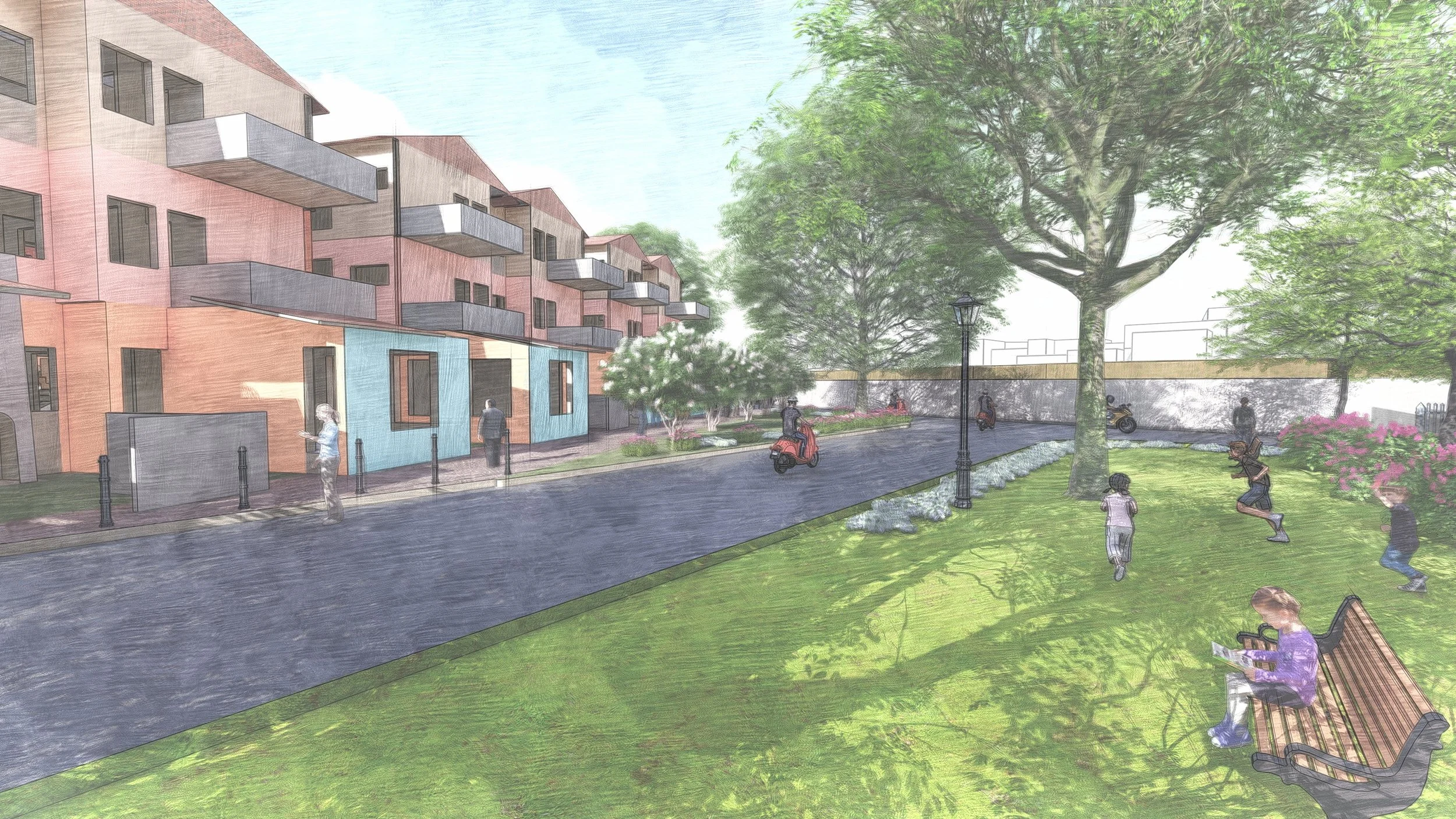
Housing area on the other (north) side of the nala and community greens
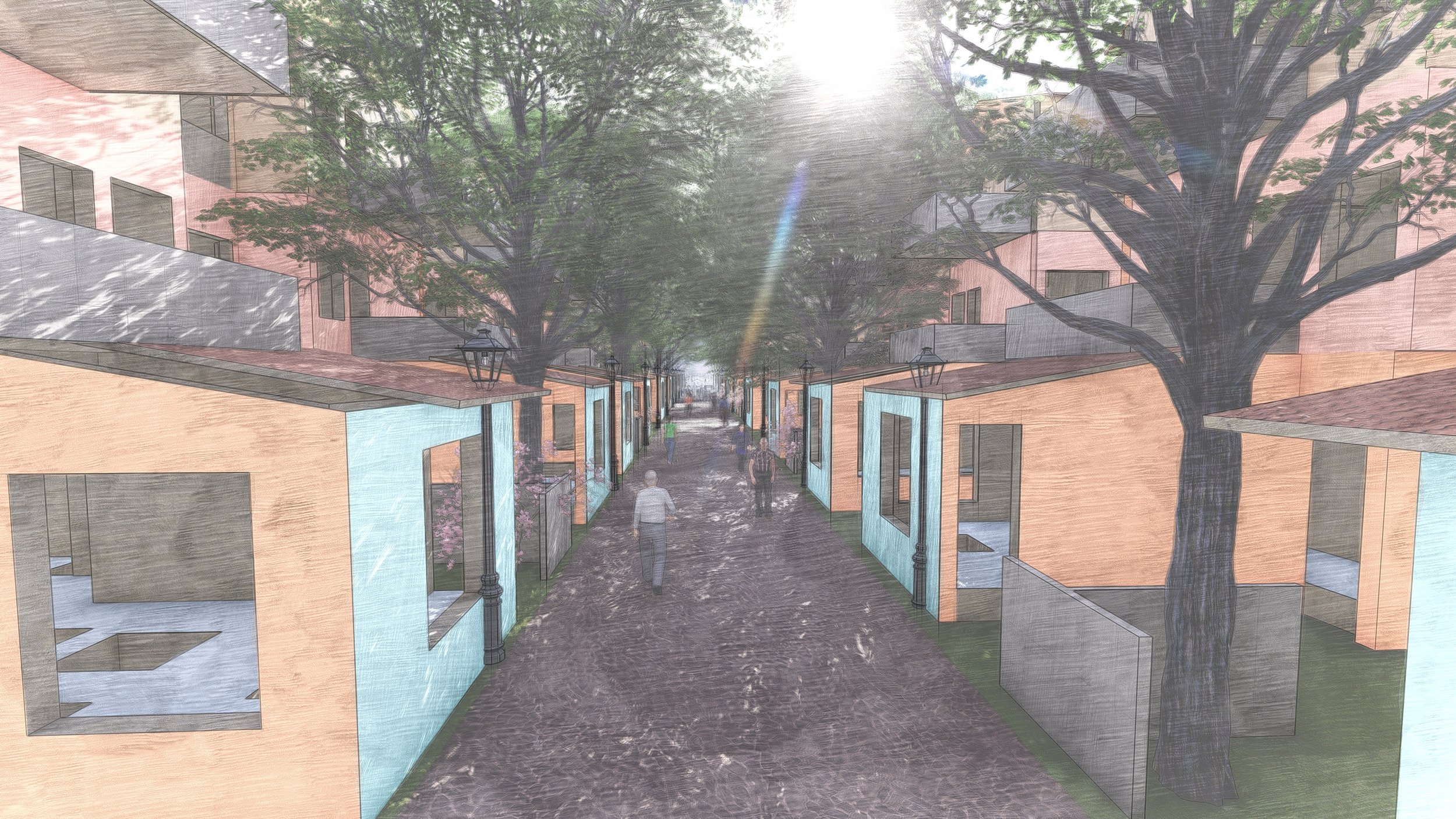
View of backyard street (pedestrian)
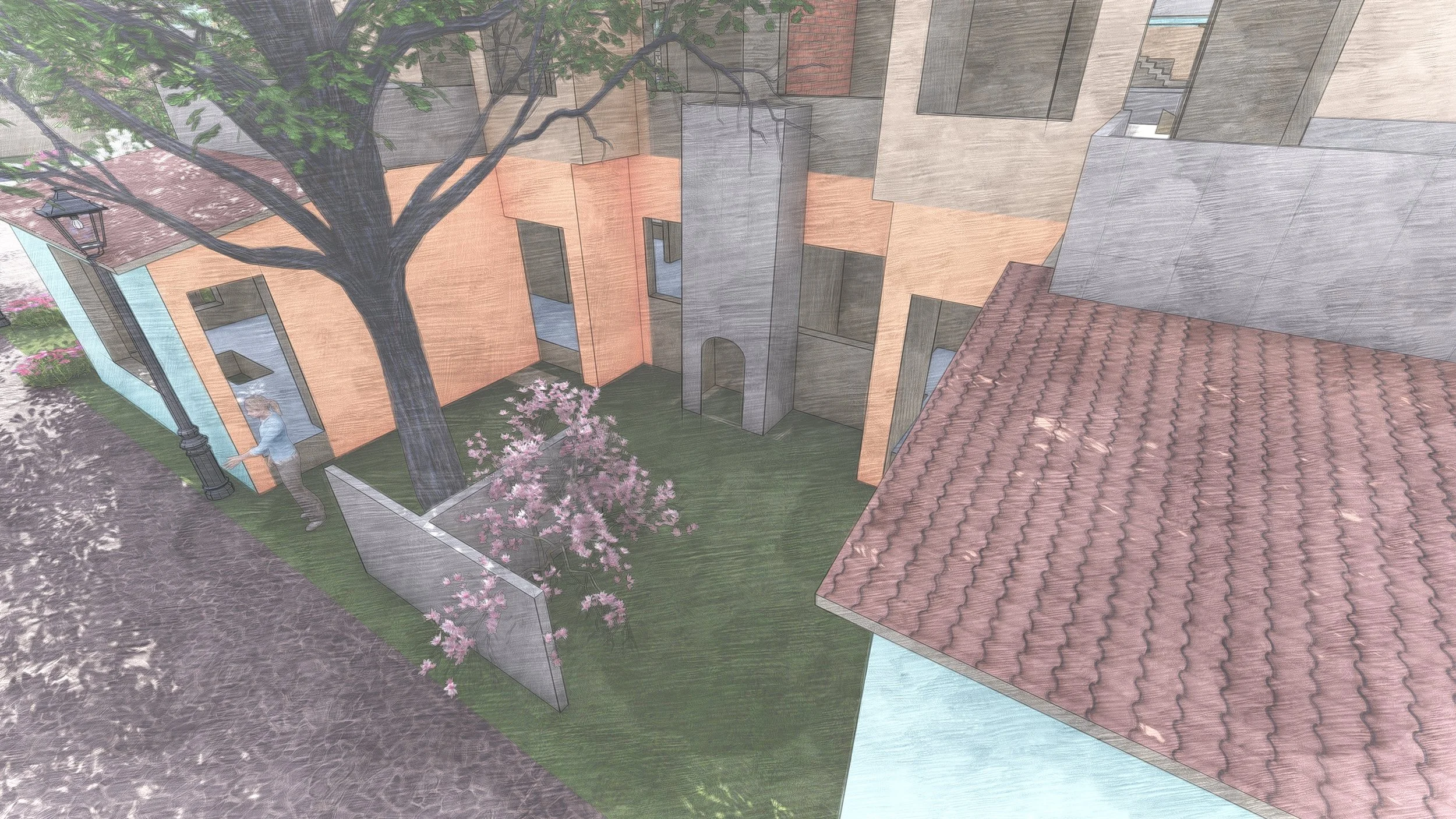
Backyard - with shared kiln and workshop / studio spaces
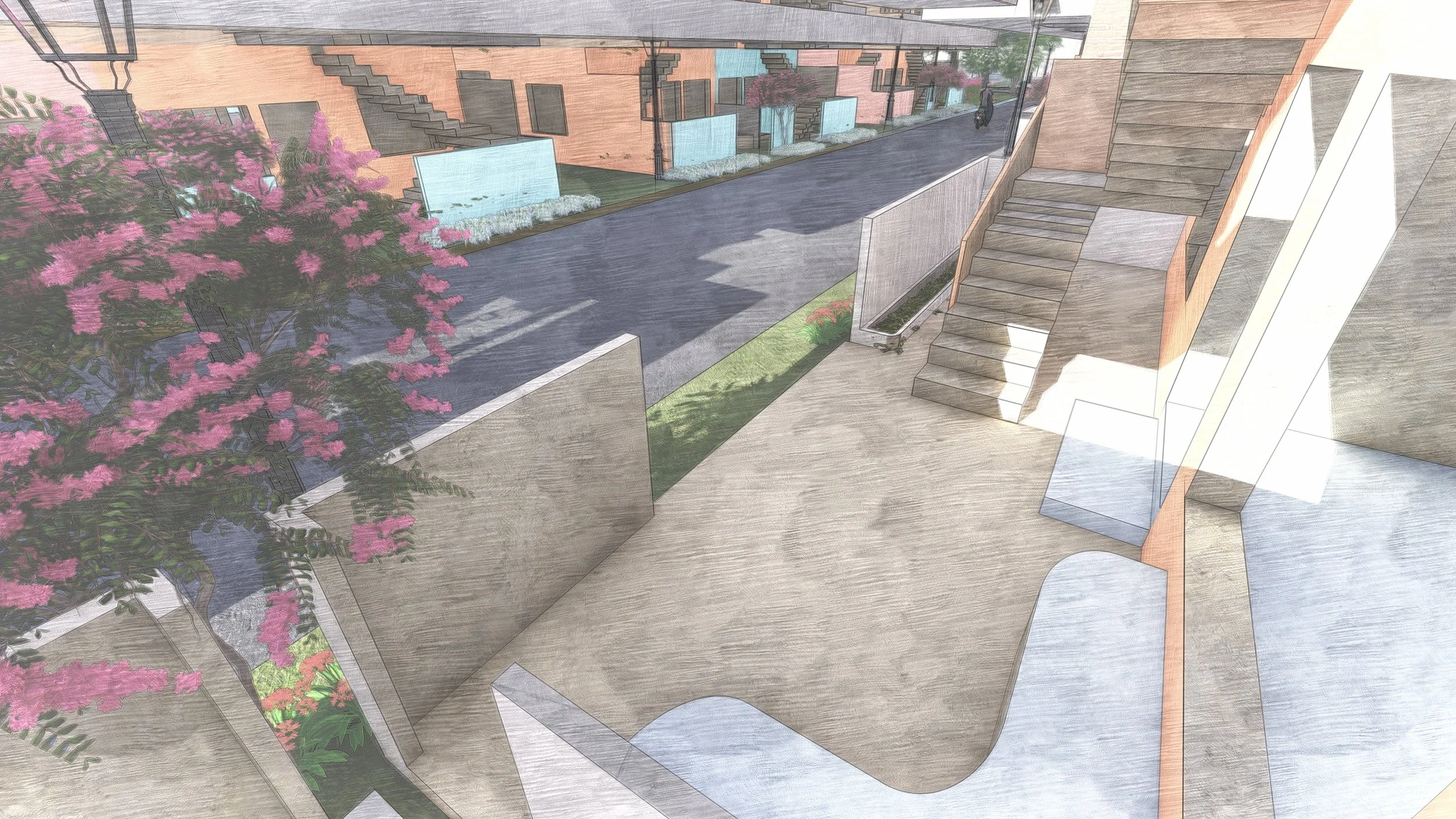
Housing row front - staircase and outdoor seating
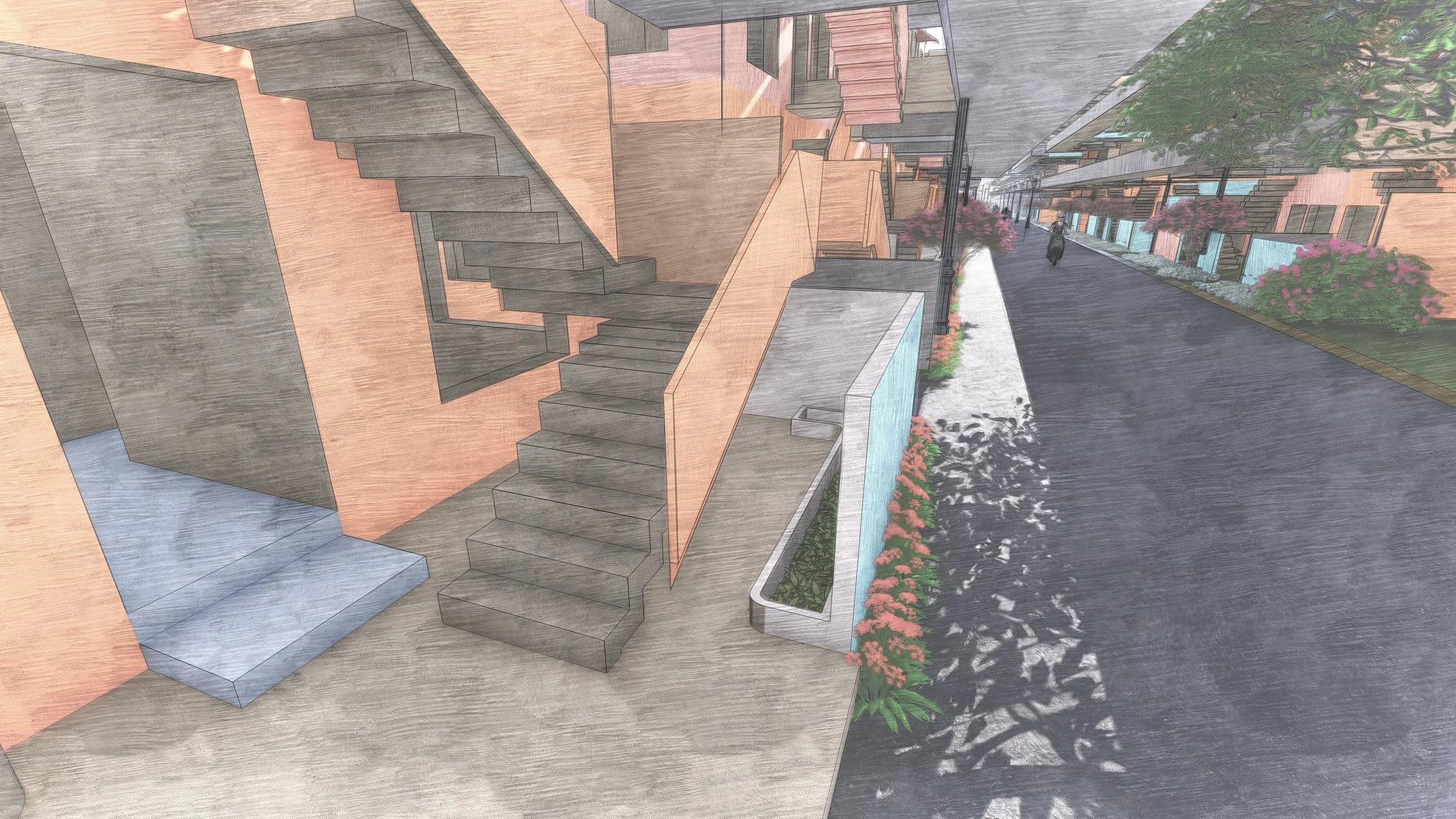
Housing row front - staircase and planter bed
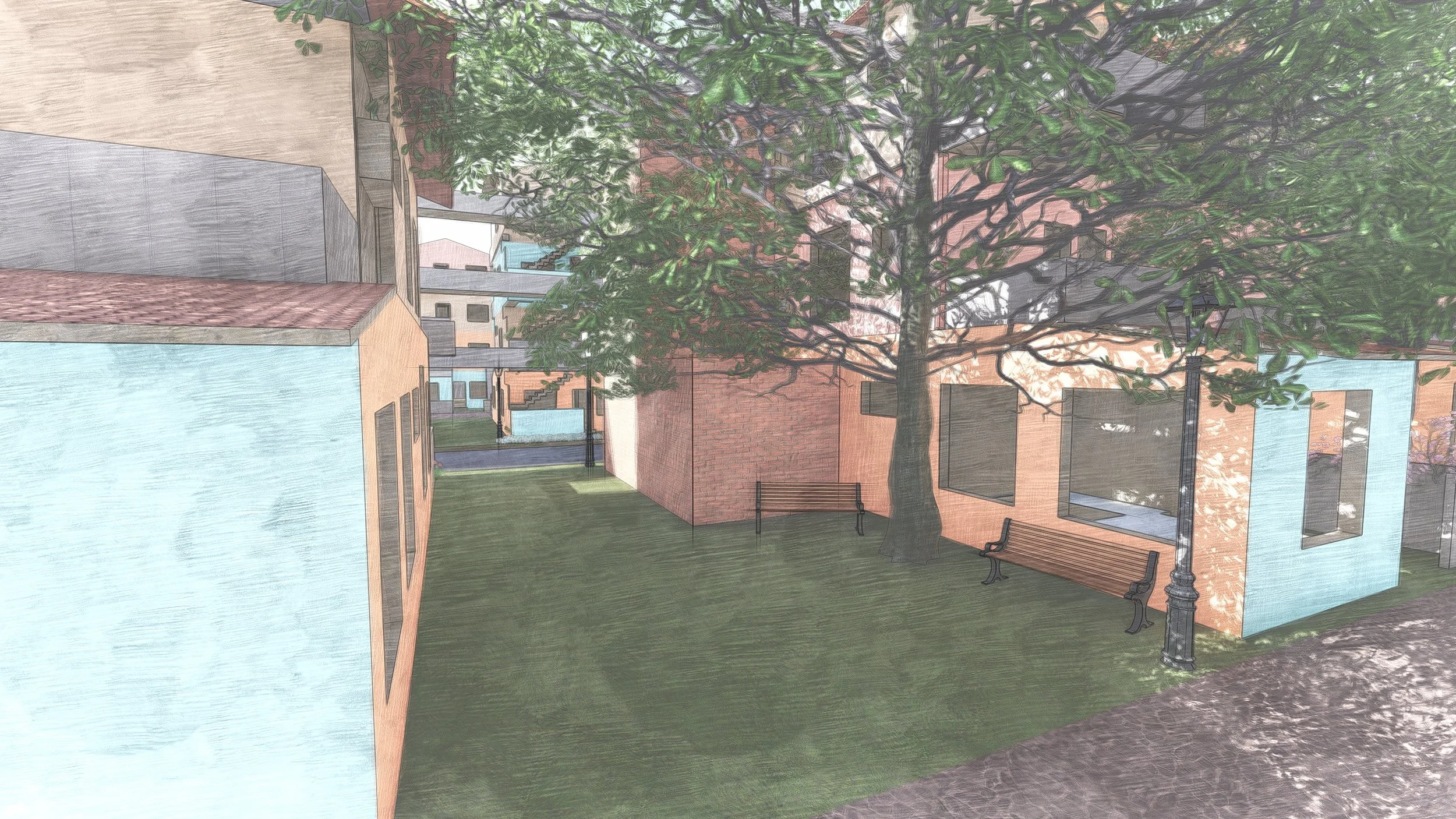
Small green spaces connecting streets and housing blocks
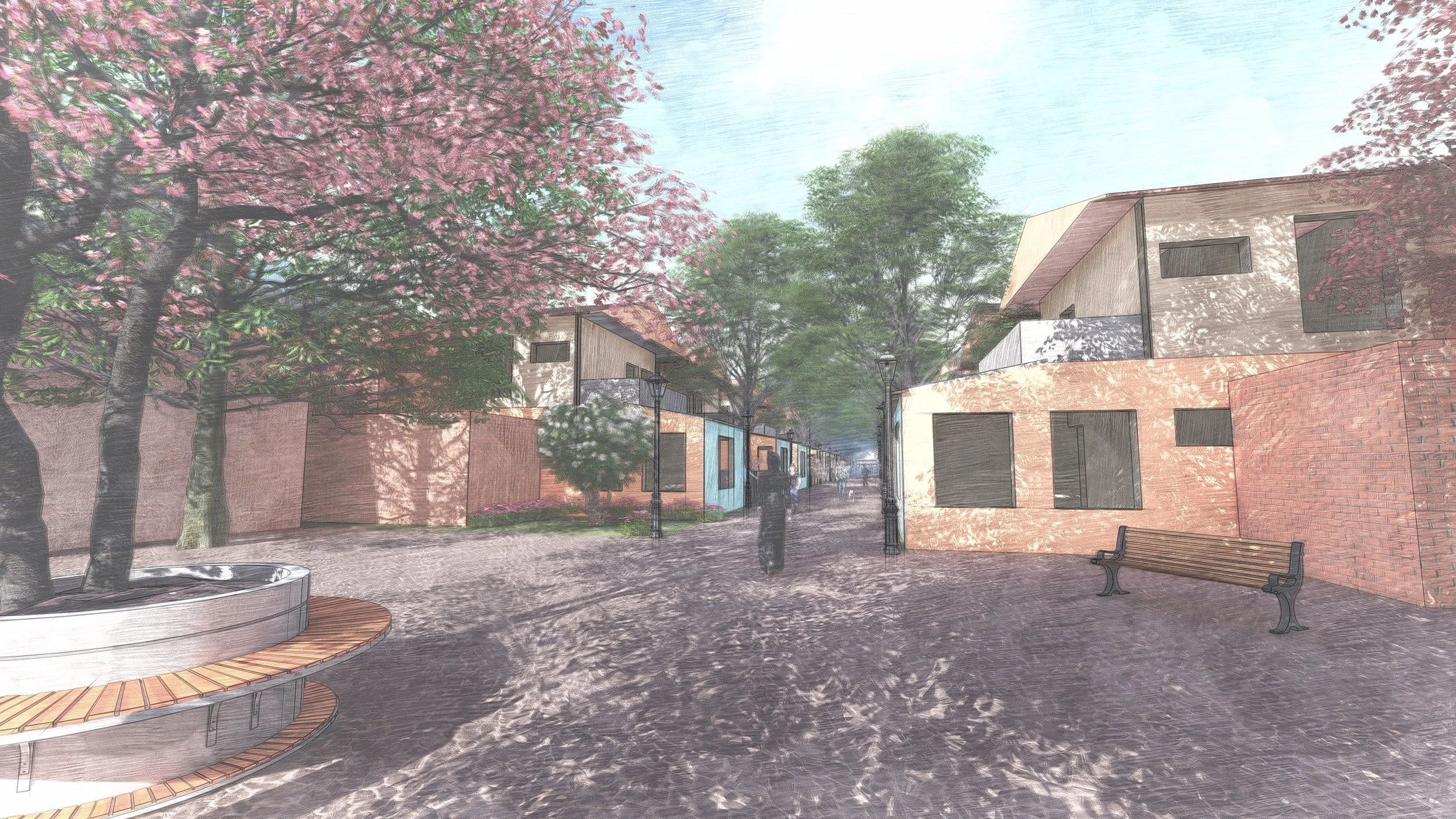
Spaces for gathering in the residential area
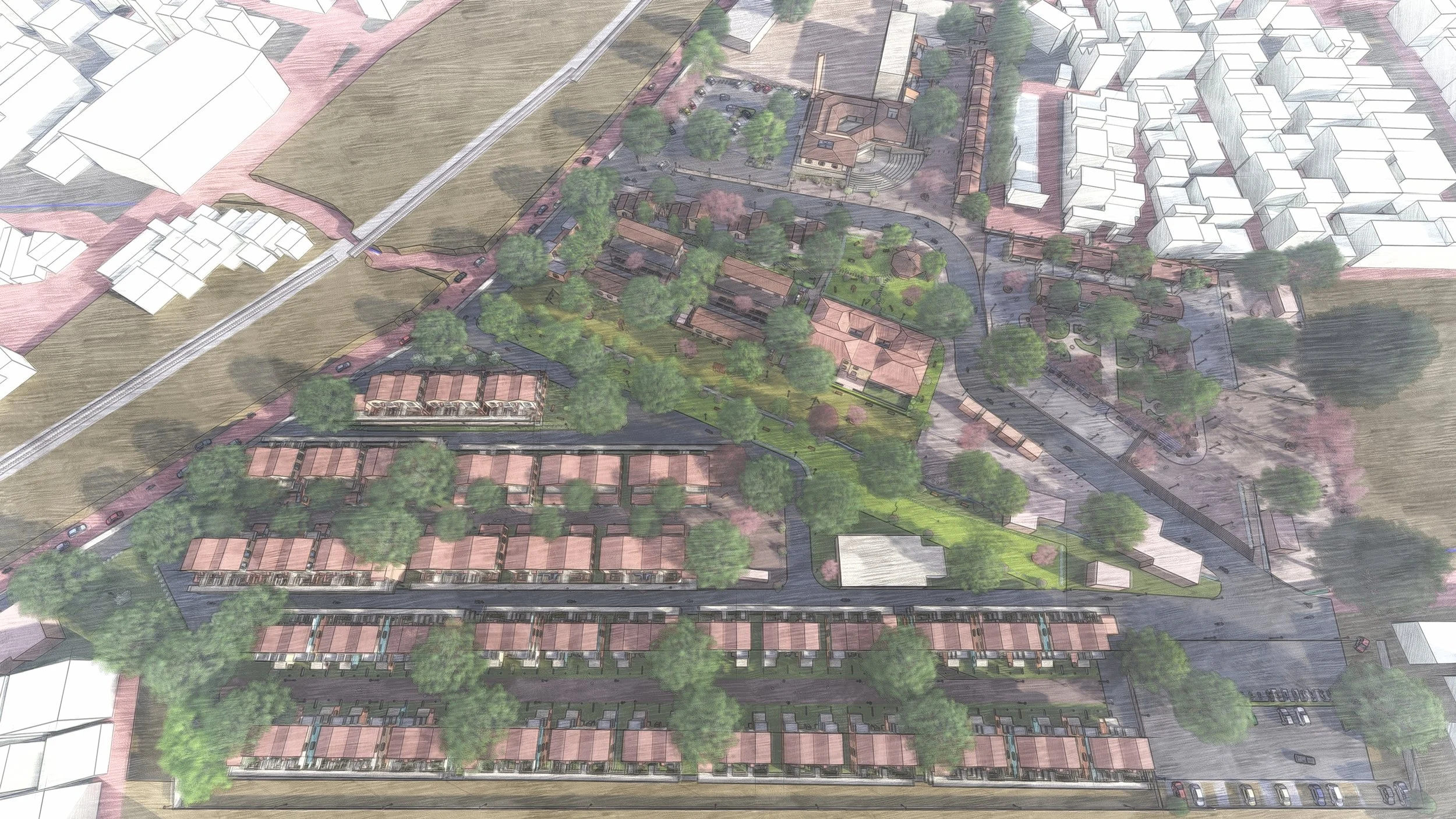
View of residential area